
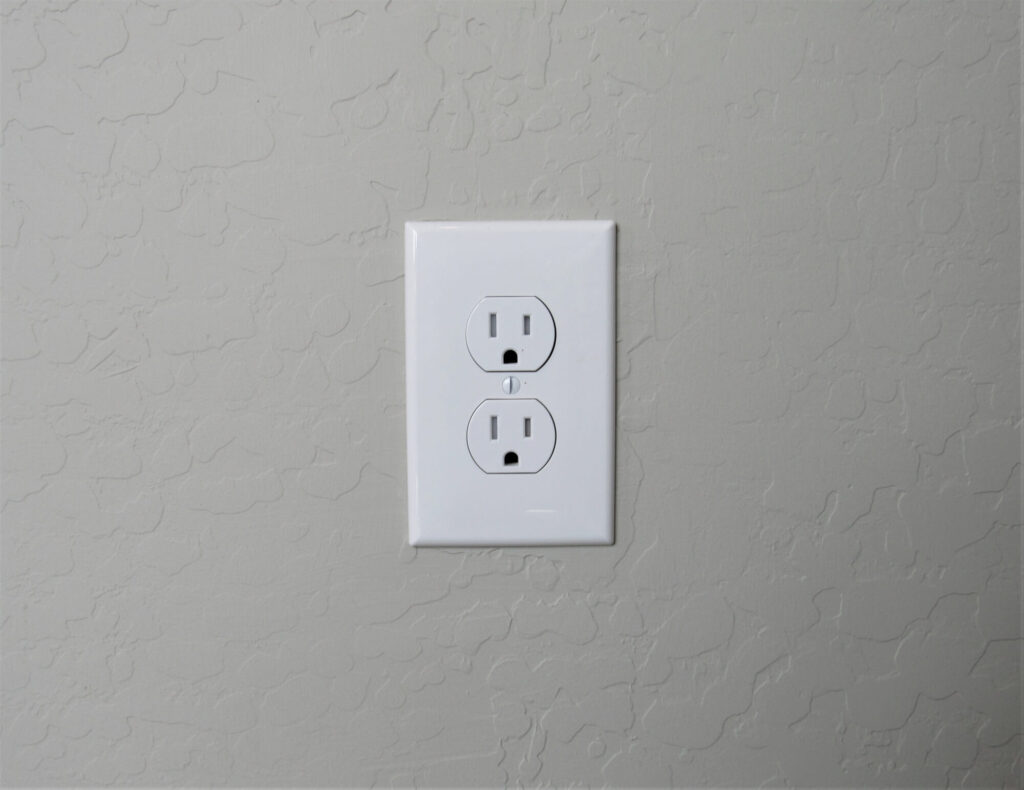
A bad electrical outlet can absolutely cause a fire. Faulty outlets account for a significant proportion of residential electrical fires every year — yet most homeowners don’t know the warning signs until it’s too late. This guide explains how outlet fires start, what to look for, and when to call an electrician.
⚡ Key Takeaways
- Yes — a faulty outlet is one of the leading causes of residential electrical fires.
- Warning signs include burning smells, scorch marks, warmth, sparking, and flickering lights.
- Stop using any outlet showing these signs immediately and call a licensed electrician.
Can a Bad Outlet Really Cause a Fire?
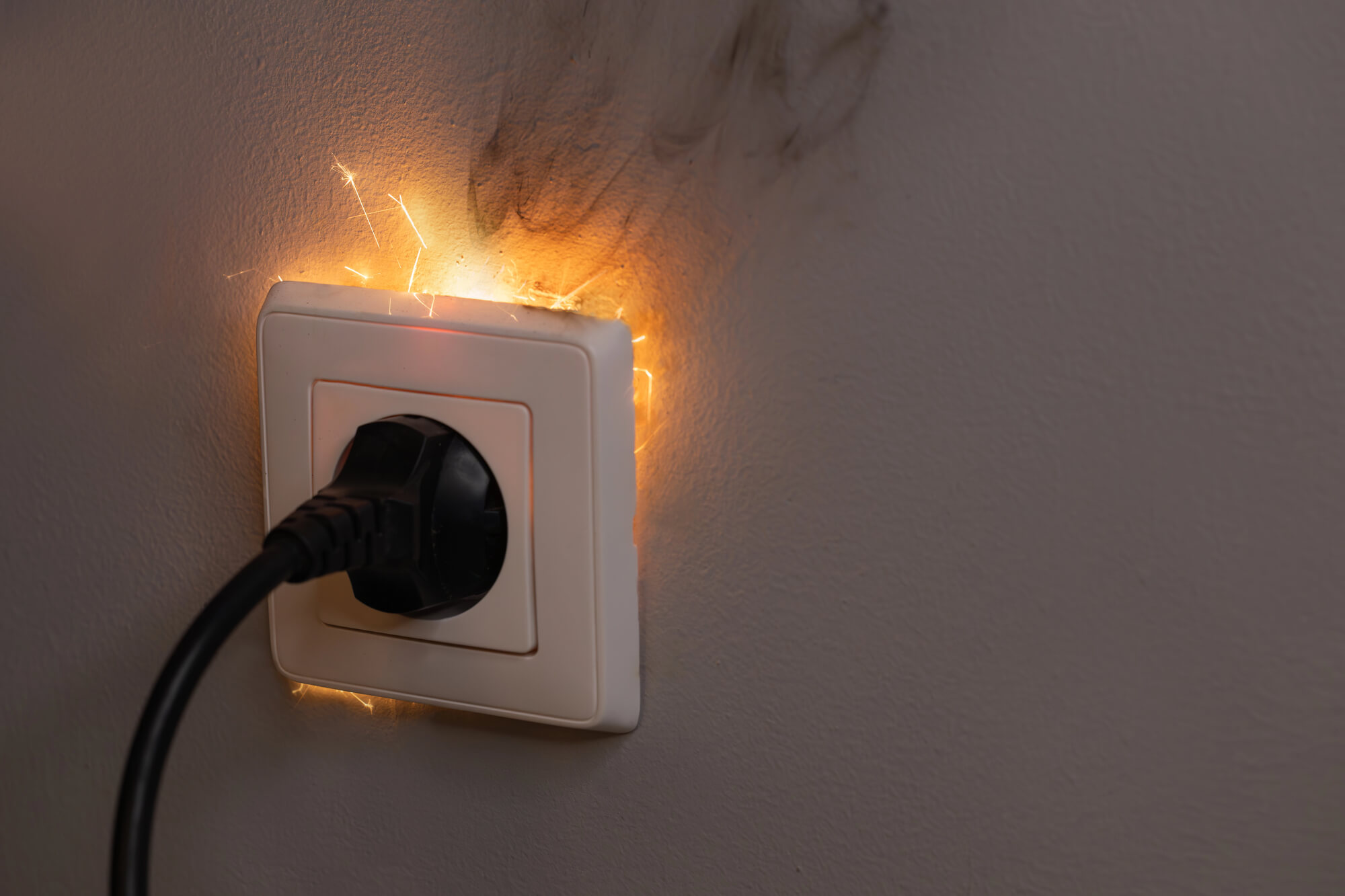
Yes. When an outlet has loose wiring, worn contacts, or water damage, it creates electrical arcing — a discharge of electricity across a gap. Arcing generates intense localised heat that can ignite surrounding insulation, drywall, or structural timber. Because the fire starts inside the wall, it can burn for some time before any visible sign appears.
According to the U.S. Consumer Product Safety Commission (CPSC), arc faults and faulty outlets are associated with thousands of home fires annually.
Warning Signs of a Dangerous Outlet
1. Burning Smell or Scorch Marks
A burning smell near an outlet — even without smoke — indicates active arcing or overheating. Scorch marks or discolouration on the outlet face or wall plate are physical evidence of previous heat events.
2. Outlet Feels Warm or Hot
Outlets should never feel warm to the touch under normal use. A warm or hot outlet indicates excessive current draw, loose wiring, or a failing device — all of which are fire risks.
3. Sparking
A brief spark when first plugging in a device is usually normal. However, large sparks, sparks during use, or sparks when nothing is being plugged in indicate a serious fault.
4. Flickering Lights When the Outlet Is Used
If lights on the same circuit flicker when an appliance is plugged in or running, the circuit is under stress — possibly due to loose connections at the outlet or in the wiring behind it.
5. Buzzing or Crackling Sounds
Audible buzzing or crackling from an outlet is the sound of electrical arcing. This should be treated as an emergency — turn off the circuit immediately.
6. Outlet Doesn’t Hold Plugs Firmly
Loose contact between the outlet’s internal contacts and a plug creates resistance and heat. An outlet that no longer grips plugs firmly is worn and should be replaced.
7. GFCI Outlet Keeps Tripping
A GFCI outlet that trips repeatedly is detecting a genuine fault. Don’t keep resetting it without investigating the cause.
8. No Power to the Outlet
A dead outlet isn’t directly a fire risk, but it may indicate a tripped GFCI elsewhere on the circuit or a deeper wiring fault worth investigating.
What Causes Outlets to Become Fire Hazards?
The most common causes are loose or deteriorated wiring connections behind the outlet, outlets that are 20 or more years old with worn internal contacts, overloaded circuits from plugging in too many high-draw appliances, water damage (especially in kitchens and bathrooms), and improper DIY installation where connections weren’t made correctly.
What to Do If You Suspect a Dangerous Outlet
Stop using the outlet immediately. Switch off the circuit at your breaker panel as a precaution. Do not attempt to open the outlet yourself — working behind a live outlet is dangerous and the damage may not be visible without proper tools. Call a licensed electrician to inspect and replace it.
Worried your outlet could be a fire hazard? Our same-day electricians are available now.
How to Prevent Outlet Fires
- Have outlets inspected if your home is more than 25 years old
- Install GFCI outlets in kitchens, bathrooms, garages and outdoor areas
- Never overload outlets with adapters or extension cords
- Replace any outlet showing the warning signs listed above
- Schedule a whole-home electrical inspection every 10 years
How Much Does Outlet Replacement Cost?
Standard outlet replacement typically costs $75–$200. GFCI outlet replacement runs $100–$250. If the wiring behind the outlet needs repair, expect $150–$400. Addressing the problem early is far less expensive than fire damage repairs.
Types of Electrical Outlets and Their Failure Modes
Understanding the type of outlet in your home can help you assess the risk. Standard duplex outlets (the most common type) have metal contact strips inside that grip the plug’s prongs. Over years of use, these strips lose tension, creating a poor connection that generates heat. GFCI outlets contain additional internal circuitry that can also fail. USB outlets and smart outlets have electronics that can overheat. Any outlet can develop a problem — but older 15A and 20A outlets in use for more than 20 years are at the highest risk.
How Electrical Arcing Causes Fires
Arc faults are the primary fire mechanism behind faulty outlets. When current jumps across a gap — caused by loose connections, damaged wire insulation, or corroded contacts — it generates a superheated plasma that can reach several thousand degrees Fahrenheit. A fraction of a second of arcing can ignite wood framing, insulation, or drywall. Because this happens inside walls, traditional circuit breakers may not trip fast enough to prevent ignition.
This is why AFCI (Arc Fault Circuit Interrupter) breakers were introduced and are now required by code in most new residential construction. If your home still has standard breakers, upgrading to AFCI breakers provides an additional layer of protection — especially important if your outlets are showing warning signs.
Outlet Safety by Room
Kitchen
Kitchen outlets are subject to moisture, heat, and heavy electrical loads from appliances. All countertop outlets should be GFCI-protected. If your kitchen still has standard outlets within 6 feet of the sink, they should be upgraded.
Bathroom
Bathrooms require GFCI protection on all outlets. Moisture creates an electrocution and short-circuit risk. Never use a bathroom outlet if it feels warm or shows any signs of corrosion.
Garage and Outdoor
Outdoor outlets must be GFCI-protected and enclosed in a weatherproof cover. Exposure to the elements accelerates corrosion. Inspect outdoor outlets annually and replace them at the first sign of moisture damage.
Bedroom and Living Areas
These low-moisture areas face wear from frequent device charging and appliance use. Extension cord overuse is common and increases fire risk. Any warm or sparking outlet in these areas warrants immediate professional inspection.
Real Cost of Ignoring a Faulty Outlet
The average cost to replace a standard outlet is $75–$200, including labour. The cost of a GFCI outlet upgrade is $100–$250 per outlet. Compare that with the average residential electrical fire claim: $20,000–$40,000 in property damage, not counting displacement costs, belongings lost, or the irreplaceable. Electrical inspection costs $150–$300 for a whole home. There is no cost-benefit argument for waiting.
Frequently Asked Questions
Can a bad outlet cause a fire even when nothing is plugged in?
Yes. A faulty outlet with loose or deteriorated wiring can arc internally at any time — even when no device is connected. If you can hear buzzing or see scorch marks, the outlet should be switched off at the breaker and inspected by an electrician.
How do I know if my outlet is dangerous?
The main warning signs are burning smells, discolouration or scorch marks, warmth, buzzing sounds, sparking, flickering lights on the same circuit, and plugs that don’t sit firmly. If you notice any of these, stop using the outlet and call an electrician.
Should I replace an outlet myself?
In the UK, replacing a like-for-like socket in a dry room is permitted for homeowners under Part P. In the US, it is legal in most states. However, if you’re not confident working with wiring, or if the outlet shows signs of arcing damage, always use a qualified electrician.
How old does an outlet have to be before it becomes dangerous?
Outlets don’t have a fixed expiry date, but contacts degrade over time. Outlets that are 25 or more years old, or those showing any warning signs, should be inspected. Homes with two-prong ungrounded outlets should be upgraded to three-prong grounded outlets for safety.