
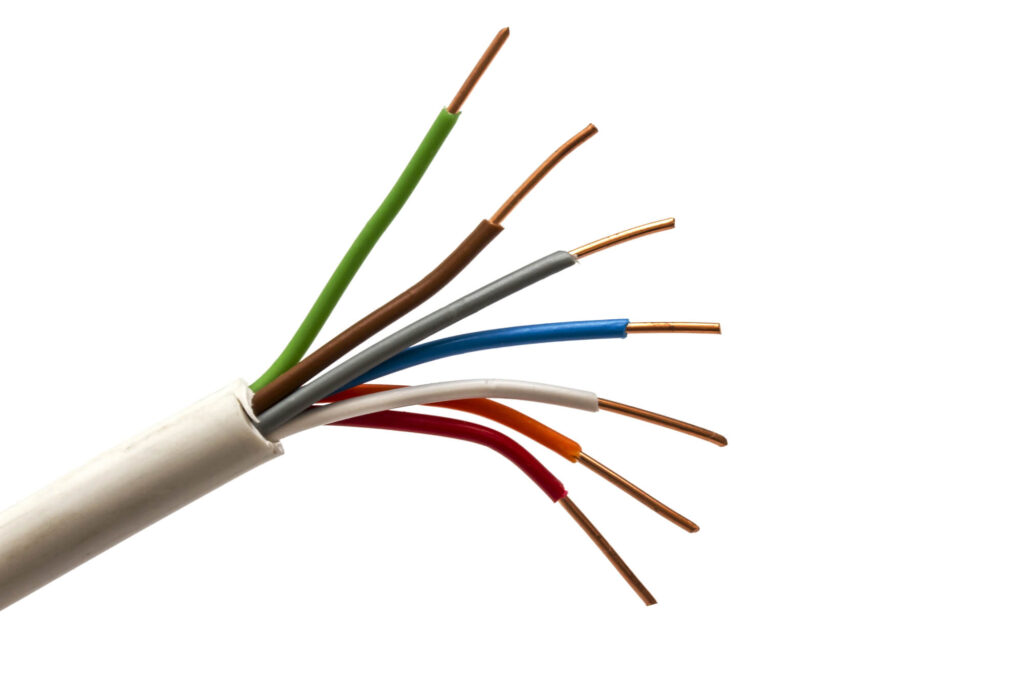
When you look at the wiring inside an electrical outlet, you’ll see three holes: one for the hot wire (live), one for the neutral wire, and one for the ground. This guide explains what the neutral wire does and why it’s essential to your home’s electrical system.
⚡ Key Takeaways
- The neutral wire completes the circuit by providing a return path for electrical current.
- Neutral wires are insulated (usually blue in modern wiring) and connected to ground at the main panel.
- A broken or disconnected neutral wire is dangerous and can cause high voltage to appliances.
The Three-Wire System
A modern electrical circuit has three key parts: the hot (live) wire carrying current from the breaker panel, the neutral wire providing the return path, and the ground wire for safety. The hot and neutral wires form a complete circuit. The ground wire is a backup safety path in case something goes wrong.
How the Neutral Wire Works
When you plug in a lamp and switch it on, electricity flows from the breaker panel through the hot wire to the lamp, then returns through the neutral wire back to the panel and ultimately to the transformer outside your home, which connects to ground. This complete path is necessary for the device to work. Without the neutral wire, the circuit cannot complete and no power reaches the device.
Neutral Wire Voltage and Safety
In a properly functioning system, the neutral wire carries current but sits at a voltage very close to ground potential (0 volts). This is why you can touch the neutral wire without getting shocked — although it is not recommended. However, if the neutral wire is broken or has a loose connection, the neutral voltage can rise, causing high voltage to appear at the outlet and potentially damaging or destroying connected appliances.
Common Neutral Wire Problems
Loose Neutral Connections
Over time, the connection between the neutral wire and the breaker panel or outlet terminal can loosen. This creates resistance, heat, and risk of fire. A burning smell from an outlet or breaker panel often indicates a loose neutral.
Broken or Damaged Neutral Wire
If the neutral wire is cut, burned, or damaged, the return path is interrupted. This causes voltage to back up and potentially creates dangerous overvoltage conditions at downstream outlets.
Neutral Wire Shared Across Circuits
An improper wiring configuration where the neutral from two different circuits shares a single wire can cause very high currents and heat. This is a serious hazard.

Neutral Wire Identification in Your Home
In modern wiring systems (since 2004 in the UK), neutral wires are blue. In older systems, they may be black. At the breaker panel, all neutral wires connect to a common neutral bus bar. At outlets, the neutral terminal is the wider of the two slots (in a US outlet).
The Complete Circuit: How Hot, Neutral, and Ground Work Together
Every circuit in your home is part of a closed loop. Current flows out from the panel on the hot wire, through the device or fixture, and returns to the panel via the neutral wire. The ground wire is separate — it provides a safe path for fault current to protect against shocks. Without a functioning neutral wire, the circuit cannot complete. A broken neutral is more dangerous than a broken hot because devices remain energized even when not working correctly.
Neutral Wire Problems and What They Look Like
Open Neutral
An open (broken) neutral causes voltage to behave unpredictably across devices on the circuit. In a split-phase 240V circuit, a lost neutral can cause one leg of the circuit to over-voltage while the other under-voltages — damaging appliances and creating fire risk. Signs include devices that flicker, dim unexpectedly, or operate intermittently.
Floating Neutral
A loose neutral connection can create a floating neutral that shifts voltage. This is particularly dangerous because the neutral wire may still appear connected while the voltage on equipment frames rises, creating electrocution risk without obvious symptoms.
Reversed Hot and Neutral
If the hot and neutral wires are swapped (reversed polarity), the neutral slot of the outlet becomes energized. This can cause shocks when touching metal parts of devices even when switched off. Reversed polarity is detectable with a basic outlet tester.
Neutral Wire Colour Coding
In US wiring, the neutral wire is white. In UK wiring (post-2004), it is blue. Older UK installations used black for neutral. When working on any wiring, colour coding is a guide — always verify with a multimeter before assuming a wire is neutral or safe to touch.
When to Call an Electrician About Neutral Wire Issues
Any sign of a neutral wire problem — flickering under load, voltage irregularities, appliances behaving oddly — warrants an electrician’s inspection. A loose neutral at the main panel or service entrance is particularly serious and can affect the entire home. Never attempt to diagnose or fix neutral wiring issues yourself without professional training.
The Neutral Wire in Three-Phase Commercial Systems
While residential homes use single-phase power, many commercial buildings and industrial facilities rely on three-phase electrical systems. In three-phase systems, the neutral wire plays an even more critical role in balancing the load across all three phases. When one phase carries more current than the others—a condition called “phase imbalance”—the neutral wire must carry the difference in current back to the transformer, where it’s grounded.
In a well-balanced three-phase system, the neutral current should be minimal. However, unbalanced loads or nonlinear loads (such as variable frequency drives, LED lighting, or UPS systems) can cause significant neutral current. If the neutral wire becomes oversized relative to the phase conductors or undersized relative to the imbalance, it can overheat or cause voltage disturbances that damage sensitive equipment. This is why commercial buildings require careful load balancing and sometimes isolated neutral systems for critical equipment.
Additionally, in three-phase systems, the neutral point at the transformer serves as the reference for all voltage measurements. Any problem with the neutral connection at the transformer, such as corrosion or loose connections, can cause voltage fluctuations across all three phases and create hazardous conditions throughout the building. This is another reason why professional electrical inspections are essential for commercial properties.
What Happens If the Neutral Wire Is Loose or Broken?
The neutral wire in your electrical system completes the circuit by returning current from your home back to the utility transformer. When the neutral wire is loose or breaks, current cannot return safely, causing a voltage imbalance across the two 120V legs of your service. If one leg of a split-phase system is used heavily (say, a dryer on one leg pulling 30A) while the other leg is lightly loaded, a broken neutral causes the heavily loaded leg’s voltage to drop while the lightly loaded leg’s voltage rises. Devices on the high-voltage leg can see 150V+ while those on the low-voltage leg see only 70V—far outside safe operating ranges. This voltage imbalance causes damage to sensitive electronics (computers, TVs, refrigerator compressors), overheating and burnout of motor-driven appliances, and fire risk from overheated wiring.
The most common sign of a broken neutral is lights in some rooms brightening significantly while others dim, especially when large appliances cycle on and off. This flickering or brightness change that follows appliance operation is a classic indicator. A broken neutral is one of the most dangerous household electrical faults and requires immediate professional attention. Call a licensed electrician immediately if you suspect a neutral wire problem—do not ignore it. The electrician will use a multimeter to test voltage at several outlets to confirm the imbalance, identify whether the break is at the service entrance (utility responsibility) or downstream in your home (your responsibility), and repair the connection. Broken neutrals are often caused by loose terminations at the breaker panel or utility connection, loose connections inside a sub-panel, or physical damage to underground service lines. Whatever the cause, a professional repair typically costs $200–$500 and takes 1–2 hours, but delaying repair risks thousands in appliance damage or a house fire.
Frequently Asked Questions
Can a broken neutral cause a fire?
Yes. A broken or disconnected neutral wire can cause high voltage conditions that damage appliances and create fire risk. This is why loose neutral connections at outlets or the breaker panel must be addressed immediately by a qualified electrician.
What happens if you reverse the hot and neutral wires?
If the hot and neutral wires are accidentally swapped at an outlet, the device may still work (because current flows regardless of direction), but the outlet becomes hazardous. The neutral slots will carry voltage, and touching the device frame or any metal part connected to it could cause a fatal shock. This configuration is called a “reverse polarity” outlet and should be corrected immediately.
Why does the neutral wire need to be insulated?
Although the neutral wire sits at near-ground potential in a healthy system, it still carries current. Insulation prevents accidental contact with the hot wire and protects the neutral from damage.