
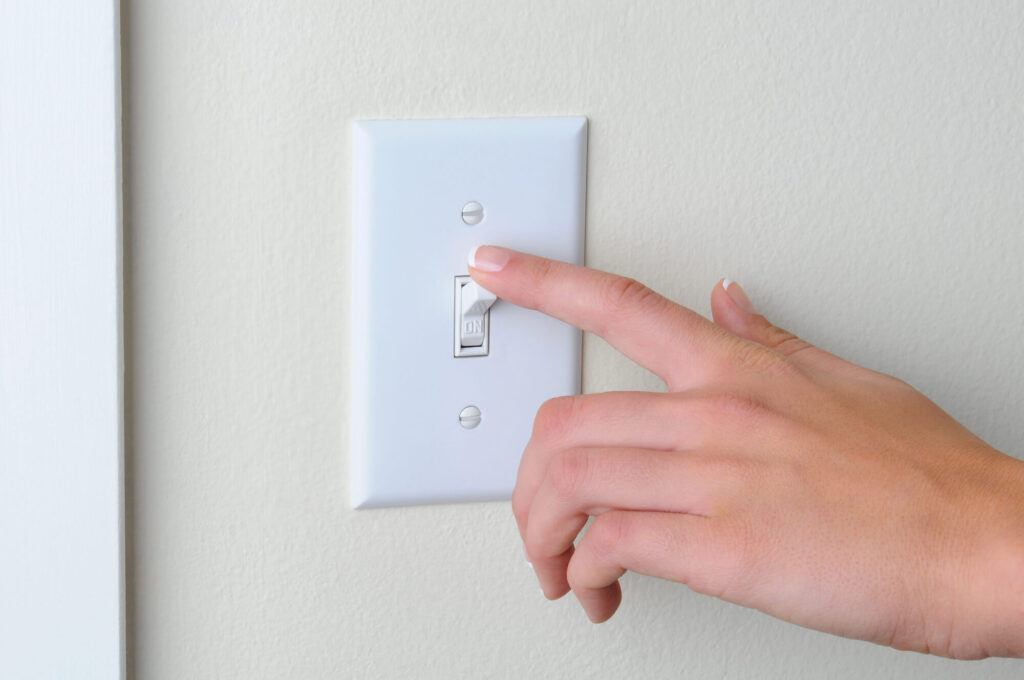
If you’re dealing with a light switch — any replacement or repair must comply with the National Electrical Code (NEC) to ensure safe wiring connections and proper load ratings not working, it can be frustrating and inconvenient—especially when you rely on it daily. Whether the switch does nothing, works intermittently, or feels loose or warm, the issue could range from a simple fix to a more serious electrical problem.
In this guide, we’ll break down the most common reasons a light switch stops working, how to troubleshoot the issue safely, and when to call a licensed electrician.
⚡ Key Takeaways
- A light switch controls the flow of electricity to a fixture.
- Burned-out light bulb: Always check the bulb first before assuming a switch problem.
- Some light switch problems can indicate a bigger safety concern.
What It Means When a Light Switch Stops Working
A light switch controls the flow of electricity to a fixture. When it fails, it usually means the electrical circuit is interrupted somewhere between the power source, the switch, and the light itself.
Sometimes the issue is as simple as a burned-out bulb. In other cases, it may involve loose wiring, a faulty switch mechanism, or a deeper electrical fault within the circuit.
Understanding the cause is key to fixing the problem safely and preventing future issues.
Common Causes of a Light Switch Not Working
- Burned-out light bulb: Always check the bulb first before assuming a switch problem.
- Faulty light switch: Internal components wear out over time and stop making proper contact.
- Loose wiring connections: Wires can loosen behind the switch, interrupting power flow.
- Tripped circuit breaker: The circuit may have shut off due to overload or fault.
- Damaged fixture or wiring: The issue may be with the light fixture, not the switch.
- Switch wiring errors: Incorrect installation can cause the switch to malfunction.
- GFCI outlet tripped: In some homes, a tripped GFCI outlet can cut power to switches.
Warning Signs of a Serious Electrical Issue
Some light switch problems can indicate a bigger safety concern. Watch for these warning signs:
- Switch feels warm or hot to the touch
- Burning smell near the switch
- Sparks when flipping the switch
- Crackling or buzzing sounds
- Lights flicker or work intermittently
- Discoloration or scorch marks on the switch plate
If you notice any of these symptoms, stop using the switch immediately and contact a professional electrician to inspect the issue.
Troubleshooting a Light Switch Not Working
Before calling an electrician, you can try a few basic troubleshooting steps:
1. Check the Light Bulb
Replace the bulb with a new one to rule out a simple failure.
2. Test the Circuit Breaker
Go to your electrical panel and check if the breaker has tripped. Reset it if necessary.
3. Inspect Nearby GFCI Outlets
If the switch is in a kitchen, bathroom, or garage, a tripped GFCI outlet may be the cause. Press the reset button on any nearby outlets.
4. Try Other Switches and Outlets
If multiple fixtures or outlets are affected, the issue may be with the circuit rather than the switch itself.
5. Listen and Feel
If the switch feels loose, makes noise, or doesn’t “click” properly, it may be worn out internally.
6. Turn Off Power Before Inspection
If you plan to remove the switch plate, always turn off power at the breaker first to avoid electric shock.
If these steps don’t resolve the issue, it’s best to call a licensed electrician to safely diagnose and repair the problem.
Our electrical repair team fixes switches fast and can upgrade to smart lighting controls.
How to Prevent Light Switch Problems
- Replace aging switches: Switches wear out over time and should be updated as needed.
- Avoid overloading circuits: Too many devices on one circuit can cause wear on switches.
- Use quality components: Cheap switches may fail sooner.
- Schedule electrical inspections: Regular checks can catch issues early.
- Upgrade old wiring: Modern wiring improves safety and reliability.
Electrical Repair Costs
The cost to fix a light switch not working depends on the cause:
- Replacing a light switch: $75 – $200
- Fixing loose wiring: $100 – $300
- Replacing a light fixture: $150 – $500
- Repairing circuit issues: $200 – $800
- Panel or wiring upgrades: $1,000 – $4,000+
Simple switch replacements are usually quick and affordable, but more complex electrical problems may require a larger investment.
Testing and Troubleshooting a Dead Switch
Before assuming your switch has failed, verify that the fixture actually has power. Turn on the switch and check if the light responds at all—dim flicker, slight hum, or barely perceptible change. If there’s no response whatsoever, locate the breaker controlling that light and make sure it hasn’t tripped. If the breaker is on, flip it off and back on to reset it. If the light still doesn’t work, try plugging a lamp into the outlet on that circuit to see if power is reaching the room. If the outlet works but the light doesn’t, the problem is likely the fixture or the connection between the switch and fixture, not the switch itself. Alternatively, if the switch still controls the light when you turn the breaker on and off, the switch itself is functioning—the issue is a burnt-out bulb or bad fixture.
When to Replace vs. Repair the Switch
A faulty light switch costs $10–$30 to replace and takes an electrician just 15–20 minutes, making replacement the most economical option in virtually all cases. Attempting to repair a broken switch by opening it up risks injury from residual electrical charge and won’t solve the underlying problem. Modern switches are not repairable components; they’re designed to be replaced. The only exception is if a switch is visibly loose in the wall—you can tighten it by removing the cover plate and adjusting the screws on the side of the switch body. If you have a switch that feels particularly stiff, is physically damaged, or shows burn marks around the toggle, replacement is definitely warranted. Purchase a switch matching your existing one—standard on/off single-pole switches work in most homes, though some may have special features like dimmers or motion detection that require specific models.
Frequently Asked Questions
Why does my light switch suddenly stop working?
This can happen due to a burned-out bulb, a faulty switch, loose wiring, or a tripped breaker interrupting the electrical circuit.
Can I replace a light switch myself?
If you have basic electrical knowledge and turn off the power first, replacing a switch can be a DIY task. However, if you’re unsure, it’s safer to hire an electrician.
Why is my light switch warm to the touch?
A warm switch can indicate loose wiring or excessive electrical load, which can be dangerous and should be inspected immediately.
Why does my house smell like burning plastic?
Burning plastic smells often occur when wire insulation overheats or melts due to electrical overloads, loose connections, or faulty appliances.
Get Professional Help Today
If your light switch is not working, don’t ignore the issue—especially if there are signs of heat, noise, or burning smells. Electrical problems can quickly become hazardous if left unresolved.
A licensed electrician can diagnose the issue, repair faulty wiring or switches, and ensure your home’s electrical system is safe and up to code.