
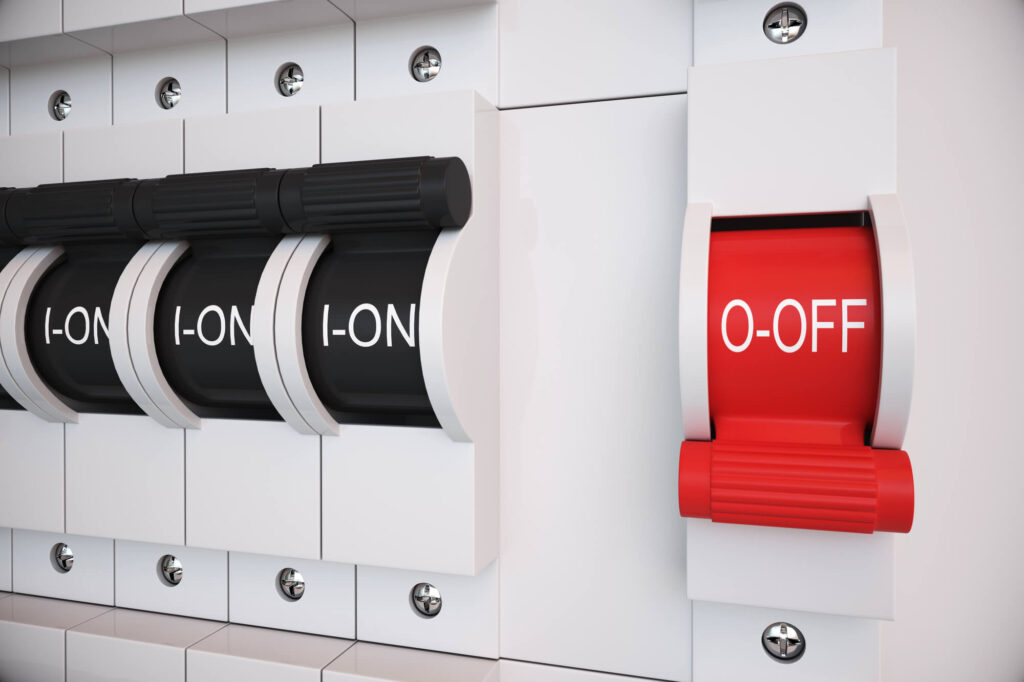
Power that flickers on and off, drops out briefly, or goes in and out repeatedly is unsettling — and it usually means something is wrong either with your home’s electrical system or with the utility supply feeding it. Some causes are simple and harmless; others are serious problems that can damage appliances and electronics or create fire hazards. Here’s how to figure out what’s happening.
⚡ Key Takeaways
- The first question to answer when power goes on and off is whether the problem is limited to your home or affecting your neighborhood.
- Many intermittent power problems originate outside the home, on the utility’s equipment and infrastructure.
- When the utility supply is confirmed normal but power is still going on and off, the problem lies within your home’s electrical system.
Is the Problem Inside or Outside Your Home?
The first question to answer when power goes on and off is whether the problem is limited to your home or affecting your neighborhood. This determines whether you call an electrician or your utility company.
Check Your Neighbors
Step outside and look for lights in neighboring homes. If your neighbors are also experiencing intermittent power, the problem is almost certainly on the utility side — a failing transformer, a damaged overhead line, a substation issue, or storm damage. Call your utility company’s outage line to report the problem. Do not call an electrician for a utility-side issue.
Check Your Meter and Main Panel
If power is going on and off only in your home, look at your meter. Most digital meters continue to display a reading even during brief outages. Check your main panel for a tripped main breaker. A main breaker that trips under load — then resets when the load reduces — indicates overloaded service or a failing main breaker.
Utility-Side Causes
Many intermittent power problems originate outside the home, on the utility’s equipment and infrastructure.
Failing Utility Transformer
Transformers step utility voltage down to usable household voltage. A failing transformer may produce intermittent supply problems, particularly under heavy load (hot summer days when AC demand is high). Report this to your utility — it’s their equipment and their responsibility to repair.
Damaged Service Drop or Overhead Lines
The wires connecting your home to the utility (the service drop) can suffer damage from wind, falling branches, animal contact, or simple deterioration. A damaged service drop connection creates intermittent contact that causes power to go on and off, sometimes in synchrony with wind or vibration. This is typically utility-owned equipment up to the weather head on your home — contact your utility company. The U.S. Department of Energy recommends documenting recurring outages and voltage fluctuations before calling, as detailed records help utilities diagnose the source of the problem faster.
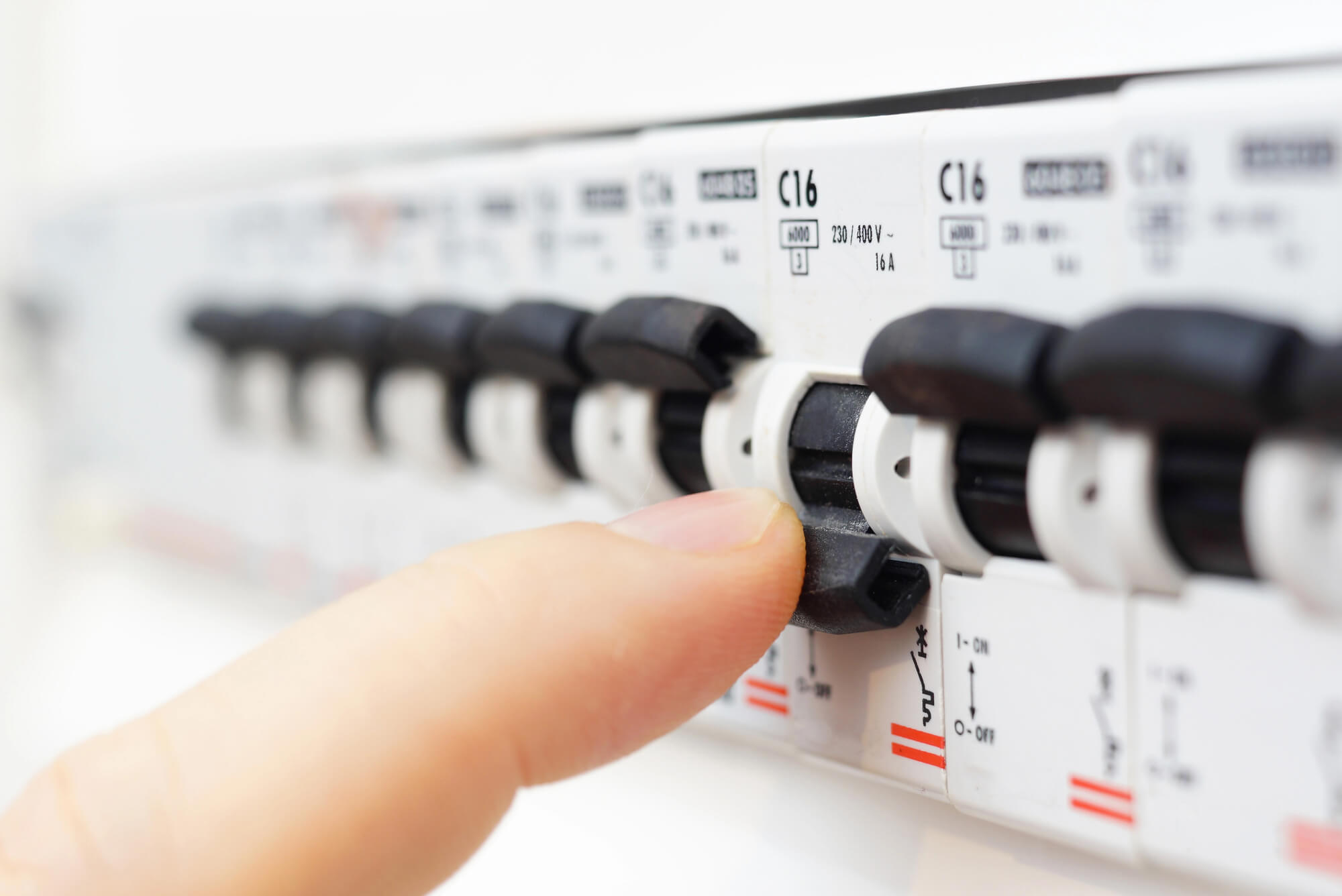 power going on and off may require panel inspection” />
Intermittent power issues often point to a loose connection or panel problem. Our diagnostic electricians can track down the cause and fix it permanently.
Home Electrical System Causes
When the utility supply is confirmed normal but power is still going on and off, the problem lies within your home’s electrical system.
Loose Main Service Connection
Where utility wires connect to your home’s service entrance conductors (typically at the weather head or meter socket), connections can loosen or corrode over time. A poor connection at this point creates intermittent power that affects the entire home. This is a serious problem that requires immediate attention from both your utility company (who owns the service drop) and a licensed electrician (who handles your service entrance equipment).
Failing Main Breaker
Main breakers in older panels can develop internal faults that cause them to trip under load or make intermittent contact. A main breaker that trips and resets creates exactly the “power on and off” symptom — especially under heavy loads like when the AC compressor cycles. Main breaker replacement is a job for a licensed electrician.
Overloaded Service
If your home’s electrical service (typically 100A or 200A) is regularly being loaded near or at its capacity — a situation more common as homes add EV chargers, heat pumps, and other high-draw equipment — the main breaker may trip intermittently under peak loads. An electrician can measure your actual peak demand and advise whether a service upgrade is needed.
Partial Outages: Some Circuits On, Some Off
A particularly telling pattern is when some lights and appliances continue working while others go out. This is a strong indicator of a lost leg — one of the two 120V supply legs to your home has been interrupted, typically by a utility-side issue with the service transformer or connections. Call your utility company immediately and report partial power loss — this is their responsibility to investigate and restore.
Utility vs In-Home Causes of Intermittent Power
Intermittent power problems can originate from either the utility grid or inside your home, and identifying the source is crucial for proper repairs. To determine if the problem is utility-side, first check with your neighbors—if several homes on your block are experiencing power outages or flickers at the same time, the issue is almost certainly with the utility company’s lines or equipment. Call your utility company to report the outage; they can check their system and may have already logged incidents in your area. You can also look at your meter—if the meter is reading normally and your main breaker shows power, but your home still has no electricity, the problem is likely between your meter and the utility’s lines.
If the power issue is isolated to your home, the cause is typically in-home and relates to a specific circuit or appliance load. Signs of in-home problems include power affecting only certain rooms (not the whole block), flickering lights that correspond to when certain appliances turn on (refrigerator, air conditioning, heater), or a circuit breaker tripping repeatedly. A clamp meter (used by electricians) can reveal if the problem is a high-load appliance drawing too much power at startup, causing a voltage sag that dims lights or disrupts electronics. An older home with undersized service (100-amp panel) might struggle to handle modern appliance loads simultaneously. If testing shows utility voltage is stable but in-home flickering persists, you likely have either a loose connection somewhere in your panel or wiring, or an appliance with a failing motor or compressor. A licensed electrician with diagnostic equipment can help pinpoint whether the issue is the utility, a loose connection, an overloaded circuit, or a failing appliance.
Frequently Asked Questions
Why does my power flicker only when the AC turns on?
A brief voltage dip when the AC compressor starts is normal — large motors draw a high current surge for a fraction of a second during startup. If power actually drops out (not just a brief dimming) when the AC cycles, it may indicate the service is overloaded or the main breaker is failing. Have an electrician check if the problem is persistent or worsening.
Is intermittent power dangerous for my appliances?
Yes. Repeated power interruptions cause wear on motor-driven appliances (refrigerators, washers, HVAC compressors) and can damage electronics. Voltage fluctuations accompanying intermittent power can be particularly hard on sensitive electronics. If you’re experiencing frequent power interruptions, protect electronics with surge-protected UPS units while the underlying cause is being investigated.
Who is responsible for fixing intermittent power — me or the utility?
The utility is responsible for everything up to and including the meter. You (as the homeowner) are responsible for the service entrance conductors, main panel, and all wiring inside your home. Sometimes the boundary of responsibility is disputed — particularly around the meter socket and service entrance conductors — and your utility company and a licensed electrician may need to coordinate the repair.
My power goes off only at night — why?
Intermittent power that occurs at predictable times often relates to loading patterns — peak demand times when the grid is under stress, or times when specific equipment in your home is running. It can also relate to temperature — connections that expand and contract with temperature changes may make or break contact at certain temperatures. This pattern is worth documenting (what time, what was running) and reporting to both your utility and an electrician.
Should I be worried about fire if power keeps going on and off?
If the intermittent power is caused by a loose connection — at the service entrance, meter, or panel — arcing at that connection is possible, which is a fire risk. Any time power fluctuations are accompanied by burning smells, visible sparking, or a buzzing or crackling sound, treat it as an emergency: cut power at the main breaker and call an electrician immediately.