
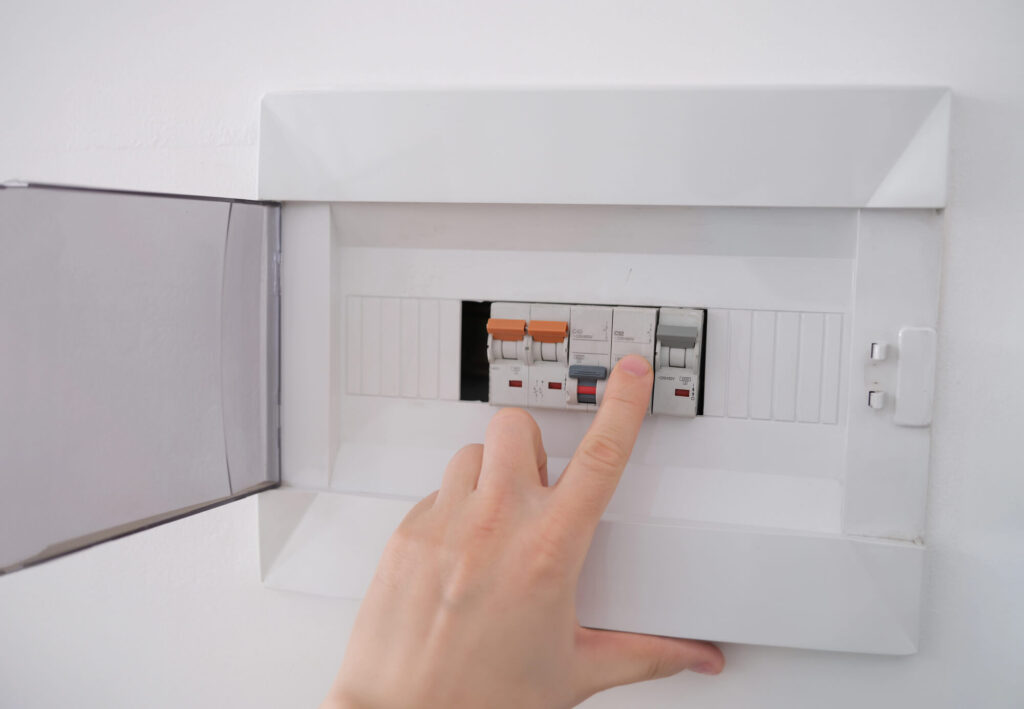
A circuit breaker that won’t reset is one of the more frustrating electrical problems a homeowner can face — especially when it leaves an important circuit without power. Understanding why a breaker won’t reset and knowing the right steps to take can help you resolve the issue safely or recognize when it’s time to call a licensed electrician.
⚡ Key Takeaways
- Circuit breakers trip and sometimes refuse to reset for several reasons.
- Step 1: Unplug all devices and turn off all appliances connected to the tripped circuit Step 2: Locate the tripped breaker — it will be in the middle position or slightly toward OFF Step 3: Push the breaker firmly to the full OFF position until you feel or hear a click Step 4: Push the breaker firmly back to the ON position Step 5: Reconnect devices one at a time to identify whether a specific device is causing the trip If the breaker trips again immediately after reset, stop.
- A breaker trips immediately after every reset attempt You cannot identify any overload source on the circuit The breaker feels hot or shows any signs of burning or melting Multiple
Why Won’t My Breaker Reset?
Circuit breakers trip and sometimes refuse to reset for several reasons. The key is identifying which situation applies before attempting to restore power.
The Circuit Is Still Overloaded
If you try to reset a breaker immediately after it trips without removing the load that caused it to trip, it will trip again right away. Breakers won’t hold in the reset position if the fault condition still exists on the circuit. Unplug devices or turn off appliances on that circuit before attempting to reset.
There Is a Short Circuit or Ground Fault
A short circuit (hot wire touching neutral or ground) or ground fault (current leaking to ground through an unintended path) — both identified by the U.S. Consumer Product Safety Commission (CPSC) as leading causes of home electrical fires — will cause a breaker to trip and refuse to reset as long as the fault is present. This is the breaker doing exactly what it’s designed to do. A licensed electrician must identify and repair the fault before the breaker can be safely reset.
The Breaker Is Faulty or Worn Out
Circuit breakers are mechanical devices with a limited number of trip-and-reset cycles. An old or damaged breaker may trip and not reset properly even when there is no fault on the circuit. If a breaker trips for no apparent reason and won’t reset, the breaker itself may need replacement.
The Breaker Was Tripped Too Hard
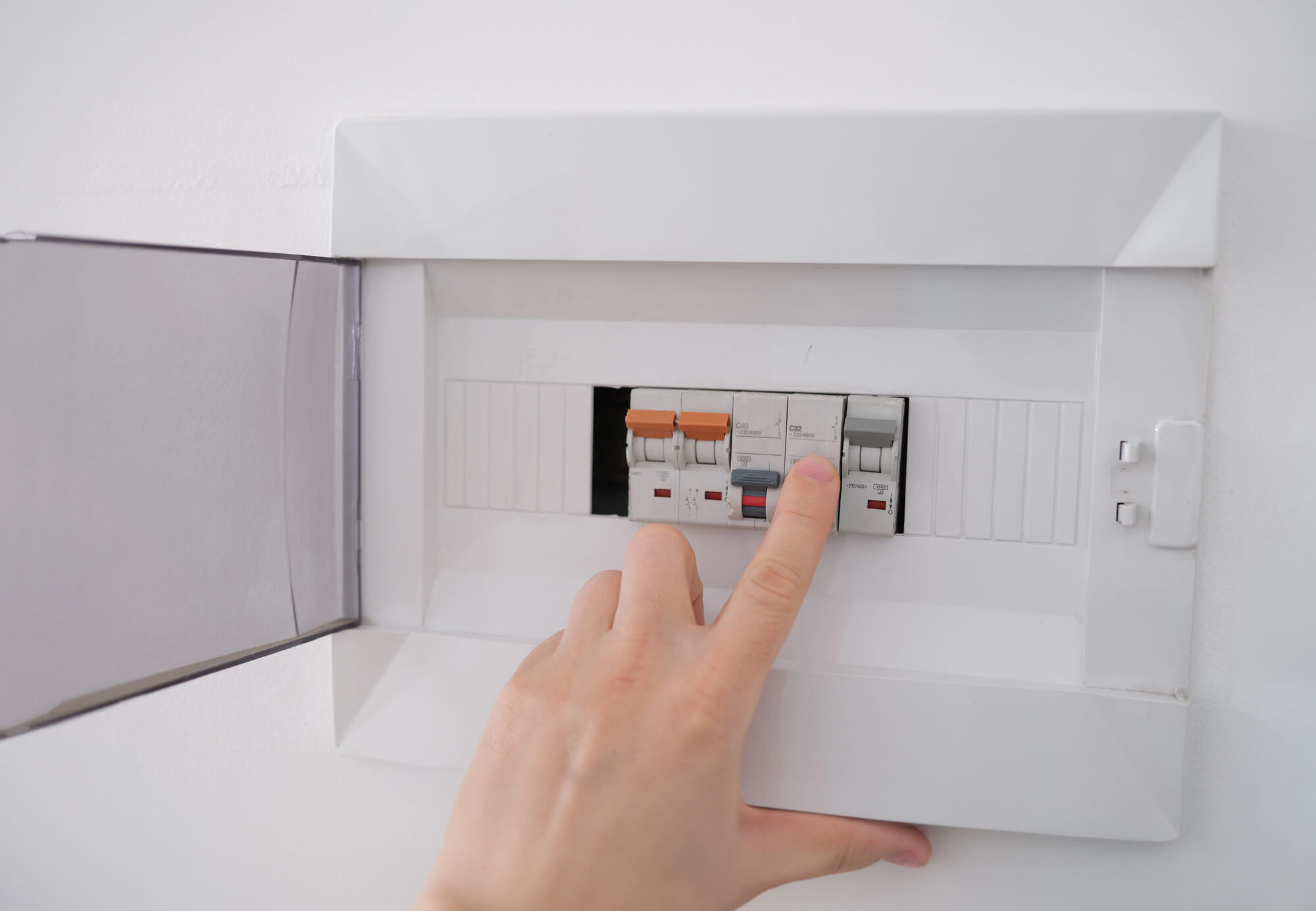
Some breakers require a specific reset sequence: fully to the off position first, then back to on. If a breaker is only pushed partway to off before being flipped to on, it may not reset correctly. Follow the manufacturer’s reset procedure — usually: push firmly to OFF until you feel it click, then push to ON.
 electrical panel” />
How to Reset a Tripped Breaker Correctly
- Step 1: Unplug all devices and turn off all appliances connected to the tripped circuit
- Step 2: Locate the tripped breaker — it will be in the middle position or slightly toward OFF
- Step 3: Push the breaker firmly to the full OFF position until you feel or hear a click
- Step 4: Push the breaker firmly back to the ON position
- Step 5: Reconnect devices one at a time to identify whether a specific device is causing the trip
If the breaker trips again immediately after reset, stop. There is likely a short circuit or ground fault that requires professional diagnosis.
When Not to Keep Resetting a Breaker
Repeatedly resetting a breaker without identifying the root cause bypasses the protection the breaker provides. If a breaker trips more than once in a short period, or trips immediately after reset, do not continue to reset it. Call a licensed electrician to diagnose the fault.
A breaker that won’t reset during an emergency needs immediate action — our emergency electricians and panel team can help now.
When to Call a Licensed Electrician
Call an electrician when:
- A breaker trips immediately after every reset attempt
- You cannot identify any overload source on the circuit
- The breaker feels hot or shows any signs of burning or melting
- Multiple breakers are tripping at the same time
- The breaker won’t hold in the ON position at all
- There is a burning smell from the panel
Upgrading Your Electrical Panel for Recurring Issues
If a breaker trips repeatedly even after the overloaded circuit is addressed, or if multiple breakers trip frequently, the problem may be with the panel itself or the electrical service capacity. Older homes often have 100-amp service, which is increasingly insufficient for modern electrical demands. Air conditioning, large appliances, electric water heaters, and EV charging all draw substantial power. If your home’s total capacity is constantly exceeded, you’ll face chronic tripping breakers and potential safety issues.
Panel upgrades to 150-amp or 200-amp service are common for homes experiencing these problems. During the upgrade, a licensed electrician will install a new main panel (or a subpanel if upgraded capacity is only needed in one area), upgrade the service entrance wiring to the utility meter, and re-circuit loads to balance power consumption. This is one of the most expensive residential electrical projects—often $3,000 to $5,000—but it’s necessary if your home’s electrical demand exceeds its capacity.
Beyond capacity, panels age and deteriorate. Some older breaker types—particularly Federal Pacific Electric (FPE) and Zinsco panels—are no longer recommended by insurance companies and electricians due to documented safety issues. If your home has one of these panels, replacing it entirely is advisable, regardless of whether you’re experiencing immediate problems. Insurance companies may refuse to insure homes with these panels, and they are a known fire risk. Upgrading to a modern panel is a proactive step that improves safety, ensures code compliance, and protects your home’s insurability.
Frequently Asked Questions
Can a breaker wear out over time?
Yes. Circuit breakers are rated for a finite number of trip cycles and degrade over time. Breakers in homes 20+ years old that trip frequently may be nearing the end of their service life and should be inspected and replaced by a licensed electrician.
Is it dangerous to leave a tripped breaker in the off position?
No — a tripped or off breaker simply means that circuit has no power. It’s safe to leave it off while waiting for an electrician. Do not attempt to force the breaker into the ON position if it won’t hold there.
Can a faulty appliance cause a breaker to not reset?
Yes. A short circuit or ground fault inside an appliance will hold the breaker in the tripped state as long as the appliance is plugged in. Unplug all devices on the circuit and try resetting. If it holds, plug devices back in one at a time to find the faulty one.
How much does it cost to replace a circuit breaker?
A single breaker replacement typically costs $150 – $300 for a standard breaker, or $200 – $400 for an AFCI or GFCI breaker, including labor. The electrician will also inspect the circuit for any underlying fault.