
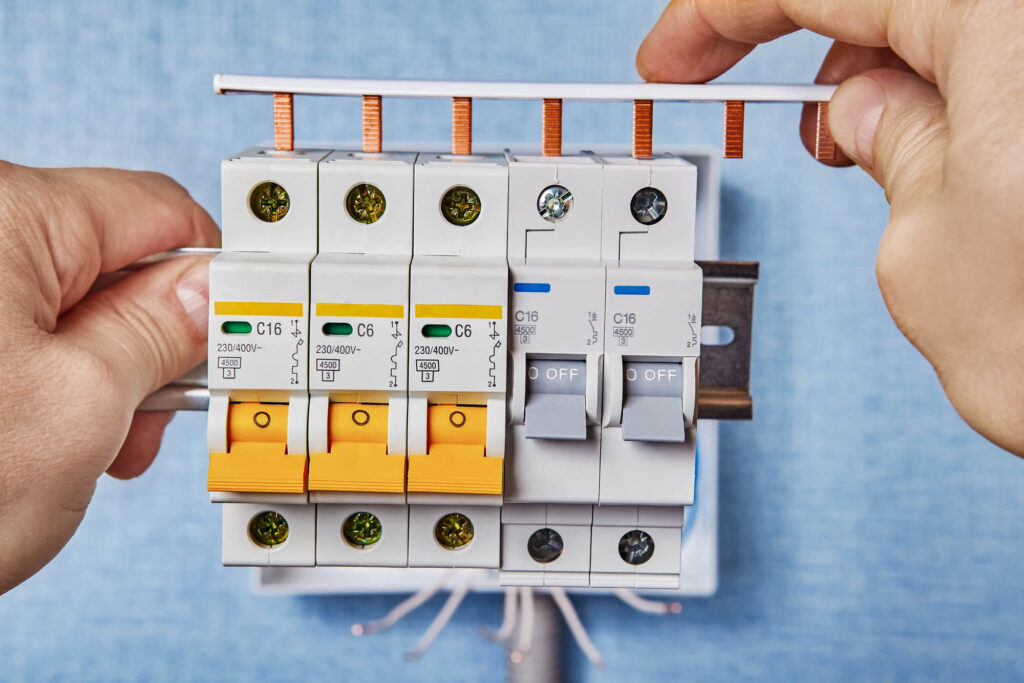
A circuit breaker replacement looks deceptively simple — you open the panel, pull out the old breaker, snap in a new one. But there’s one critical difference between this and other electrical work: even when you switch off the main breaker, the bus bars (the thick copper rails the breakers connect to) remain live at full mains voltage. That’s 120/240V in the US or 230V in the UK — lethal voltage — accessible inside the panel you’re working in. This guide explains the risks and what your options are.
⚡ Key Takeaways
- Switching off the main breaker does NOT de-energise the main bus bars in the panel — they remain live at full voltage.
- In the US, homeowners can legally replace breakers in some states; in the UK, consumer unit work must be done by a qualified electrician.
- If you choose to proceed, only work with insulated tools, ensure adequate lighting, and never touch the main service conductors.
Why This Is Different From Other DIY Electrical Work
When you switch off a circuit breaker, the wiring on that circuit becomes de-energised. When you switch off the main breaker, all the branch circuit breakers lose power. But the main bus bars — the thick conductors that run vertically through the centre of the panel — remain live at all times. They’re connected directly to the utility service entrance, which you cannot switch off from inside the panel.
Working near live bus bars with metal tools, in an enclosed metal box, with your face at the same level as lethal voltage requires training, correct tools, and respect for what can go wrong. One slip can be fatal.
Legal Position
In the US: replacing a circuit breaker is legal for homeowners in most states, though a permit and inspection may be required. The limiting factor is practical safety, not legal prohibition.
In the UK: work inside a consumer unit is classified as notifiable electrical work under Part P. It must be carried out by a qualified electrician registered with a competent person scheme, or be inspected and certified by Building Control. This is a legal requirement, not a recommendation.
What an Electrician Does That Makes It Safer
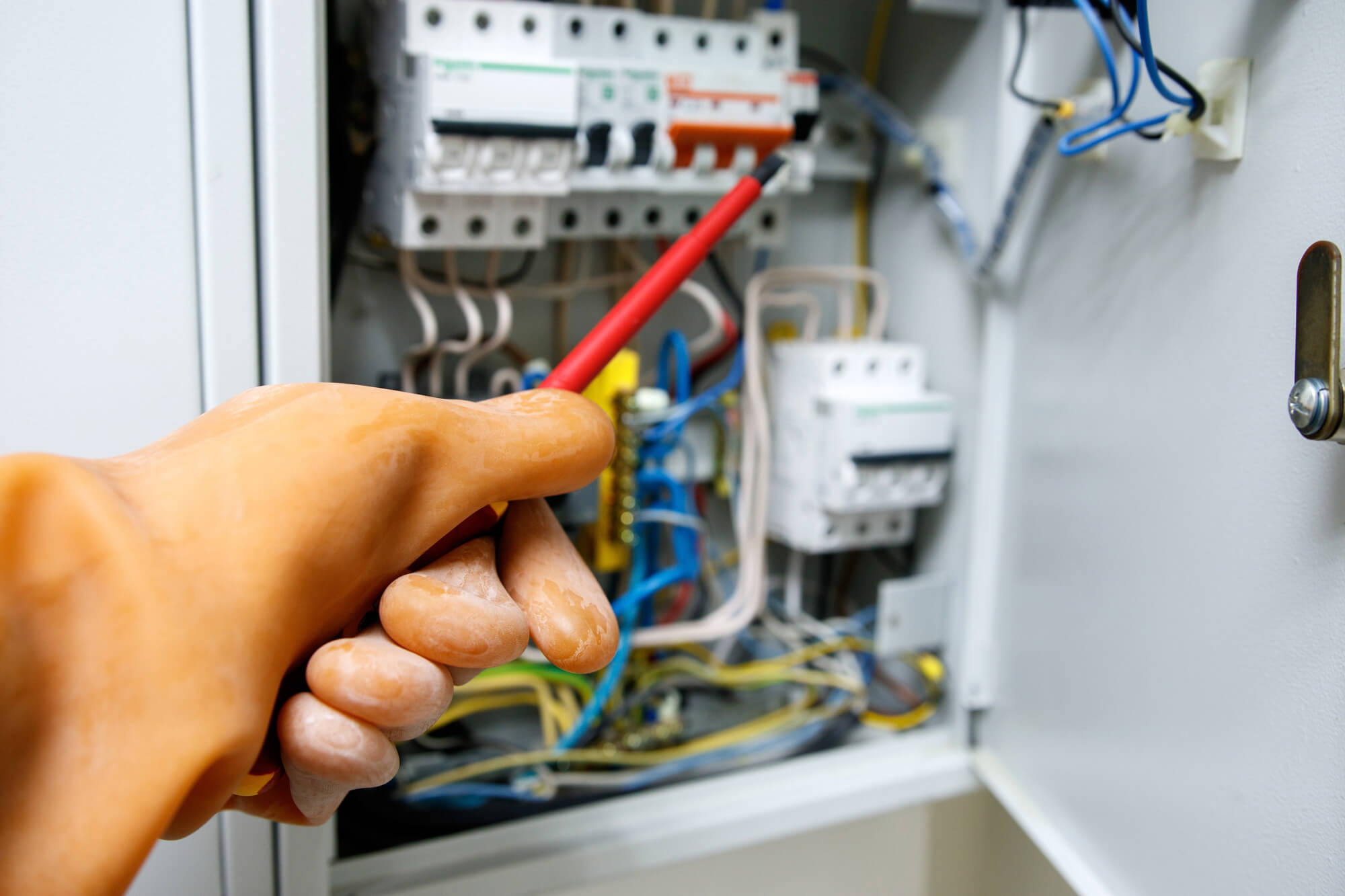
A qualified electrician works with insulated tools rated for live working, wears appropriate PPE, and knows to keep insulated covers in place over the main bus bar section while working. They also correctly identify the failed breaker (sometimes a breaker that appears to be tripping is actually a panel fault, not a breaker fault), and ensure the replacement is the correct type and rating for the panel brand.
Brand Compatibility: A Key Technical Point
Circuit breakers are not universally interchangeable. Most panel manufacturers require use of their own branded breakers — Siemens in a Siemens panel, Square D in a Square D panel, and so on. Using an off-brand breaker can create poor contact with the bus bar, generating heat and a potential fire hazard. An electrician ensures the correct breaker is used.
Breaker needs replacing? Our qualified electricians carry common breaker types and can replace yours safely.
What Replacing a Circuit Breaker Actually Involves
Replacing a circuit breaker requires opening your electrical panel — a task with inherent high-voltage risks. Inside the panel, the bus bars remain live even when the main breaker is off. The service entrance wires — the large cables entering from the utility meter — are always live and cannot be shut off by any breaker in the panel. These wires can deliver lethal current at all times.
Even experienced DIYers who can safely replace outlets and switches should carefully assess their comfort level before opening a panel. The consequences of a mistake — a dropped tool, an accidental contact, a misidentified wire — can be fatal.
Legal Considerations
In the US, homeowner electrical work is regulated at the state and local level. Many jurisdictions allow licensed homeowners to perform their own electrical work with appropriate permits, but some specifically require licensed electricians for panel work. In the UK, work on consumer units must be carried out by a Part P-certified electrician. Before starting, check your local electrical permit requirements.
When a Breaker Replacement Is Necessary
Not every tripping breaker needs replacement. Most breakers trip because of overloaded circuits or temporary faults — reset and reduce the load. A breaker genuinely needs replacement when it: trips at loads well below its rated amperage, feels hot or shows heat damage, won’t hold in the on position, or makes buzzing sounds when the circuit is lightly loaded. Always replace with an identical manufacturer and model wherever possible.
Cost of Professional Breaker Replacement
A licensed electrician can typically replace a single circuit breaker in 30–60 minutes. Cost ranges from $100–$250 including labour and the breaker itself. If the panel is old and breakers for it are no longer manufactured, or if the panel shows signs of age or damage, the electrician may recommend a full panel replacement — a $1,500–$4,000 job that provides both safety and increased capacity.
Warning Signs Your Circuit Breaker Needs Professional Replacement
Knowing when a circuit breaker truly requires professional attention helps you avoid dangerous DIY mistakes. Several warning signs indicate your breaker is failing and needs an electrician’s expertise. If your breaker trips repeatedly even when you haven’t added new appliances or increased load, the breaker itself may be faulty—not your electrical system. A breaker that won’t reset after being switched back to the ON position is another red flag; this means the internal mechanism is broken and you cannot safely operate it yourself.
Additional danger signals include breaker handles that feel loose or move without clicking into place, visible scorch marks or discoloration on the panel around the breaker, a burning smell coming from the electrical panel, or flickering lights throughout your home when a specific breaker trips. Water damage around the panel, corrosion on the breaker contacts, or signs that the breaker was previously installed incorrectly all require professional intervention. Licensed electricians have diagnostic tools to test breakers under load and determine whether replacement or panel servicing is needed. They also ensure your replacement breaker is identical in amperage and type—mixing breaker brands or specifications can create safety hazards that aren’t immediately obvious.
Frequently Asked Questions
How much does it cost to have a breaker replaced by an electrician?
A single circuit breaker replacement typically costs $75–$200 in the US, including labour and the breaker itself. In the UK, the cost is usually £80–£150. AFCI or GFCI breakers cost more due to the component cost. If the panel itself is the cause of repeated breaker failures, a panel replacement may be recommended.
Can I switch off the electricity to the whole panel from the meter?
In some cases — particularly if you have a separate meter isolator switch — you can de-energise the panel completely. However, the incoming service cables from the street remain live regardless. Even with a meter isolator off, the wiring up to the meter is still at full mains voltage. Only the utility company can fully de-energise the incoming supply.
How do I know if a breaker needs replacing vs resetting?
If a breaker trips once and resets normally, it likely tripped due to an overload or brief fault — not a breaker failure. A breaker that trips immediately on reset, trips under normal load with no obvious cause, or that physically feels different (loose, won’t stay in position) may have failed internally and need replacing. An electrician can confirm with testing.