
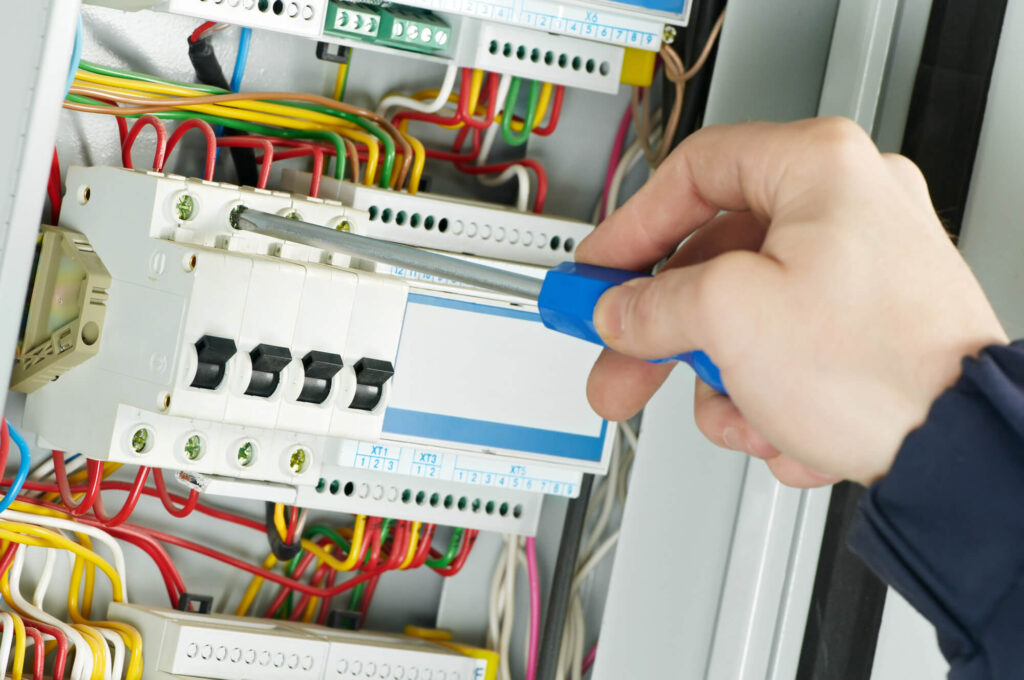
A subpanel (also called a sub-panel or secondary panel) extends your home’s electrical capacity by adding additional circuit breaker slots fed from the main panel. Whether you’re finishing a basement, adding a workshop, or expanding a garage, a subpanel is often the most cost-effective solution.
Contents
⚡ Key Takeaways
- Subpanel installation typically costs $500–$1,500 depending on size and location
- A subpanel is the right choice when your main panel is full or when adding power to a detached structure
- Common subpanel sizes: 60A, 100A, and 125A — size determines capacity and cost
- The main panel must have enough capacity to support the subpanel feed breaker
- All subpanel work requires permits and inspection — this is mandated by the National Electrical Code (NFPA 70) by a licensed electrician
Average Cost to Install a Subpanel
Subpanel installation costs vary significantly by size, location, and complexity:
- 60A subpanel (garage/workshop): $500–$900
- 100A subpanel (basement/addition): $700–$1,200
- 125A–200A subpanel (large addition/detached): $1,000–$2,000+
- Detached structure (underground conduit run): $1,500–$4,000+

When Do You Need a Subpanel?
Main Panel Is Full
If your main panel has no available breaker slots and you need to add circuits, a subpanel is often more economical than replacing the entire main panel. A subpanel feed takes one double-pole breaker slot in the main panel and creates 12–24+ new circuit slots.
Detached Structures
Adding power to a detached garage, workshop, shed, or guest house almost always requires a separate subpanel. Running individual circuits from the main house is code-prohibitive for multiple circuits. A single large feed to a subpanel in the structure is the correct approach.
Basement or Addition Buildout
A basement finish or home addition with multiple rooms, a bathroom, workshop, and entertainment area benefits from a dedicated subpanel. This localizes the breakers for that area and avoids overloading the main panel.
Factors That Affect Cost
Subpanel Amperage
Larger subpanels require larger feed wire (heavier gauge, more expensive) and a larger breaker in the main panel. A 60A subpanel uses 6-gauge wire; a 100A uses 4-gauge or 2-gauge; 200A requires 2/0 or 4/0 wire — significantly more expensive per foot.
Distance from Main Panel
Every additional foot of heavy feeder wire adds material and labor cost. An attached garage 20 feet from the main panel is far less expensive than a detached workshop 100 feet away requiring underground conduit.
Underground vs. Surface Run
Detached structures require underground conduit — adding trenching, conduit, and direct burial wire costs. Expect $10–$25 per linear foot for the underground portion alone.
Permits and Code Requirements
Subpanel installation is always a permitted project. Your electrician handles the permit and coordinates inspection. Detached structure feeds have additional requirements including a grounding electrode system at the subpanel location and proper disconnect means. Ensure your electrician is familiar with local code requirements.
Does My Main Panel Have Enough Capacity?
Before installing a subpanel, your electrician will assess whether the main panel can support the feed breaker. If your main panel is already near its rated capacity (common in older 100A service homes), a service upgrade may be needed before a subpanel can be added. Service upgrades typically cost $1,500–$3,500.
Frequently Asked Questions
How much does it cost to install a subpanel?
A subpanel installation typically costs $500–$1,500 for an attached location (garage, basement). Detached structures requiring underground runs can cost $1,500–$4,000+ depending on distance and site conditions.
What size subpanel do I need?
For a 2-car garage or workshop, a 60A–100A subpanel is usually sufficient. For larger additions or structures with HVAC, EV chargers, or heavy equipment, 125A–200A may be needed. Your electrician can size the subpanel based on your load calculation.
Can I install a subpanel myself?
Subpanel work involves your main electrical panel and 240V feeder circuits — it’s not a DIY project. Permits and inspections are required. Always hire a licensed electrician for subpanel installation.
How long does subpanel installation take?
A straightforward attached subpanel installation takes 4–8 hours. Detached structure installations with trenching can take 1–2 days or more depending on distance and site conditions.
Do I need a subpanel or a panel upgrade?
A subpanel is appropriate when you need additional circuit capacity in a specific area or have a full panel with room for one more double-pole breaker. If your main panel is aged, undersized, or at capacity with no room for a feed breaker, a full panel upgrade may be the better investment.