
Electrical fires are responsible for tens of thousands of home fires in the US each year — and most of them are preventable. The key is recognizing warning signs before a fire starts. Unlike a burst pipe or broken appliance, electrical problems often develop silently inside walls and panels before becoming dangerous. This guide covers the most important electrical fire warning signs every homeowner should know.
Contents
- 1 Frequently Tripping Circuit Breakers
- 2 Burning Smell From Outlets, Switches, or Panel
- 3 Discolored or Scorched Outlets and Switch Plates
- 4 Flickering or Dimming Lights
- 5 Sparks From Outlets or Switches
- 6 Buzzing or Crackling Sounds
- 7 Hot Outlets, Switches, or Panel
- 8 Old or Ungrounded Wiring
- 9 What to Do If You Notice These Warning Signs
- 10 Frequently Asked Questions
⚡ Key Takeaways
- An occasional tripped breaker isn’t unusual, but if the same breaker trips repeatedly — especially under normal loads — it’s a warning sign.
- Any burning smell near an outlet, switch, or electrical panel is a serious warning sign of overheating wiring, melting insulation, or an arc fault in progress — the U.S. Consumer Product Safety Commission (CPSC) reports arc faults cause over 28,000 home fires annually.
- Black marks, discoloration, or melted plastic around an outlet or switch plate indicate that arcing or overheating has already occurred at that location.
Frequently Tripping Circuit Breakers
An occasional tripped breaker isn’t unusual, but if the same breaker trips repeatedly — especially under normal loads — it’s a warning sign. Breakers trip to protect wiring from overheating. Repeated trips mean the circuit is regularly drawing more current than it should, which stresses the wiring and breaker. A licensed electrician can determine whether the circuit is overloaded, the breaker is faulty, or a wiring problem exists.
Burning Smell From Outlets, Switches, or Panel
Any burning smell near an outlet, switch, or electrical panel is a serious warning sign of overheating wiring, melting insulation, or an arc fault in progress. These are fire precursors — not normal operating smells. Turn off power to the area and call a licensed electrician immediately.
Discolored or Scorched Outlets and Switch Plates
Black marks, discoloration, or melted plastic around an outlet or switch plate indicate that arcing or overheating has already occurred at that location. Do not use the outlet and do not ignore this sign — it indicates damaged wiring behind the wall that requires immediate inspection.
Flickering or Dimming Lights
Lights that flicker or dim when appliances turn on can indicate overloaded circuits, loose connections, or inadequate electrical service. While occasionally caused by utility fluctuations, persistent flickering — especially from multiple fixtures — suggests a wiring or panel issue that warrants professional assessment.
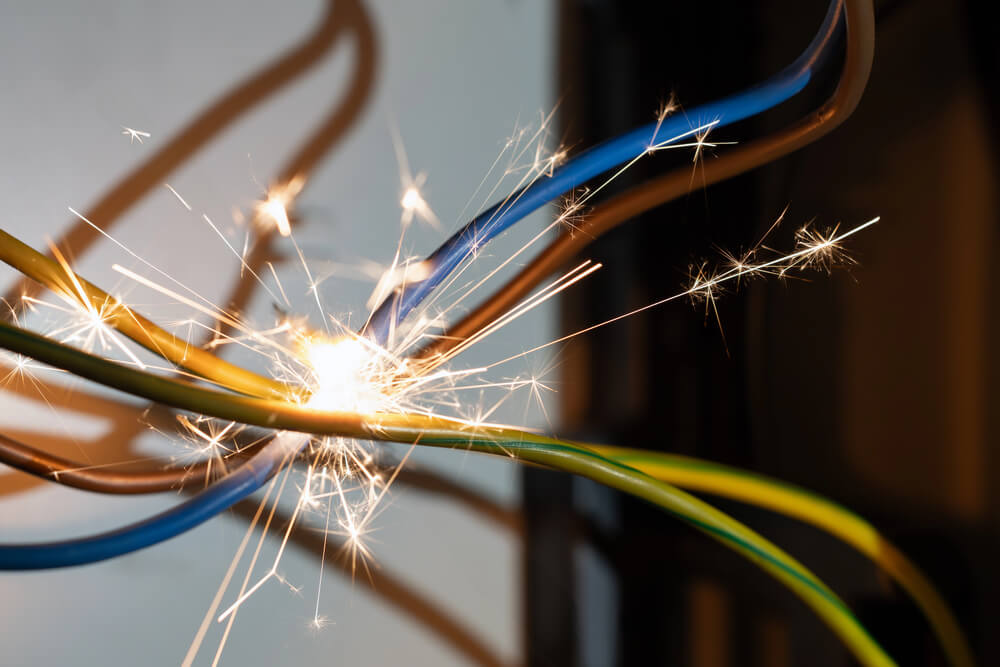
Sparks From Outlets or Switches
A brief spark when plugging in a device can be normal — it’s caused by the sudden rush of current. However, large sparks, sparks that are accompanied by a popping sound, or sparks from an outlet when nothing is being plugged in indicate a serious problem. This includes arcing inside the outlet box, a failing outlet, or deteriorating wiring.
Buzzing or Crackling Sounds
Electricity should flow silently. Buzzing, crackling, or sizzling sounds from outlets, switches, or the electrical panel indicate electrical arcing or loose connections — both of which are direct fire hazards. These sounds require immediate professional attention.
Hot Outlets, Switches, or Panel
Outlets and switch plates should never be warm or hot to the touch during normal use. Heat indicates that too much current is flowing through connections that can’t handle it — a condition that can ignite surrounding materials. A warm electrical panel is particularly serious and requires immediate electrician inspection.
Old or Ungrounded Wiring
Homes with knob-and-tube or aluminum wiring, or outlets that accept only two-prong plugs (ungrounded), have wiring systems that don’t meet modern safety standards. These systems are more susceptible to overloading, arcing, and fire. An electrician can assess the safety of older wiring and recommend necessary upgrades.
Recognizing warning signs early can save lives. If you spot any of these red flags, our emergency electricians are available 24/7 to make your home safe.
What to Do If You Notice These Warning Signs
If you observe any of the warning signs above, take the following steps:
- Stop using the affected outlet, switch, or circuit
- Turn off the circuit at the breaker if safe to do so
- Do not attempt to diagnose or repair electrical wiring yourself
- Call a licensed electrician for inspection and repair
- If you see flames or smell smoke, evacuate immediately and call 911
Frequently Asked Questions
How do I know if my home’s wiring is a fire hazard?
Signs include two-prong outlets, aluminum wiring, knob-and-tube systems, a fuse box, or a recalled panel brand. An electrician can perform a full wiring inspection to identify hazards and recommend appropriate upgrades.
How often should I have my electrical system inspected?
Homes over 25 years old should be inspected by a licensed electrician every 10 years, or sooner if any warning signs appear. Homes being purchased, renovated, or upgraded with major appliances should be inspected before work begins.
Can electrical fires start inside walls without visible warning signs?
Yes. Arc faults and overheating can occur inside wall cavities or junction boxes with no visible external symptoms. AFCI breakers detect these hidden arc faults and trip before they can ignite surrounding materials — one reason AFCI protection is required in modern construction.
Is it safe to use an outlet that has tripped the breaker?
Reset the breaker once and try again. If it trips again immediately, stop using the circuit and call an electrician. Repeatedly resetting a tripping breaker bypasses the protection it provides and can lead to wiring damage or fire.