
If your home still has a fuse box rather than a circuit breaker panel, understanding the difference between the two can help you decide whether an upgrade is right for you. Both systems protect your home’s wiring from overloads — but they work differently and have very different implications for safety, capacity, and insurance coverage.
⚡ Key Takeaways
- A fuse box uses replaceable fuses to protect electrical circuits.
- A circuit breaker panel uses mechanical switches that trip automatically when a circuit is overloaded or a fault occurs.
- Reset method: Fuse boxes require replacing blown fuses; breaker panels reset with the flip of a switch Capacity: Most fuse boxes provide 60–100 amps; modern breaker panels offer 10
How a Fuse Box Works
A fuse box uses replaceable fuses to protect electrical circuits. Each fuse contains a thin metal filament — when too much current flows through a circuit, the filament melts and breaks the connection, stopping the flow of electricity. Once a fuse blows, it must be replaced. Fuse boxes were standard in homes built before the 1960s and many homes built up to the 1970s.
How a Breaker Panel Works
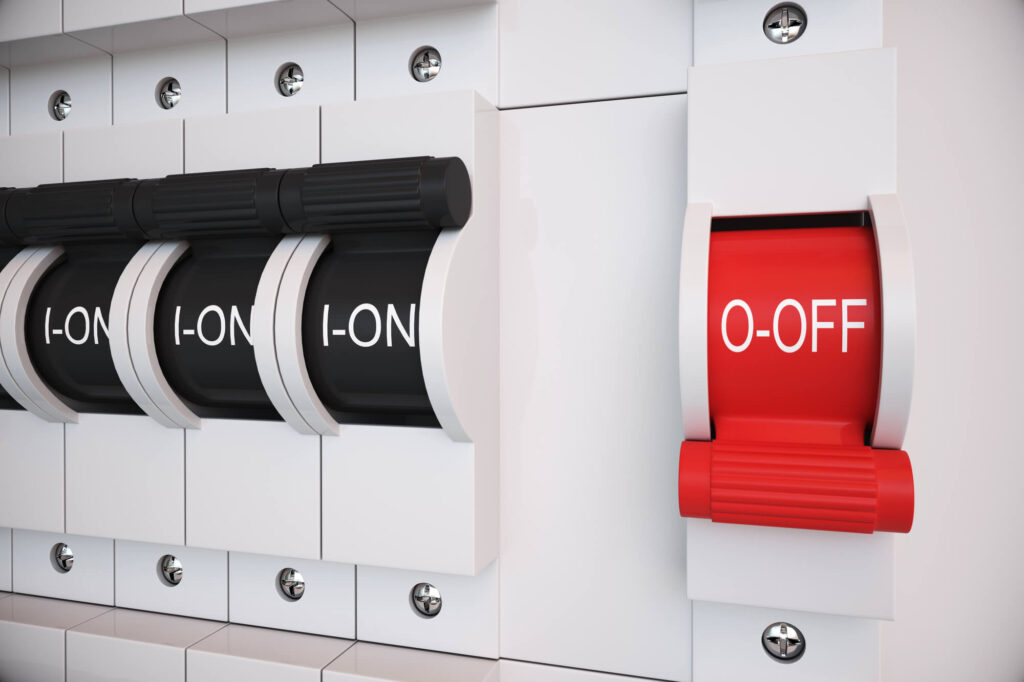
A circuit breaker panel uses mechanical switches that trip automatically when a circuit is overloaded or a fault occurs. Instead of replacing a blown fuse, you simply reset the tripped breaker by flipping it back to the “on” position. Breaker panels became the industry standard beginning in the 1960s and are used in all new residential construction today.
Key Differences: Fuse Box vs. Breaker Panel
- Reset method: Fuse boxes require replacing blown fuses; breaker panels reset with the flip of a switch
- Capacity: Most fuse boxes provide 60–100 amps; modern breaker panels offer 100–400 amps
- Safety features: Breaker panels support GFCI and AFCI protection; fuse boxes do not
- Oversize risk: Fuse boxes tempt homeowners to install larger fuses than circuits are rated for, removing overload protection
- Insurance: Many insurers charge higher premiums or refuse to cover homes with fuse boxes
- Code compliance: Fuse boxes are not code-compliant for new installations or most renovation permits
Is a Fuse Box Dangerous?
A fuse box itself is not inherently dangerous if the correct fuses are used and the box is properly maintained. The risk comes from oversized fuses — if someone installs a 30-amp fuse on a 15-amp circuit, the circuit wiring can overheat and start a fire before the fuse ever blows. Additionally, fuse boxes are designed for much lower electrical loads than modern homes require, making overloads more likely.
When to Upgrade from Fuse Box to Breaker Panel
You should strongly consider upgrading from a fuse box to a breaker panel when:
- Your home insurance carrier is charging a surcharge or refusing coverage
- You’re renovating or adding circuits and need permit approval
- You want to add a Level 2 EV charger, air conditioning, or other high-draw appliance
- Fuses are blowing repeatedly under normal household usage
- You’re buying or selling a home where the fuse box is flagged by inspectors
Still running on a fuse box? Our panel upgrade specialists can convert your system to a modern breaker panel — improving safety, capacity, and resale value.
Cost to Upgrade from Fuse Box to Breaker Panel
Replacing a fuse box with a modern 200 amp breaker panel typically costs $1,500 – $3,500 all-in, including the new panel, labor, permits, and utility coordination. Homes with outdated wiring may require additional rewiring work, increasing the total cost — the U.S. Consumer Product Safety Commission (CPSC) identifies outdated electrical systems as a significant fire risk.
Upgrading from Fuses to Circuit Breakers: Cost & Timeline
Homes with fuse boxes are significantly older — fuse technology dominated residential electrical design through the 1960s and early 1970s. Most insurance companies and modern lending institutions now require fuse panel upgrades before approving mortgages or issuing homeowners policies, making this upgrade virtually mandatory for older home sales or renovations. A full panel replacement from fuses to a modern 100-amp or 200-amp breaker panel typically costs $1,500–$3,000 for labor and materials, plus an additional $200–$500 for electrical permits and inspections.
The installation process takes 4–8 hours depending on the complexity of existing wiring and whether the utility service entrance needs updating. Your home will need to be de-energized during the work, so plan for the project during daylight hours when an electrician can complete it. If your fuse box is in a basement or crawlspace with inadequate clearance, additional work to relocate the panel may add $500–$1,500 to the total cost. Modern breaker panels come with 20–30 years of manufacturer warranty, so this upgrade is a one-time investment in safety and code compliance.
Safety Risks of Fuse Boxes & Expedited Replacement Scenarios
Beyond functionality, fuse boxes carry physical safety hazards that circuit breaker panels eliminate. Fuse cartridges generate heat and occasionally explode or ignite when a short circuit occurs — this creates flash hazards and can cause burns or eye injuries. Many fuse boxes lack adequate labeling of circuits, leading homeowners to install oversized fuses in wrong positions, bypassing safety protections entirely. Even experienced electricians may be uncomfortable servicing antique fuse panels due to corrosion, missing neutral buses, or non-standard design.
If your home has aluminum wiring, a fuse panel should be replaced immediately — aluminum and copper connections at fuse terminals corrode rapidly and create fire hazards. Similarly, if you’ve experienced repeated blown fuses, need to add circuits for new appliances, or are planning a major renovation (kitchen remodel, adding circuits for EV charging), upgrading to a breaker panel is the appropriate time. Some municipalities now ban fuse box repairs entirely, requiring full panel replacement for any electrical work — check your local building code before scheduling repairs.
Insurance and Financing Implications of a Fuse Box
Home insurance companies are increasingly reluctant to insure homes with fuse boxes. Many major insurers, including State Farm and Allstate, either charge significantly higher premiums for properties with outdated fuse-based electrical systems or outright refuse to issue policies. Insurance underwriters view fuse boxes as a liability because they lack the modern safety features of circuit breakers—specifically the inability to protect against arc faults and ground faults. If your home has a fuse box, you may face premiums 15–30% higher than comparable homes with modern panels, or in some cases, insurers will require a panel upgrade as a condition of coverage. This makes the insurance implications nearly as significant as the technical and safety concerns.
Beyond insurance, a fuse box significantly impacts home sale negotiations and property value. A typical fuse-to-breaker panel upgrade costs $1,500–$4,000 depending on amperage, wiring condition, and local labor rates, but the investment often proves worthwhile. Buyers frequently demand discounts of $3,000–$8,000 when they discover a fuse box during home inspection, anticipating the upgrade cost they’ll need to absorb. Some buyers may walk away entirely if the home doesn’t meet current electrical codes. Upgrading before listing can recoup much of the investment through faster sales and higher sale prices, especially in competitive markets. Additionally, modern breaker panels may qualify for small insurance discounts (typically 5–10%) due to improved safety features, which offset a portion of the upgrade cost over time.
Frequently Asked Questions
Can I keep my fuse box if it’s working fine?
You can continue to use a functioning fuse box if correct fuses are installed and it meets your current electrical load. However, upgrading to a breaker panel is strongly recommended for safety, insurance coverage, capacity, and code compliance.
Will my home insurance be affected by a fuse box?
Yes. Many insurers charge higher premiums for homes with fuse boxes or require replacement as a condition of coverage. Contact your insurer to understand your specific situation.
Is it expensive to convert from fuses to breakers?
A standard fuse box to 200 amp breaker panel conversion costs $1,500 – $3,500 in most markets. This is a one-time investment that can lower your insurance premiums, increase your home’s value, and improve electrical safety.
Do I need a permit to replace a fuse box?
Yes, in virtually every jurisdiction. Panel replacement requires a permit and inspection. A licensed electrician will handle the permit process on your behalf.