
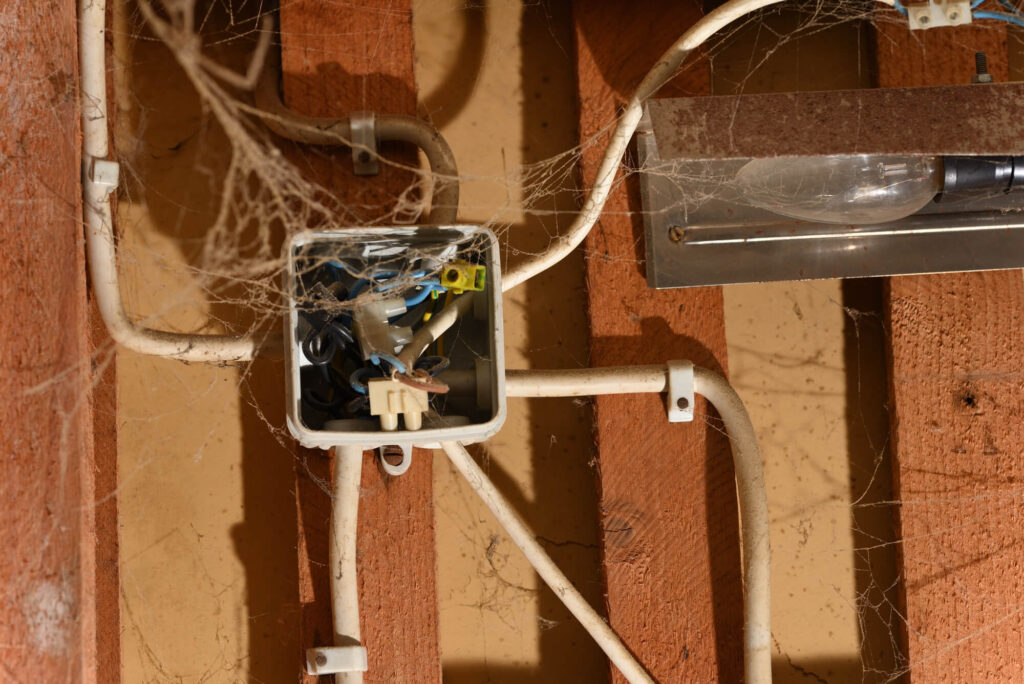
A full rewire is one of the more disruptive but necessary electrical projects a homeowner can undertake. Understanding how long it will take — and why — helps you plan effectively. The timeline varies significantly based on house size, accessibility, and whether the property can remain occupied during work.
⚡ Key Takeaways
- A full house rewire typically takes 3–6 weeks, depending on property size and complexity.
- Most of the time is spent routing cables through walls and ceilings, installing junction boxes, and testing.
- The pace slows significantly if the property is occupied or if walls must be opened and closed cosmetically.
Timeline by House Size
One-Bedroom Flat or Small House
A small property with simple layout and accessible cavities can be rewired in 1–2 weeks. Expect additional time if cosmetic redecoration is needed.
Three-Bedroom House
The most common project, typically taking 3–4 weeks. This assumes relatively straightforward routing and good access to wall cavities.
Four-Five Bedroom House
Expect 4–6 weeks. Larger properties have more circuits, longer cable runs, and more junction boxes to install and test.
Large Period Property or Unusual Layout
Historic homes, period properties with thick walls, or properties with difficult cable routing (plaster, stone, complex geometry) can take 6–10 weeks or longer.
What Slows Down a Rewire?
Wall and Ceiling Access
If cables must be run through cavity walls and solid plaster, the electrician will need to chase (cut grooves in) the walls to lay cable. Chasing thick brick or stone is slow — sometimes just a foot or two per hour. Surface-mounted trunking is faster but less aesthetic.
Occupation During Rewire
Rewiring an occupied property is slower and more disruptive. The electrician works around your presence, seals dust, and takes care not to disturb your daily life. An empty property can be worked on more aggressively.
Redecoration
If the property requires making good and redecorating after chasing walls, add 1–2 weeks for plastering, sanding, and painting.
Testing and Certification
After installation, the full electrical system must be tested and certified (EICR). This can take 1–2 days and is essential for insurance and legal compliance.

Typical Rewire Timeline
Week 1: Disconnect old wiring and survey property for cable routing. Install consumer unit and main earth connection.
Week 2: Install junction boxes and chase walls for new cable. Begin cable installation in main areas.
Week 3: Complete cable installation. Install outlets, switches, and light fittings. Begin testing.
Week 4: Complete testing and remedy any faults. Make good on walls. Begin cosmetic redecoration if needed.
Weeks 5+: Redecoration and snagging work.
Can You Speed Up a Rewire?
Some things can be accelerated — surface-mounted trunking instead of wall chasing, simpler routing, or working around the clock with multiple electricians. However, testing cannot be rushed; the full electrical certification must be thorough. Rushing safety testing puts you at risk.
What Happens During a Rewire
A full rewire involves systematically replacing all electrical wiring, circuit breakers, outlets, switches, and light fixtures. Electricians start by mapping the existing installation and planning new cable routes. They remove old wiring (typically by pulling it out through walls or conduit), install new cables to code, connect them to a new consumer unit (breaker box), and fit new sockets and switches. The process requires cutting access points in walls and ceilings, running cables through studs and cavities, making connections in junction boxes, testing all circuits, and finally applying for an inspection and Electrical Installation Certificate. Modern installations include proper grounding, GFCI protection where required, and adequate circuit separation — significantly safer than older installations.
Factors Affecting Timeline
Property size: A 1-bedroom flat may take 5–7 days; a 3-bedroom house typically 10–14 days; a 5+ bedroom property 3–4 weeks. Access difficulty: Properties with suspended timber floors allow easier cable routing and are faster. Solid concrete floors, complicated roof structures, or listed buildings with conservation restrictions slow the work. Occupancy during work: An empty property is fastest; working around tenants or family requires extra time for safety barriers and evening/weekend work. Existing infrastructure: If the consumer unit location needs moving, external supply work is required (adds 2–5 days). Inspection delays: If the local authority inspector isn’t immediately available, the project may be paused waiting for a sign-off appointment.
Minimising Disruption
Plan the project during a time when you can be absent if possible — full rewires generate noise, dust, and restrict access to affected areas. Discuss staging with your electrician: working room by room allows you to use some circuits while others are offline. Confirm whether the work requires you to vacate the property entirely (if so, arrange accommodation). Protect furniture and belongings by closing off work areas with plastic sheeting. Arrange for the water company and gas provider to mark underground services before any external digging. Confirm inspection dates in advance so you’re not surprised by delays or tight deadlines.
What to Expect After the Rewire
After the rewire is complete and certified, you’ll have brand-new electrical infrastructure with a full warranty (typically 5–10 years on materials and labour). Your home will be safer: GFCI outlets in wet areas, AFCI breakers in bedrooms and living areas, proper grounding, and correct circuit distribution. Appliances will operate more reliably without voltage fluctuations. Your insurance company may offer a small premium discount for having a new, certified installation. You’ll also have redecoration work: patched drywall, repainted surfaces, and possibly minor structural repairs from cable routing. Most electricians include basic making-good in the quote, but major redecoration is typically a separate cost. Keep your Electrical Installation Certificate — you’ll need it for home sales, insurance claims, or future work permits.
Rewiring Timeline Factors: Old vs. Modern Construction Methods
The time required to rewire a house varies dramatically depending on construction style and existing infrastructure. Homes built with wood frame construction (most residential homes in the United States) are faster to rewire than masonry or concrete-block structures because electricians can fish new wires through wall cavities and along framing members. Older homes with balloon-frame construction (where studs run continuously from foundation to roof) are sometimes faster to rewire because vertical cavities are open, allowing wires to be dropped straight down to the basement and pulled up to the attic. Conversely, homes with finished walls, multiple layers of insulation, or plaster-over-brick construction require wall openings, wire pulling, and careful patching, extending timeline significantly. A 2,000-square-foot ranch home with a basement and accessible attic might take 3–4 weeks for a small team, while a 2,000-square-foot Victorian with finished basements, concrete block, and no attic could require 6–8 weeks. The availability of wall space for new circuits also affects timeline—if replacing old knob-and-tube wiring in a fully finished home, electricians may need to reroute all circuits, which requires opening walls, patching, and coordinating with other contractors for painting and repairs. Labor costs reflect this complexity: rewiring a small ranch home might cost $8,000–$12,000, while rewiring a larger Victorian or colonial with complex architecture could reach $20,000–$40,000. Planning the project during off-season (late fall or winter) and coordinating with general contractors or renovators can sometimes reduce timeline and cost through scheduling efficiency.
Frequently Asked Questions
Can you rewire a house room by room?
Partial rewires can be done, but a full rewire is almost always more practical and cost-effective. Partial rewires may leave old circuits in place temporarily, creating a mixed system that’s harder to manage and test.
Can you live in a house during a full rewire?
Yes, though it’s disruptive. You’ll experience noise, dust, limited power during certain times, and restricted access to areas being worked on. Many homeowners prefer to stay with family or in temporary accommodation.
How much does a house rewire cost?
Costs vary widely but typically range from £3,000–£10,000+ depending on size and complexity. See our guide on how to know if your house needs rewiring.