
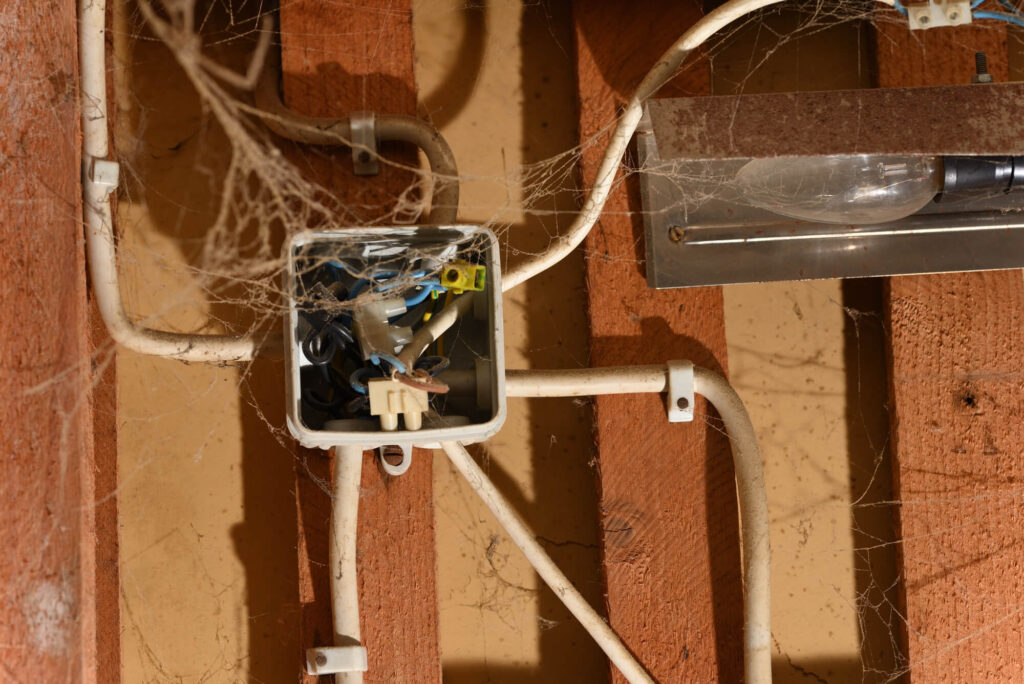
Most homeowners don’t know their wiring is failing until a breaker trips, a light flickers, or something more serious happens. UK homes built before 1970 are particularly at risk — but even newer properties can develop wiring faults. This guide explains the 8 key warning signs that your house may need rewiring.
⚡ Key Takeaways
- UK homes built before the 1960s–70s may have outdated wiring that no longer meets modern safety standards.
- Warning signs include persistent flickering, burning smells, tripping breakers, and discoloured outlets.
- A full rewire is a significant but worthwhile investment — it can last 25–40 years and eliminates fire risk from deteriorated wiring.
How Long Does Electrical Wiring Last?
Modern PVC-insulated wiring typically lasts 25–40 years. Older wiring types — such as rubber-insulated cables (pre-1960s), lead-sheathed wiring, or aluminium wiring (used in some 1960s–70s homes) — can deteriorate more quickly and present greater hazards. If your home has never been rewired and is more than 25 years old, an electrical inspection is strongly recommended.
8 Warning Signs Your House Needs Rewiring
1. Persistent Flickering or Dimming Lights
Occasional flickers can be caused by loose bulbs. But lights that regularly flicker across multiple rooms often indicate failing connections in the wiring itself — a classic sign that the installation needs attention.
2. Frequently Tripping Circuit Breakers
A circuit breaker that keeps tripping is doing its job — but repeated trips indicate the circuit is regularly exceeding its safe capacity, which may be because old wiring can no longer handle modern electrical loads.
3. Burning Smell or Scorch Marks
A burning smell from outlets, switches, or the consumer unit (fuse box) suggests wiring is overheating. Scorch marks or discolouration are physical evidence of heat events. This is a fire risk that requires immediate professional attention.
4. Older Wiring Types Still Present
If your home has rubber-insulated cables (identifiable by fabric-covered or black rubber coating), lead-sheathed wiring, or the older red/black colour scheme (pre-2004), these are signs that a rewire may be overdue. Modern wiring uses brown (live) and blue (neutral) insulation.
5. Outlets and Switches That Buzz or Spark
Any outlet or switch that buzzes, crackles, or sparks unexpectedly indicates loose or deteriorated connections. Combined with ageing wiring, this is a significant hazard.
6. Insufficient Outlets for Modern Needs
Homes with very few outlets — particularly those built before the 1980s — often have wiring that wasn’t designed for today’s electrical loads. Running extension cords as a permanent solution is a fire risk. A rewire allows for properly positioned, sufficient outlets throughout the home.
7. Fuse Box Rather Than Consumer Unit
Older homes may still have a fuse box with rewirable fuses rather than a modern consumer unit with RCDs and MCBs. This is a sign that the electrical installation is likely outdated and should be assessed.
8. Failed Electrical Installation Condition Report (EICR)
In the UK, an EICR (electrical inspection) grades the installation from C1 (danger present) to C2 (potentially dangerous) to C3 (improvement recommended). A C1 or C2 result may indicate that a partial or full rewire is required.
How Much Does a House Rewire Cost?
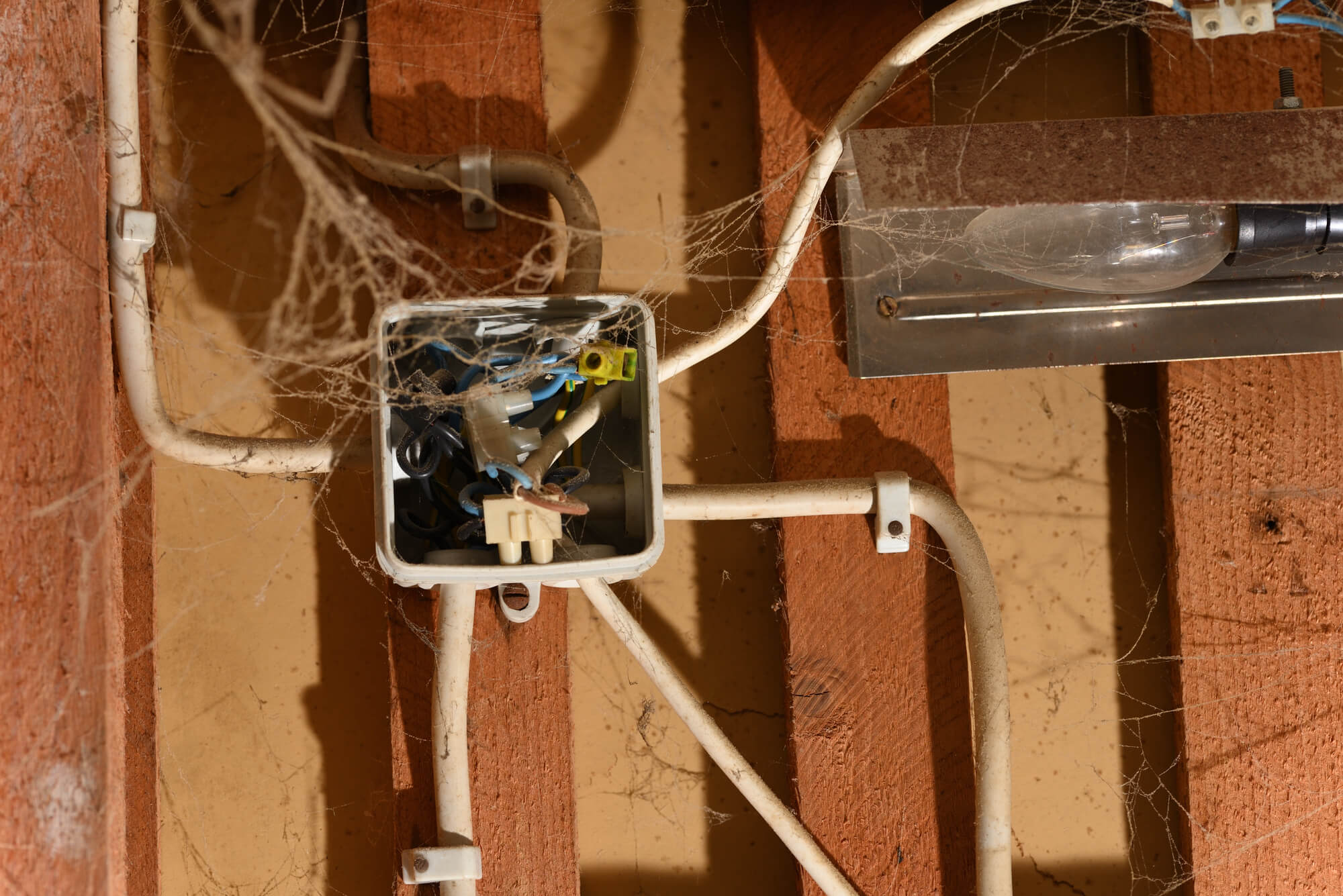
The cost to rewire a house varies by property size. A one-bedroom flat typically costs £1,500–£3,000. A three-bedroom house runs £3,000–£5,000. A five-bedroom house can cost £6,000–£10,000 or more. These are significant investments, but a full rewire lasts decades and eliminates the risk of fire from deteriorated wiring.
Think your home might need rewiring? Our qualified electricians can carry out an EICR and advise on next steps.
What Happens During a House Rewire?
A full rewire involves replacing all the wiring, consumer unit, sockets, and switches throughout the property. It typically requires access behind walls and ceilings, which means some redecoration is usually needed afterwards. For a detailed timeline, see our guide on how long it takes to rewire a house.
How to Check What Type of Wiring You Have
If you want to check your wiring type without opening walls, start at the consumer unit (breaker box or fuse box). Look at the cables entering the unit. Modern cables are grey or white with brown (live) and blue (neutral) wires. Older installations may show red/black wiring (pre-2004 UK), fabric-covered cables, or aluminium conductors — all indicators that the installation is aging and potentially due for assessment.
You can also look behind unused outlets or switches to check the cable colour coding and insulation type. If the insulation crumbles or cracks when touched, the cable is deteriorated and should be replaced.
What Does a Rewire Actually Involve?
A full rewire involves running new cables throughout the property, replacing the consumer unit, fitting new sockets, switches, and light fittings, and obtaining an Electrical Installation Certificate (EICR sign-off). It typically requires access through ceilings and walls, which means redecoration work afterward. Most electricians work room by room to minimise disruption.
A partial rewire — addressing specific circuits such as the kitchen, bathroom, or upstairs ring main — is an option when only certain areas are problematic. Your electrician will advise based on the condition found during inspection.
Cost to Rewire a House
The cost to rewire a house varies significantly with property size and age:
- 1-bedroom flat: $2,500–$4,500
- 2–3 bedroom house: $4,000–$7,000
- 4–5 bedroom house: $6,500–$12,000
These estimates typically include labour, materials, and the electrical safety certification. Disruption and redecoration costs are additional. Always get at least three quotes from registered electricians.
Does Home Insurance Cover Rewiring?
Standard home insurance does not cover rewiring costs for general wear and age. However, if faulty wiring causes a fire or flood and you make a claim, insurers may investigate the electrical installation. Having out-of-date wiring can complicate claims or even invalidate your policy. Proactive rewiring protects both your home and your insurance standing.
How to Find a Qualified Electrician for Rewiring
In the UK, rewiring work must be carried out or certified by a registered electrician. Look for membership of NICEIC, NAPIT, or ELECSA. In the US, a licensed master electrician should carry out the work, and permits are required in most jurisdictions. Always ask for references from past rewiring projects.
Frequently Asked Questions
Does a house need rewiring if it has never been done?
If your home is more than 25–30 years old and has never been rewired or had a full electrical inspection, it’s strongly advisable to have an EICR carried out. The results will determine whether a full or partial rewire is needed.
Can I live in my house while it’s being rewired?
It depends on the extent of the work. Partial rewires often allow you to remain in the property. For a full rewire, many homeowners find it more practical to stay elsewhere for the duration, as there will be periods without power and considerable disruption.
Is it safe to buy a house that needs rewiring?
It can be — but you should factor the rewiring cost into your offer price. Always commission an EICR before purchasing an older property, and ensure any required work is completed before moving in.
How often should electrical wiring be inspected?
The UK recommends an EICR every 10 years for owner-occupied homes, every 5 years for rental properties, and on change of occupancy. Even within these intervals, any warning signs should prompt an immediate inspection.