
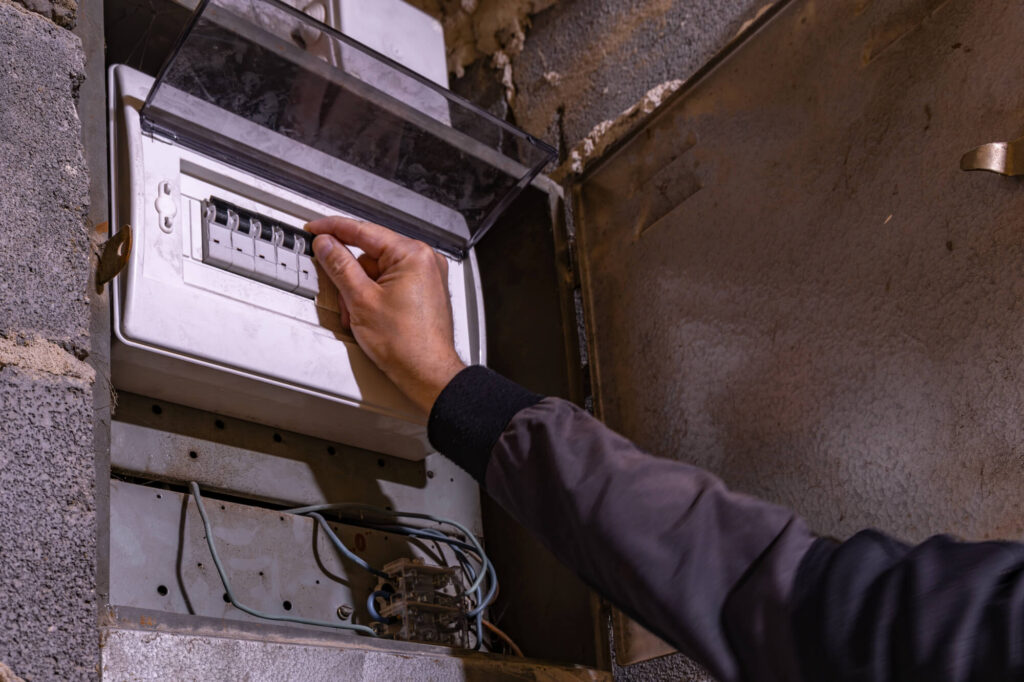
Knob-and-tube wiring was the standard in American homes from the 1880s through the 1940s. If your home was built before 1950, there’s a real chance it still has some. Understanding whether it’s dangerous — and what to do about it — is critical for homeowner safety.
Contents
⚡ Key Takeaways
- Knob-and-tube wiring has no ground wire, making it incompatible with modern three-prong devices
- Original intact knob-and-tube in good condition is not immediately dangerous, but it has serious limitations
- Insulation degrades over decades — brittle, cracked cloth insulation is a fire hazard
- Many insurance companies refuse to cover homes with knob-and-tube wiring — the U.S. Consumer Product Safety Commission (CPSC) identifies aging and deteriorated wiring insulation as a leading cause of residential electrical fires
- Replacement is almost always the right long-term decision for homes relying on knob-and-tube
What Is Knob-and-Tube Wiring?
Knob-and-tube (K&T) wiring uses single-conductor copper wires routed through ceramic knobs (which hold wires away from framing) and ceramic tubes (which protect wires passing through joists and studs). The hot and neutral wires run separately, spaced apart, with no ground wire. The insulation is rubber-coated cloth — materials that degrade significantly over 70–100+ years.

Is Knob-and-Tube Wiring Dangerous?
The answer is nuanced. Original, unmodified knob-and-tube wiring in good condition can function safely for certain loads. However, several factors make it inherently risky in modern use:
No Ground Wire
K&T has only two conductors — hot and neutral. There is no ground wire. This means three-prong devices have no ground path, surge protectors don’t work properly, and GFCI protection cannot be easily extended to the system.
Insulation Deterioration
The rubber and cloth insulation used in K&T becomes brittle over time. When it cracks or crumbles, bare conductors are exposed — a shock and fire hazard. This deterioration is often hidden inside walls and ceilings, making inspection difficult.
Incompatibility with Insulation
Knob-and-tube wiring was designed to be open to air for cooling. Modern homes often have blown-in or batt insulation in contact with K&T wiring — this traps heat and is a recognized fire hazard. The NEC prohibits covering K&T wiring with insulation.
Prior Modifications
Decades of homeowner modifications often connect modern wiring to K&T improperly. Overloaded circuits, wrong-gauge connections, and amateur splices in walls are common problems in homes where K&T and modern wiring coexist.
Insurance and Mortgage Implications
Many homeowner’s insurance carriers refuse to insure homes with knob-and-tube wiring, or charge significantly higher premiums. Some mortgage lenders also require K&T remediation before approving a loan. If you’re buying or selling a home with K&T wiring, expect these issues to surface during the home inspection and underwriting process.
What Should You Do If Your Home Has Knob-and-Tube Wiring?
- Have it inspected — a licensed electrician can assess the extent and condition of the K&T wiring, identify any modifications, and advise on priority areas
- Address immediate hazards first — any circuit with deteriorated insulation, covered wiring, or improper modifications should be replaced first
- Plan a full replacement — while expensive, replacing K&T wiring with modern grounded wiring is the safest long-term solution and resolves insurance and mortgage issues
- Don’t add load to K&T circuits — avoid plugging in high-draw appliances on circuits you know to be K&T
Cost to Replace Knob-and-Tube Wiring
Partial rewiring (priority circuits) runs $1,500–$5,000. Full home rewiring with K&T removal typically costs $8,000–$20,000+ depending on home size and accessibility. While significant, this cost is often offset by improved insurability and home value.
Frequently Asked Questions
Is knob-and-tube wiring illegal?
No — K&T wiring is not illegal in existing homes. However, it cannot be extended or modified to add new circuits, and it cannot be covered with insulation per the NEC. Many local codes require disclosure or inspection when selling a home with K&T wiring.
Can I get homeowner’s insurance with knob-and-tube wiring?
It’s increasingly difficult. Many insurers refuse to cover homes with K&T wiring or charge significant surcharges. Some will insure if a licensed electrician inspects and certifies the wiring is in acceptable condition. Check with your insurance provider before purchasing or maintaining a policy on a K&T home.
How do I know if my home has knob-and-tube wiring?
Check your attic, basement, and crawl space for ceramic knobs holding single-conductor wires against framing, or ceramic tubes where wires pass through joists. Your electrical panel may also show signs — two-wire circuits without grounds. A licensed electrician can perform a thorough inspection.
Can knob-and-tube wiring be repaired rather than replaced?
Repairs can address specific hazards (bad splices, exposed insulation) but don’t resolve the fundamental limitations — no grounding, aging insulation throughout, incompatibility with insulation. Most electricians recommend planning full replacement rather than ongoing repairs to an aging system.
How much does it cost to replace knob-and-tube wiring?
Full home rewiring to replace K&T typically costs $8,000–$20,000+ depending on home size, accessibility, and local labor rates. Partial rewiring of priority circuits runs $1,500–$5,000. Get quotes from multiple licensed electricians for accurate pricing.