
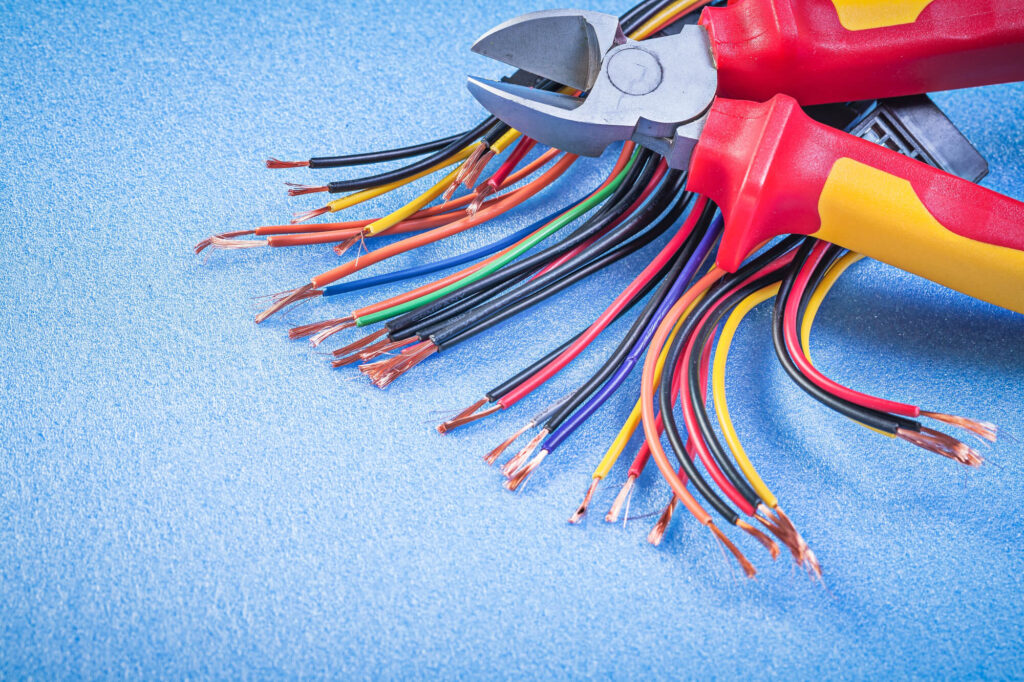
When working on electrical wiring, knowing which wire is live (hot) and which is neutral can be the difference between a safe repair and a dangerous accident. In US wiring, the colour coding has a clear standard — but there are important exceptions that catch out even experienced DIYers. This guide explains everything you need to know.
⚡ Key Takeaways
- In standard US wiring, black = hot (live), white = neutral, bare copper or green = ground.
- White wires used as hot conductors (common in switch loops) must be marked with black tape — but older wiring may not be.
- In UK wiring, the colour code is completely different: brown = live, blue = neutral, green/yellow = earth.
- Never assume a wire is safe based on colour alone — always test with a non-contact voltage tester.
US Electrical Wire Colour Codes
The US National Electrical Code (NEC) specifies the following for standard single-conductor wire:
- Black — Hot (live, line)
- White or Grey — Neutral
- Green or Bare Copper — Ground (earth)
- Red — Second hot conductor (240V circuits, 3-way switches)
- Blue, Yellow — Hot conductors used in specific applications (conduit wiring, traveller wires)
So in answer to the question: black is the hot wire, white is the neutral — in standard NM cable wiring.
Important Exceptions: When White Is Hot
In older switch loop wiring, a white wire is often used as the hot (switched live) conductor running from the switch back to the light fixture. This was common practice before the NEC required a neutral at every switch location. If you encounter a white wire in a switch box or at a ceiling fixture that appears to carry power, it may be wired as a hot conductor — even if not marked.
The NEC now requires white wires used as hot conductors to be re-identified with black tape or paint at both ends. Older wiring may not comply. Always test before touching.
UK Electrical Wire Colour Codes
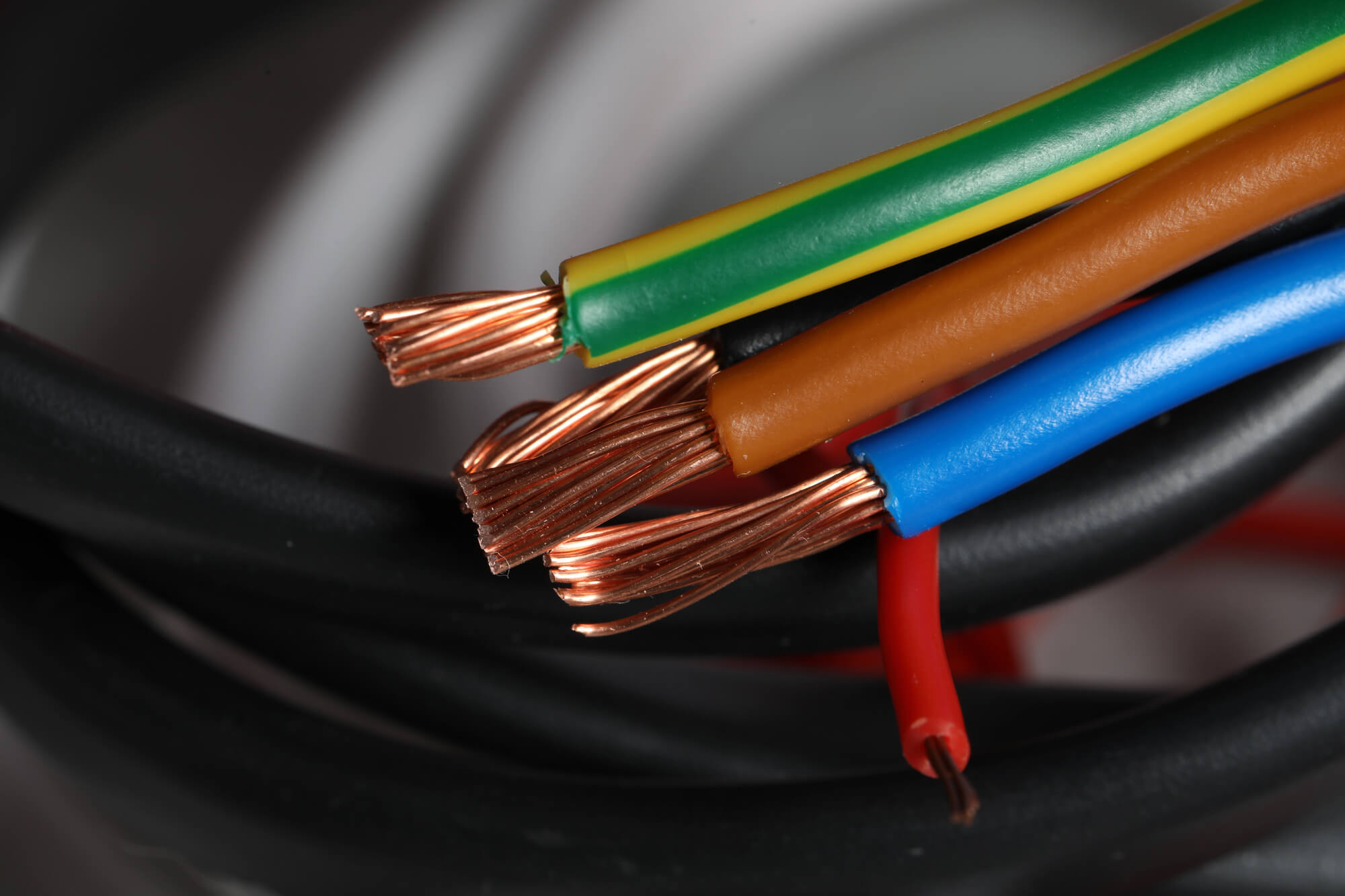
UK wiring follows completely different conventions. For modern wiring (post-2004):
- Brown — Live (hot)
- Blue — Neutral
- Green with yellow stripe — Earth (ground)
For older UK wiring (pre-2004): red = live, black = neutral, green/yellow = earth. Note: in old UK wiring, black is neutral — the opposite of US convention. This is a critical distinction when working on mixed old/new wiring. For more on wire colours, see our guide on what the red wire means and what the neutral wire does.
How to Identify the Hot Wire Safely
Never rely solely on colour coding. Always use a non-contact voltage tester before touching any wire. These inexpensive tools detect the presence of live voltage without physical contact. Insert the tester near each wire — it will beep or light up near a hot (live) conductor. If you don’t have one, an electrician can identify wiring safely for you.
Unsure about the wiring in your home? Our qualified electricians can safely identify and label any wiring.
When Colour Coding Doesn’t Tell the Whole Story
Wire colours are a guide — not a guarantee. In properly wired installations, colour coding is reliable. But in older homes, homes that have been modified, or installations by careless electricians, colours can be misleading or reversed. A white wire that’s been re-marked with black tape or paint is no longer safely recognizable as neutral. A wire spliced mid-circuit may have lost its colour integrity. Wires in conduit are sometimes reused and repurposed, changing their actual function even though their colour suggests otherwise. Never assume a wire’s function based solely on colour. Always verify with a multimeter or non-contact voltage tester before touching or working with any wire.
US Wire Colour Codes at a Glance
| Wire Colour | Function | Voltage |
|---|---|---|
| Black | Hot (Line 1) | 120V |
| Red | Hot (Line 2) or Traveller (3-way switch) | 120V or 240V |
| White | Neutral | 0V (reference) |
| Bare Copper or Green | Ground (Safety) | 0V (reference) |
UK Wire Colour Codes Post-2004
Modern UK wiring (post-2004 harmonised colours) uses: brown for live (hot), blue for neutral, and yellow/green striped for protective earth (ground). Older UK wiring (pre-2004) used red for live, black for neutral, and green/yellow for earth. Many UK homes still have mixed wiring ages. If you see red, black, and bare wires in UK property, you’re looking at pre-2004 wiring and should verify function with a multimeter before assuming. EU-standard colour coding is now mandatory in new UK installations and modernisations.
What to Do If Unsure
If you encounter wiring where colour coding seems inconsistent or questionable, stop work immediately. Use a non-contact voltage tester to identify live wires without touching them — these inexpensive tools ($5–$15) light up or beep near any live conductor and are the safest way to identify hot wires. For any permanent work (switches, outlets, repairs), use a multimeter to verify voltage and continuity. Never guess about wire function in an electrical circuit. When in doubt, consult a licensed electrician.
International Wire Color Codes and Modern Electrical Standards
While the US standard uses black for hot, white for neutral, and bare copper or green for ground, other countries follow different color coding systems. This distinction becomes important if you ever work with electrical contractors from other countries or if you’re remodeling a home that has received international equipment. Understanding global standards also helps electricians who move between countries or work with imported electrical equipment.
The International Electrotechnical Commission (IEC) established a global standard where brown represents hot, blue represents neutral, and green/yellow striped represents ground. Many developed countries including Europe, Australia, and Asia use these standards. Within the United States, the National Electrical Code (NEC) requires adherence to the black/white/green standard, but electricians should be aware of international conventions, especially when troubleshooting equipment imported from abroad or installed by international contractors.
Modern electrical innovations also challenge traditional color coding. LED lighting systems, low-voltage circuits, and smart home automation sometimes use different color schemes or require additional conductor colors for control signals. Some advanced buildings use additional wire colors like orange for ungrounded conductors or pink for indicating higher voltage levels in industrial settings. When in doubt about any wire’s function, always test with a voltage tester rather than rely on color alone, and consult a licensed electrician if you’re uncertain about any circuit or installation.
Frequently Asked Questions
What if I find a wire colour that isn’t in the standard code?
Older wiring, non-standard installations, and multi-conductor cables sometimes use colours not in the standard code. In these cases, always treat any unidentified wire as potentially live. An electrician can trace the circuit and identify the function of each wire safely.
Is a black wire always hot?
In standard US NM (Romex) cable, yes — black is always the hot wire. However, in conduit wiring, any colour except white, grey, or green can be used for a hot conductor. In a multi-wire branch circuit, you may find black and red as the two hot conductors.
Can I tell if a wire is live without a voltage tester?
No reliable method exists short of a proper voltage tester. Do not use touch, visual inspection, or resistance measurement (with the circuit live) to determine whether a wire is live. A non-contact voltage tester costs under £20 and is an essential safety tool for any home electrical work.