
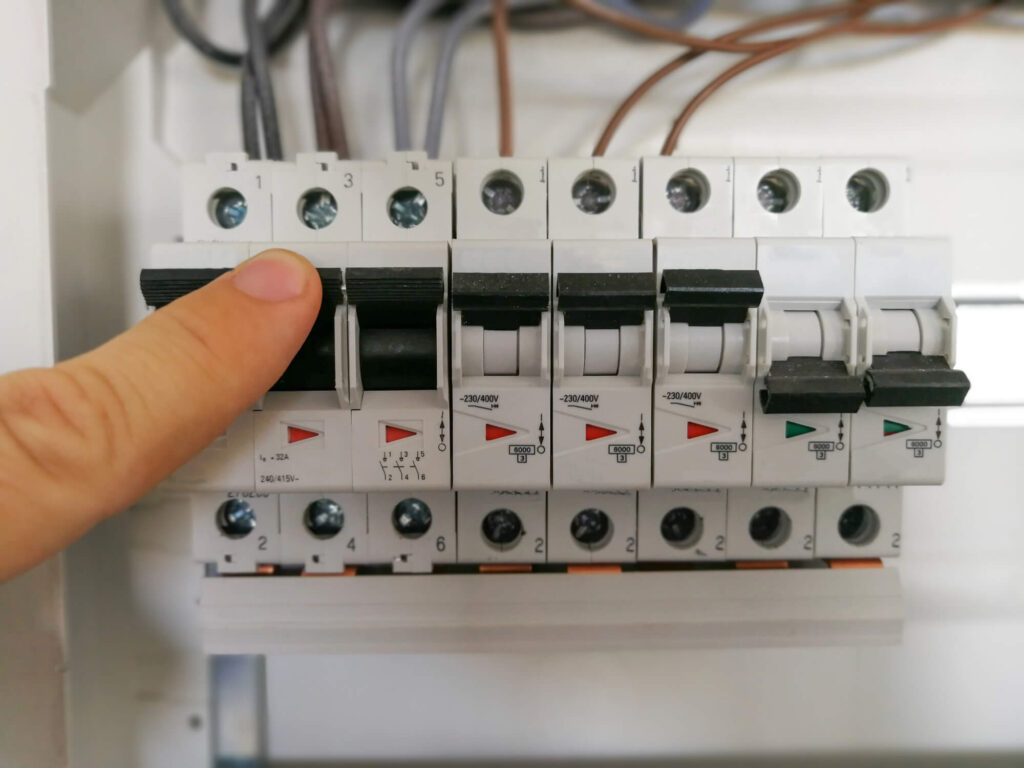
A tripping circuit breaker is your electrical system’s way of preventing a fire or worse. It’s not a nuisance — it’s a warning. Understanding why it’s tripping is the key to fixing it safely. This guide covers every common cause and what action to take.
⚡ Key Takeaways
- A tripping breaker is a safety device, not a fault in itself — the fault is whatever is causing it to trip.
- The 5 main causes are overloaded circuit, short circuit, ground fault, failing breaker, and arc fault.
- Repeatedly resetting a breaker without finding the root cause is dangerous.
How a Circuit Breaker Works
A circuit breaker is designed to trip — cut power — whenever the current flowing through it exceeds its rated capacity, or whenever it detects a short circuit, ground fault, or arc fault. This prevents wiring from overheating and causing a fire. A breaker that trips once after an unusual event may just need resetting. A breaker that trips repeatedly is telling you there’s an ongoing fault that needs addressing.
5 Reasons a Circuit Breaker Keeps Tripping
1. Overloaded Circuit
The most common cause. An overloaded circuit occurs when the total wattage of all devices on that circuit exceeds what the breaker is rated for. A 15-amp breaker handles about 1,800 watts continuously; a 20-amp breaker handles about 2,400 watts. High-draw appliances like space heaters, hairdryers, and microwaves are common culprits. The fix is to redistribute appliances across different circuits or to add a dedicated circuit.
2. Short Circuit
A short circuit occurs when a hot (live) wire directly contacts a neutral wire, creating a low-resistance path that allows much more current to flow than the circuit can handle. This causes an immediate, decisive trip. Signs include a popping sound, burning smell, or scorch marks near an outlet or appliance. Short circuits require professional diagnosis.
3. Ground Fault
A ground fault occurs when the hot wire contacts a grounded surface — a metal box, water pipe, or a person. Ground fault circuit interrupters (GFCIs) are designed to detect this and trip very quickly. A GFCI outlet that keeps tripping is detecting a genuine ground fault condition.
4. Failing or Worn Breaker
Breakers can fail with age, especially if they’ve tripped many times. A breaker that trips under normal load — when no overload or fault condition exists — may have degraded and needs replacement. This is common in breaker panels that are 20 or more years old.
5. Arc Fault
AFCI (Arc Fault Circuit Interrupter) breakers detect electrical arcing — a discharge of electricity across a gap in damaged wiring. Arcing is a leading cause of house fires. If you have an AFCI breaker that trips repeatedly, damaged wiring may be the cause. See our guide on what an AFCI breaker does.
How to Reset a Tripped Breaker Safely
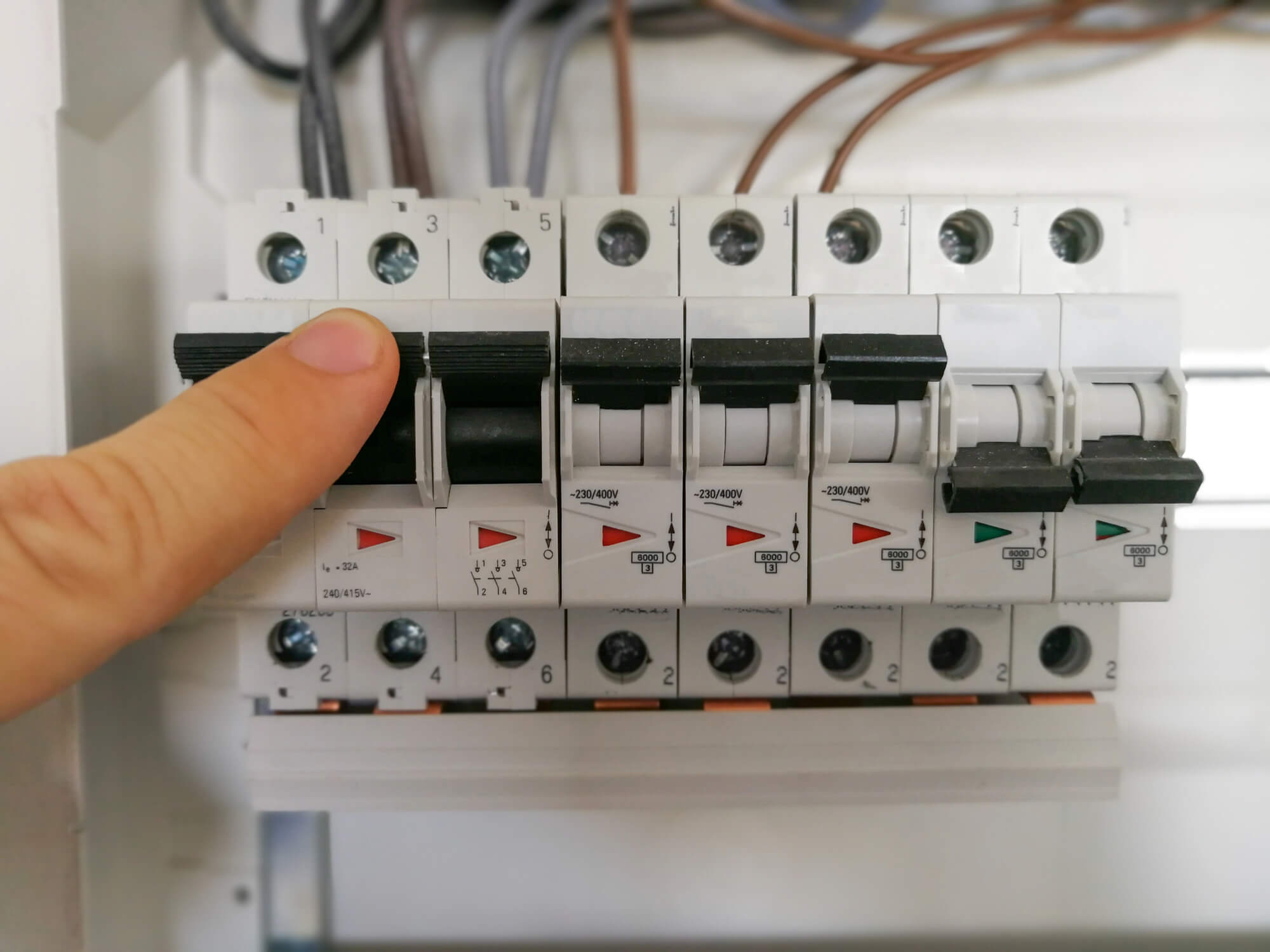
Before resetting, unplug or switch off the devices on that circuit. Then flip the breaker fully to OFF before switching it back ON — many breakers trip to a middle position that looks like “ON” but isn’t. For a full step-by-step guide, see how to reset a circuit breaker.
If your breaker keeps tripping after reset, our same-day electricians can diagnose the fault immediately.
When Is a Tripping Breaker an Emergency?
Call an electrician immediately if: the breaker trips instantly on reset, if there’s a burning smell from the panel or outlets, if the breaker or panel feels warm, or if you see scorch marks anywhere. A burning smell from a breaker panel is a fire emergency.
Understanding Circuit Breaker Ratings
Every circuit breaker is rated for a maximum continuous current load — typically 15A or 20A for standard household circuits. When the current flowing through the circuit exceeds this rating, the breaker is designed to trip. This is not a malfunction — it’s the safety system working correctly. The problem occurs when a circuit trips repeatedly, indicating a mismatch between load and capacity.
The Three Main Causes of Repeated Tripping
1. Overloaded Circuit
The most common cause. Too many devices on a single circuit draw more current than the breaker rating allows. Calculate your circuit load: add up the wattage of all devices on the circuit and divide by 120 (US voltage) to get amps. If you’re consistently near or above 15A on a 15A circuit, the circuit is overloaded. Solution: Redistribute loads to other circuits, or have an electrician add a dedicated circuit for high-draw appliances.
2. Short Circuit
A short circuit occurs when a hot wire contacts a neutral or ground wire, creating a low-resistance path for current. This causes an immediate and dramatic surge in current — the breaker trips instantly and often with a loud pop. Short circuits can be caused by damaged appliance cords, faulty wiring inside walls, or loose connections in junction boxes. A short circuit that keeps recurring after resetting indicates a persistent wiring fault — do not continue resetting. Call an electrician.
3. Ground Fault
Similar to a short circuit, but the hot wire contacts a grounded surface. GFCI protection is specifically designed to catch these before they cause electrocution. On standard circuits, ground faults trip the breaker.
How to Identify Which Appliance Is Causing the Trip
Unplug everything from the circuit before resetting the breaker. Reset it, then plug items back in one at a time, waiting a minute between each. The item that trips the breaker when plugged in is likely the cause — either the appliance itself is faulty or it’s pushing the circuit over its limit. If the breaker trips with nothing plugged in, there is a wiring fault in the circuit that requires professional inspection.
When the Breaker Itself Is the Problem
Breakers don’t last forever. A breaker that trips at lower than its rated load, trips immediately after being reset with no load present, or feels hot when tripped is likely failing. Breaker replacement costs $100–$250 per breaker (including labour), and is a job for a licensed electrician only — never replace a breaker yourself without shutting off the main power.
Adding a Dedicated Circuit for Problem Appliances
High-draw appliances — electric ranges, ovens, air conditioners, EV chargers, heat pumps, washing machines — should each have their own dedicated circuit. Adding a dedicated circuit typically costs $250–$900 depending on the distance from the panel and local labour rates. It’s one of the most effective ways to end chronic tripping problems.
Frequently Asked Questions
Is it safe to keep resetting a tripping breaker?
No. Resetting a breaker that keeps tripping without identifying the cause is dangerous. Each trip is a warning that something is wrong. Repeated resets without fixing the underlying issue risk overheating, fire, or equipment damage.
Why does my breaker trip in the middle of the night when nothing is running?
Some appliances draw power overnight — refrigerators, HVAC systems, and water heaters cycle on and off. If one of these shares a circuit that’s already near capacity, it can tip the breaker over the edge. An electrician can identify the cause with load testing.
How long does a circuit breaker last?
A quality circuit breaker should last 30–40 years under normal conditions. However, breakers that have tripped many times, or that are in humid or high-temperature environments, may fail sooner. If your panel is more than 20 years old and breakers are tripping regularly, a panel inspection is advisable.
Can I replace a circuit breaker myself?
This is not recommended for most homeowners. Working inside a consumer unit involves exposure to live bus bars that cannot be safely de-energised without isolating the supply at the meter. See our guide on replacing circuit breakers for more information.