
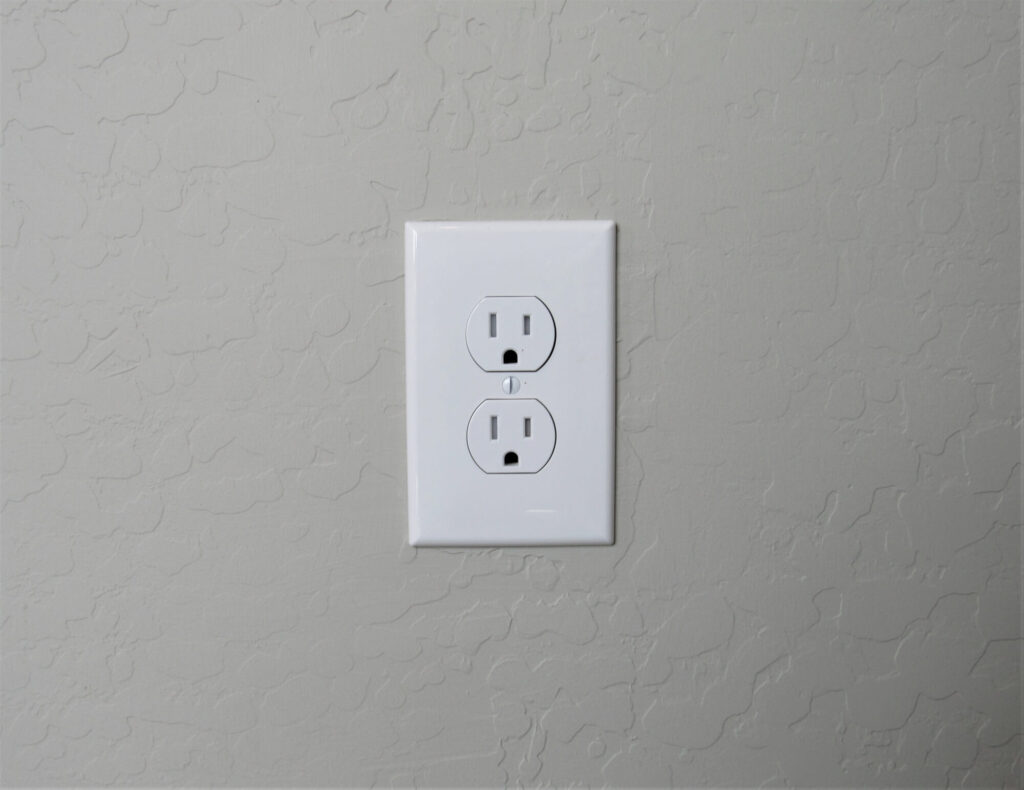
A 15 amp outlet and a 20 amp outlet look nearly identical — the only visible difference is a small horizontal slot on one side of the 20 amp outlet. But the distinction matters. Installing the wrong outlet for a circuit, or connecting a high-draw appliance to a 15 amp outlet on a 15 amp circuit, can cause nuisance tripping or, worse, overloading. This guide explains the differences, when each is appropriate, and how to identify what you have.
⚡ Key Takeaways
- The key visual difference: 20 amp outlets have a T-shaped horizontal slot; 15 amp outlets have two parallel vertical slots.
- A 20 amp outlet requires a 20 amp circuit with 12 AWG wire — it cannot simply be installed on a 15 amp circuit.
- Most household circuits are 15 amp; dedicated circuits for kitchens, bathrooms, and workshops are typically 20 amp.
The Visual Difference
Both 15 amp and 20 amp outlets have the standard two vertical slots (hot and neutral) plus a round or U-shaped ground hole. The 20 amp outlet has an additional horizontal extension on the neutral slot, creating a T-shape. This T-slot allows 20 amp plugs (which have a horizontal neutral blade) to be inserted, while also accepting standard 15 amp plugs.
The Electrical Difference
- 15 amp outlet: rated for 1,800 watts continuous (at 120V). Requires 15 AWG wire and a 15 amp breaker.
- 20 amp outlet: rated for 2,400 watts continuous (at 120V). Requires 12 AWG wire and a 20 amp breaker.
A 20 amp outlet on a 15 amp circuit is technically wired incorrectly — the outlet promises capacity that the wiring cannot deliver. Conversely, a 15 amp outlet on a 20 amp circuit is code-compliant (15 amp outlets can be installed on 20 amp circuits, though the circuit’s full capacity is then limited by the outlet rating).
When Do You Need a 20 Amp Outlet?
You need a 20 amp outlet (on a properly wired 20 amp circuit) when you have high-draw appliances that draw close to or more than 1,800 watts. This includes: refrigerators (especially if on a dedicated circuit), microwaves, dishwashers, washing machines, and some power tools. Kitchen circuits are typically required to be 20 amp in both the NEC and most local codes.
For more information on dedicated circuits for high-draw appliances, see our guide on the cost to install a dedicated circuit.
Can I Replace a 15 Amp Outlet with a 20 Amp Outlet?
Only if the circuit is wired for 20 amps — meaning it has 12 AWG wire and a 20 amp breaker in the panel. You cannot simply swap in a 20 amp outlet on a 15 amp circuit and gain additional capacity. The outlet rating must match the circuit capacity. If you need to upgrade a 15 amp circuit to 20 amp, an electrician needs to replace the wiring and breaker as well as the outlet.
Need to upgrade to 20 amp circuits? Our qualified electricians can assess and upgrade your circuits.
UK Equivalent
The UK uses a different system — ring main circuits rated at 32 amps, with individual outlets (sockets) fused at 13 amps via the plug fuse. There is no direct equivalent to the 15/20 amp outlet distinction in UK wiring.
The Physical Difference Between 15A and 20A Outlets
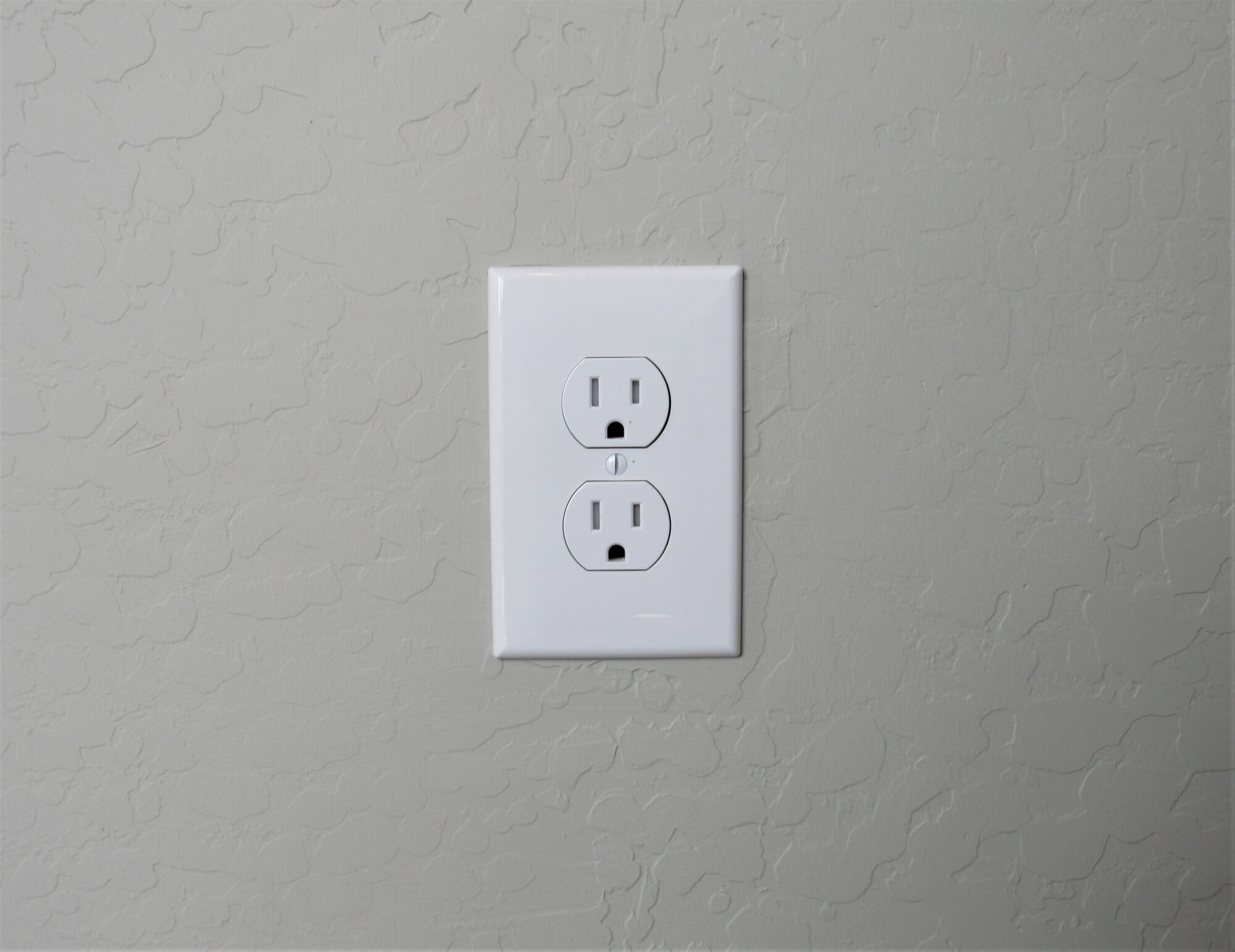
The simplest way to tell a 15A outlet from a 20A outlet is the slot shape. A standard 15A outlet has two vertical slots plus a ground hole. A 20A outlet has one T-shaped slot — one slot has a horizontal extension. This T-slot allows 20A plugs to be inserted, while still accepting standard 15A plugs. A 15A outlet cannot accept a 20A plug — this prevents high-draw devices from being plugged into an undersized circuit.
Circuit Requirements for Each Type
A 15A outlet must be on a circuit protected by a 15A breaker with 14-gauge wire (or larger). A 20A outlet requires a 20A breaker with 12-gauge wire minimum. The wire gauge is critical — undersized wiring on a 20A circuit is a fire hazard. If you’re adding 20A outlets for a kitchen or garage, ensure the electrician installs the correct wire gauge for the entire circuit.
Where Each Type Is Used — and Required by Code
15A outlets are standard for bedrooms, living areas, hallways, and most general-purpose circuits. 20A outlets and circuits are required or strongly recommended for:
- Kitchen countertop circuits: At least two 20A small-appliance circuits required by NEC
- Bathroom: At least one 20A GFCI circuit required
- Garage and workshop: 20A circuits for power tools and equipment
- Laundry: 20A circuit for washing machines
Can You Mix 15A and 20A Outlets on the Same Circuit?
Yes — a 20A circuit can have both 15A and 20A outlets. The 15A outlets will work correctly on a 20A circuit. What you cannot do is put a 20A outlet on a 15A circuit — the outlet allows devices that draw up to 20A, but the circuit and wiring aren’t sized for it.
Upgrading from 15A to 20A Outlets
Swapping a 15A outlet for a 20A outlet without upgrading the circuit is a code violation and a fire risk. A proper upgrade requires replacing the 14-gauge wiring with 12-gauge throughout the circuit and replacing the 15A breaker with a 20A breaker. This is not a simple outlet swap — it requires opening walls, running new wire, and may involve a permit. Budget $400–$800+ per circuit for a full upgrade.
Upgrading from 15-Amp to 20-Amp Outlets
Upgrading from 15-amp outlets to 20-amp outlets makes sense in kitchens, bathrooms, and high-load areas where power demands have increased since your home was built. A 20-amp outlet can safely handle 1,920 watts (at 120V) compared to a 15-amp outlet’s 1,440 watts—that extra 480 watts means you can run a space heater and a microwave on the same circuit without tripping the breaker. However, upgrading an outlet alone doesn’t solve the problem; you must also upgrade the circuit’s breaker and verify that the wire gauge matches. If your kitchen circuit is wired with 14 AWG copper wire (which is standard for 15-amp circuits), upgrading just the outlet and breaker to 20 amps creates a fire hazard because 14 AWG wire can safely carry only 15 amps. Upgrading to 20 amps requires either running new 12 AWG wire or having an electrician verify that your existing wire is 12 AWG or larger.
The National Electrical Code (NEC) requires dedicated circuits in kitchens and bathrooms: kitchens must have at least two 20-amp circuits for small appliances, and bathrooms must have at least one 20-amp circuit exclusively for outlets (not lighting). If your home has 15-amp circuits in these spaces, upgrading to 20-amp circuits is often the right choice and may be required when you’re selling your home or applying for a renovation permit. The cost typically ranges from $150-$300 per circuit and involves replacing the breaker, running or verifying the wire, and installing 20-amp outlets (which have a slightly different slot configuration than 15-amp outlets to prevent mismatched plugs). Some homes have shared circuits (e.g., kitchen outlets on the same circuit as living room outlets), and upgrading these requires carefully planning which outlets go on which dedicated circuits to meet code requirements.
Before upgrading, confirm your panel’s remaining capacity and have an electrician assess your home’s total electrical load to ensure a 20-amp circuit is truly necessary and safe. In older homes with 100-amp or 150-amp panels, adding more high-amperage circuits may require a panel upgrade, which is a more expensive project ($3,000-$5,000). However, in homes with 200-amp panels or newer, most upgrades are straightforward. If you’re planning a kitchen or bathroom renovation anyway, upgrading circuits to meet current code is a smart investment that improves safety, adds outlet capacity for modern appliances, and can increase your home’s resale value by demonstrating electrical compliance.
Frequently Asked Questions
How do I know if my circuit is 15 or 20 amps?
Check your consumer unit or breaker panel. The breaker for the circuit will be labelled with its amp rating — 15A or 20A. You can also check the wire gauge: 15 amp circuits use 14 AWG wire (white sheathing in NM cable), and 20 amp circuits use 12 AWG wire (yellow sheathing).
Can I plug a 20 amp appliance into a 15 amp outlet?
Most 20 amp appliances come with standard 15 amp plugs for exactly this reason — they can be plugged into standard 15 amp outlets. However, if the appliance regularly draws close to its rated 20 amp capacity, it will likely trip the 15 amp breaker. Dedicated circuits for high-draw appliances avoid this.
Is it dangerous to use a 15 amp outlet on a 20 amp circuit?
No — it’s code-compliant and not dangerous. A 15 amp outlet on a 20 amp circuit simply limits that outlet’s usable capacity to 15 amps. The 20 amp breaker still provides protection; it will trip if the current through the outlet (and wire) exceeds approximately 20 amps.