
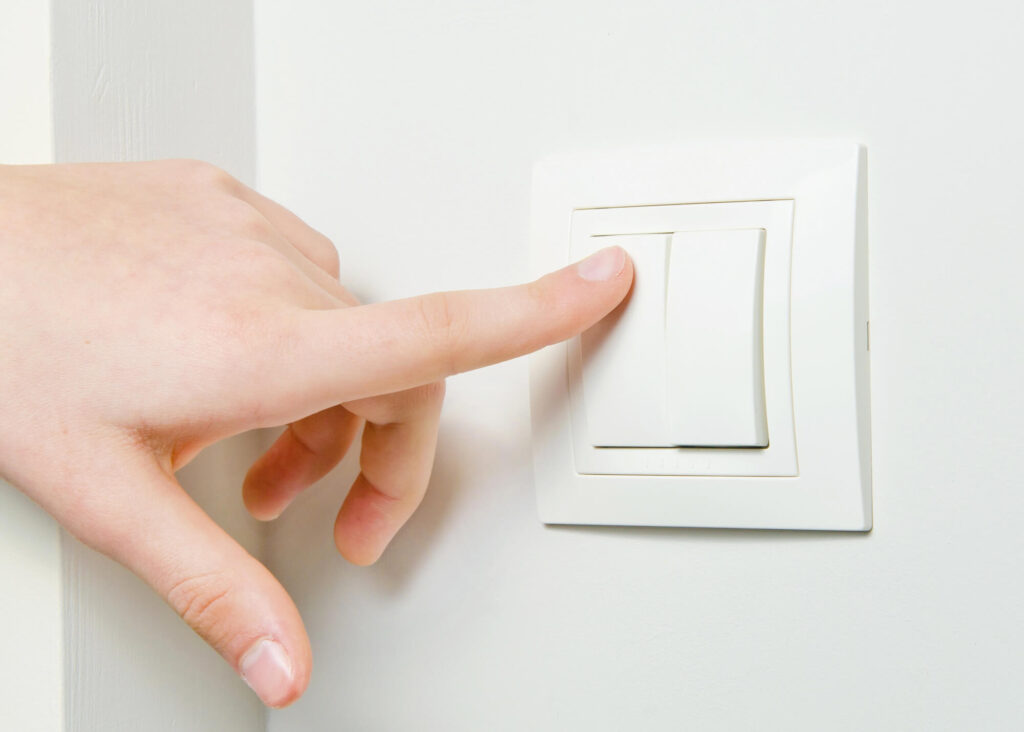
A buzzing or crackling sound from a light switch or outlet is not something to ignore. Electrical buzzing almost always points to loose wiring, arcing, or an incompatible device — conditions that can cause fires inside your walls. This guide explains the common causes and what to do.
⚡ Key Takeaways
- Buzzing from a light switch usually means loose wiring, worn contacts, or a dimmer that is incompatible with your LED bulbs.
- Buzzing from an outlet indicates loose wiring, arcing, or an overloaded circuit — a potential fire hazard requiring immediate attention.
- Do not continue using a buzzing or crackling switch or outlet until a licensed electrician has inspected it.
Why Is My Light Switch Buzzing?
Common causes of a buzzing light switch include:
- Loose wire connections: A loose wire at the switch terminal causes arcing, which produces buzzing or crackling and generates dangerous heat.
- Worn switch contacts: Old or worn switches develop pitting inside the contact mechanism, causing buzzing under load.
- Dimmer switch incompatibility: Dimmer switches not rated for LED bulbs will buzz — often from both the switch and the bulb. See our guide on flickering/”>dimmer switch problems.
- Overloaded switch: A switch controlling a circuit loaded beyond its rating generates heat and can buzz.
Why Is My Outlet Buzzing?
Buzzing from an outlet is more serious and should be treated as an urgent electrical problem:
- Loose wiring: Loose terminals cause arcing — the primary cause of outlet buzzing and a leading cause of house fires — the U.S. Consumer Product Safety Commission (CPSC) considers electrical arcing a serious fire hazard that warrants immediate professional attention.
- Backstab connections: Outlets wired using push-in backstab terminals loosen over time, creating intermittent arcing.
- Overloaded circuit: Too many high-draw devices on one circuit generate heat and noise.
- Failing outlet: Worn outlet contacts create resistance and buzzing under load.
What to Do About a Buzzing Switch or Outlet
- Stop using it — do not plug anything in or operate the switch.
- Turn off the circuit at the breaker if you hear buzzing, crackling, or smell burning.
- Do not open the switch or outlet yourself — this must be done by a licensed electrician.
- Call a licensed electrician to diagnose the cause. Arcing inside a wall can ignite materials within the cavity.
If the buzzing is accompanied by a burning smell, discoloration, or scorch marks, treat it as an electrical emergency and call immediately.
How to Diagnose a Buzzing Switch or Outlet
Before calling an electrician, you can perform some basic diagnostic steps to help identify the source and severity of the problem. First, listen carefully to where the sound is coming from — is it from the switch or outlet itself, or from somewhere within the wall? A buzzing sound directly from the device is more likely a loose terminal or worn contact, while a sound deeper in the wall may indicate arcing between wires inside the wall cavity, which is more serious.
Check for visual signs of damage or burn marks around the switch or outlet. Scorch marks, discoloration, or burn smells indicate active arcing and are a sign to shut off power immediately at the breaker and call a licensed electrician. Test whether the buzzing occurs continuously or only when you flip the switch or plug in a device — intermittent buzzing often suggests a connection that is loose but not completely severed, making it particularly hazardous because the arcing is unpredictable.
If you suspect a dimmer switch issue, try replacing the LED bulbs with incandescent alternatives (if you have a compatible fixture). If the buzzing stops, you have confirmed a dimmer-bulb compatibility problem. However, even compatibility buzzing should be addressed — either upgrade to LED-compatible dimmer switches or revert to traditional bulbs. Never ignore the problem in hopes it will resolve itself.
When to Call an Electrician and What to Expect
Any persistent buzzing, crackling, or heat from a switch or outlet warrants a professional evaluation. Licensed electricians diagnose these issues using specialized equipment like a multimeter and infrared thermometer to detect heat buildup and measure electrical resistance at connections. The inspection typically takes 15–30 minutes and costs $100–$150 for a service call, though this is often credited toward the repair if you proceed with work.
Repair or replacement costs depend on the underlying cause. Simple switch or outlet replacement runs $75–$150 per device plus labor. If the issue is loose wiring deeper in the circuit, your electrician may need to access the breaker panel or junction boxes, which can add $200–$500 depending on complexity. In older homes with multiple loose connections or degraded wiring, a more extensive inspection of the entire circuit may be recommended, particularly if the home has aluminum wiring or is over 40 years old.
Most buzzing issues can be resolved in one visit. However, if an electrician discovers that the problem is part of a larger wiring issue — such as aluminum wiring corrosion or a deteriorating panel — they may recommend a comprehensive electrical safety inspection. This protects your home from hidden fire hazards and typically costs $200–$400 but can prevent costly damage and insurance complications down the road.
Dimmer Switch Buzzing: A Specific and Common Cause
Dimmer switch buzzing is one of the most common and easily remedied electrical issues in homes. The root cause is incompatibility between the dimmer circuit and the bulb type installed. Traditional incandescent and halogen bulbs are compatible with virtually all dimmer switches because they have simple resistive loads. LED bulbs, however, have complex internal electronics that interact poorly with older dimmer designs, causing the dimmer to rapidly cycle or vibrate—producing an audible buzzing or humming sound. CFLs (compact fluorescent) are similarly problematic and often cannot dim at all. Modern dimmer switches designed specifically for LEDs (such as Lutron Caséta, Leviton Decora Smart, or GE Enbrighten) eliminate this issue because they regulate voltage in ways compatible with LED driver electronics. If you’re experiencing dimmer buzzing, the first step is to replace the bulbs with LED bulbs rated as “dimmable” or, better yet, upgrade to a dimmer designed for LEDs.
If dimmer-compatible bulbs don’t solve the buzzing, the dimmer itself may be faulty or simply incompatible. Replacing a dimmer switch costs $50–$150 in labor plus the cost of the new dimmer ($15–$80 for standard models, up to $150+ for smart dimmers like Lutron or Leviton). Most electricians can diagnose whether the dimmer is the issue within minutes of arrival. In some cases, if the home has old wiring or a combination of multiple LED fixtures on one dimmer, the problem persists even with a compatible dimmer—in these rare scenarios, an electrician might recommend converting to a standard on-off switch or installing individual circuit-level controls. Modern smart dimmers offer additional features like scheduling, wireless control, and perfect dimmer-bulb compatibility, making them a worthwhile investment for homes with extensive LED installation.
Frequently Asked Questions
Is a buzzing light switch dangerous?
Yes. Buzzing usually indicates arcing from loose connections or worn contacts. Arcing can ignite surrounding materials inside a wall cavity. Do not continue using a buzzing switch.
Can a buzzing dimmer switch cause a fire?
A dimmer buzzing due to incompatible bulbs is less of a fire risk than one buzzing from loose connections, but both should be inspected. An incompatible dimmer can overheat over time.
My outlet buzzes only when a certain appliance is plugged in — is the appliance the problem?
The appliance may have a motor or transformer creating normal vibration, but if the outlet itself buzzes, that points to a loose connection or overloaded circuit. Have an electrician inspect it.
How much does it cost to replace a buzzing switch or outlet?
Switch or outlet replacement typically costs $75–$200 including labor. If upstream wiring issues are found, additional work may be needed.