
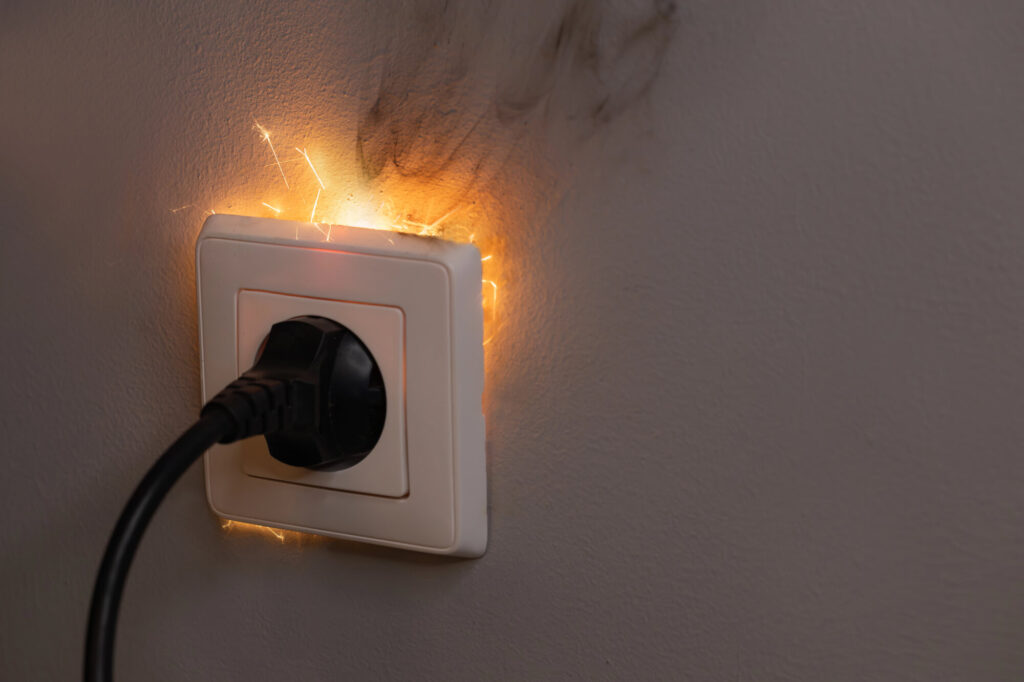
A hot or warm outlet is one of the clearest warning signs of an electrical problem in your home. Unlike a tripped breaker or flickering light, a warm outlet indicates active heat generation — and heat in your wiring is a fire hazard that needs immediate attention.
⚡ Key Takeaways
- A warm or hot outlet indicates loose wiring, an overloaded circuit, or a failing outlet — all of which are fire hazards requiring immediate action.
- Stop using the outlet immediately and turn off the circuit at the breaker — do not attempt to diagnose or repair it yourself.
- A licensed electrician must identify the cause before the outlet is safe to use again; this is not a DIY repair.
Is a Warm Outlet Ever Normal?
A standard outlet should never be warm or hot to the touch under normal use. High-draw appliances like hair dryers or space heaters can transfer brief warmth to the faceplate, but the outlet should return to room temperature shortly after the appliance is unplugged. If an outlet is warm with nothing plugged in, or stays persistently hot during use, that is a warning sign.
Common Causes of a Hot Outlet
- Loose wiring connections: Loose wire terminals create resistance that generates heat — one of the most common causes of outlet fires.
- Overloaded circuit: Too many high-draw devices on one circuit cause the wiring to overheat.
- Worn or failing outlet: Outlets degrade over time; worn contacts increase resistance and heat generation.
- Wiring gauge mismatch: Undersized wire on a circuit causes heating under normal loads.
- Backstab connections: Outlets wired using push-in backstab terminals (rather than screw terminals) are prone to loosening and overheating over time.
What to Do If Your Outlet Is Hot
- Stop using the outlet immediately — unplug anything connected to it.
- Turn off the circuit at the breaker to remove the risk of fire or shock.
- Do not inspect the wiring yourself — this requires working with live conductors inside the wall.
- Call emergency-same-day”>a licensed electrician to diagnose the cause and make a code-compliant repair.
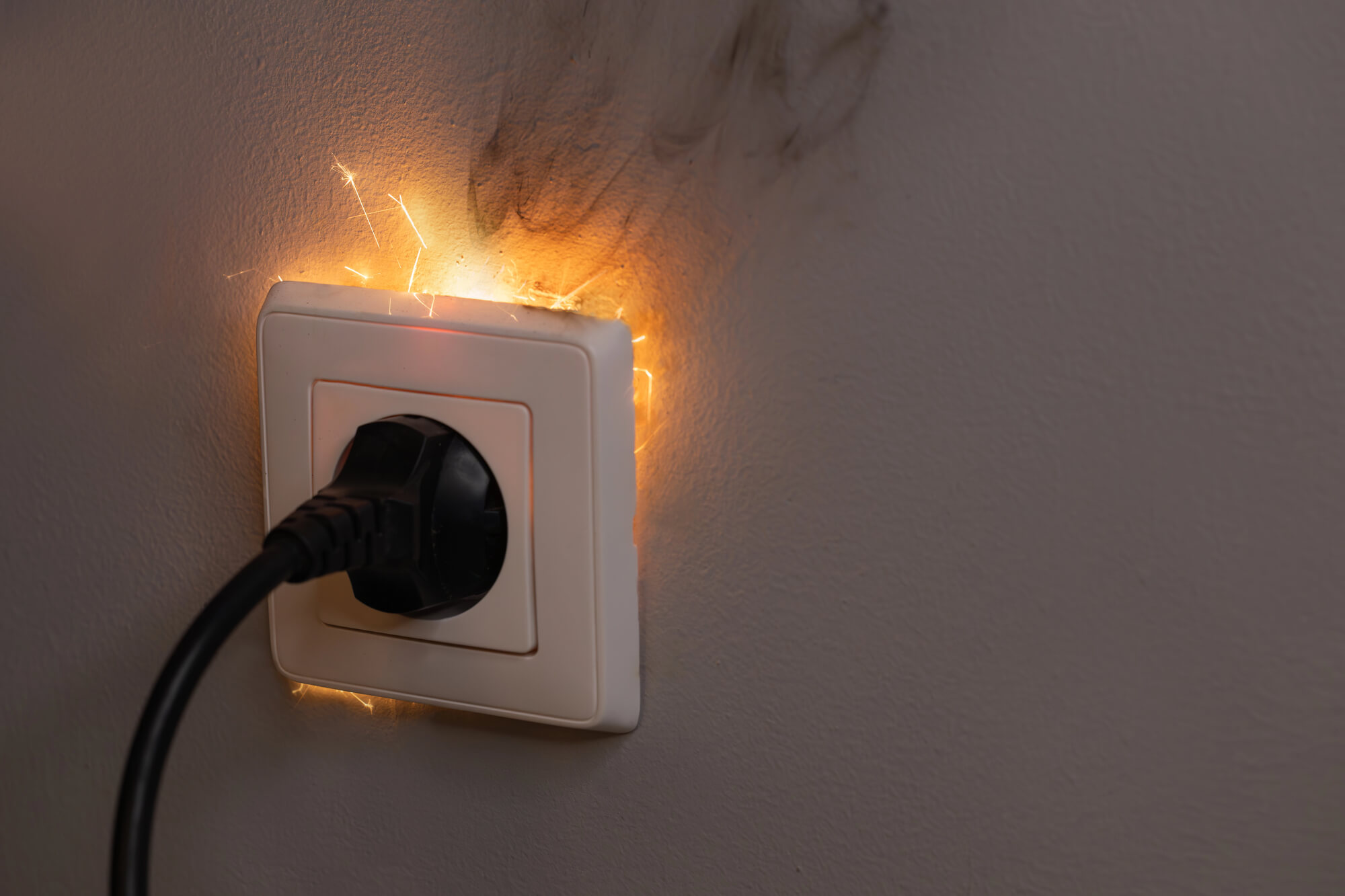
If you notice a burning smell, discoloration, or scorch marks around the slots, treat this as an electrical emergency and call immediately. Do not restore power until an electrician has inspected the circuit.
What an Electrician Will Check
A licensed electrician will remove the outlet, inspect all wire connections, check for appropriate wire gauge, test the circuit for overloading, and replace the outlet if worn. They will also inspect adjacent outlets and junction boxes on the same circuit, since loose connections upstream can cause heat at outlets downstream. If backstab wiring is found, connections will be re-terminated to screw terminals.
Electrical Codes and Outlet Temperature Safety Standards
The National Electrical Code (NEC) does not allow outlets to exceed safe operating temperatures under normal load conditions. While outlets are designed to handle some heat during continuous use, any perceptible warmth indicates abnormal resistance in the connection. Electrical inspectors testing homes for code compliance use infrared thermometers to check outlet temperatures—outlets registering above ambient temperature by more than 10-15 degrees Fahrenheit are considered unsafe and must be replaced. This safety standard exists because excessive heat indicates a failing connection that will eventually arc and ignite.
Building codes for residential electrical systems specify that all outlets must be installed with proper gauge wiring matched to the circuit amperage, secure terminal connections, and appropriate GFCI/AFCI protection. When you feel an outlet is warm, it signals that the installation may not meet these standards. A licensed electrician can identify whether the problem is an undersized wire, improper breaker sizing, a loose connection at the outlet, or a deeper issue with the circuit.
What to Do If You Find a Warm Outlet
If you discover a warm or hot outlet, your immediate action should be to stop using it and contact a licensed electrician. Do not attempt a DIY fix—replacing an outlet requires safely de-energizing the circuit, and diagnosing the root cause requires professional knowledge of electrical systems and NEC code. While waiting for service, unplug any devices from that outlet and do not rely on it for important equipment.
Document the situation by noting when the outlet feels warm, what was plugged into it, and whether the warmth appears even when nothing is connected. This information helps the electrician diagnose the problem more quickly. If other outlets on the same circuit also feel warm, or if the breaker keeps tripping, you have a more serious issue that needs immediate attention. In the meantime, use other circuits carefully to avoid overloading your electrical system further.
Electrical Codes and Safety Standards for Outlet Temperature
The National Electrical Code (NEC) does not permit outlets to exceed safe operating temperatures under normal load conditions. While outlets are designed to handle some heat during continuous use, any perceptible warmth indicates abnormal resistance. Electrical inspectors use infrared thermometers to check outlet temperatures—outlets registering more than 10-15 degrees Fahrenheit above ambient temperature are considered unsafe and must be replaced. This standard exists because excessive heat indicates a failing connection that will eventually arc and ignite.
Building codes specify that all outlets must use proper gauge wiring matched to circuit amperage, secure terminal connections, and appropriate GFCI/AFCI protection. When an outlet feels warm, it signals that the installation may not meet these standards. A licensed electrician can determine whether the issue is undersized wiring, improper breaker sizing, loose connections, or a deeper circuit problem.
What to Do When You Find a Warm Outlet
If you discover a warm or hot outlet, stop using it immediately and contact a licensed electrician. Never attempt a DIY fix—outlet replacement requires safely de-energizing the circuit and diagnosing the root cause. While waiting for service, unplug all devices from that outlet. Document when the outlet feels warm, what was plugged in, and whether warmth appears even when nothing is connected. This helps the electrician diagnose faster.
If other outlets on the same circuit feel warm or if the breaker keeps tripping, you have a more serious issue requiring immediate attention. Do not continue using that circuit while waiting for service. Avoid overloading your electrical system with other circuits. A licensed electrician will identify the underlying cause, whether it’s a loose connection, failing breaker, undersized wire, or overloaded circuit, and make the necessary corrections to bring your system back to safe operation.
Frequently Asked Questions
Can a hot outlet cause a fire?
Yes. Resistance heating from loose connections or overloaded wiring is a leading cause of electrical fires. Fires can start inside wall cavities and spread before any visible sign appears. A hot outlet must be treated as a fire hazard. The U.S. Consumer Product Safety Commission (CPSC) identifies faulty wiring and overloaded circuits as leading contributors to residential electrical fires.
Is it safe to use a GFCI outlet that feels warm?
No. GFCI outlets have more internal components than standard outlets, but they should not run warm. A warm GFCI has the same potential causes — loose wiring, overloading, or a failing device — and must be inspected by an electrician.
My outlet is warm only when a specific appliance is plugged in — is that normal?
High-draw appliances can warm an outlet during heavy use. But if the outlet is excessively hot, or multiple appliances cause the same issue, the problem is likely a loose connection or undersized circuit. Have an electrician inspect both the outlet and the circuit.
How much does it cost to replace a hot outlet?
Outlet replacement alone is $75–$200 including labor. If the problem requires circuit rewiring or panel work, costs will be higher. A licensed electrician can provide an accurate estimate after diagnosis.