
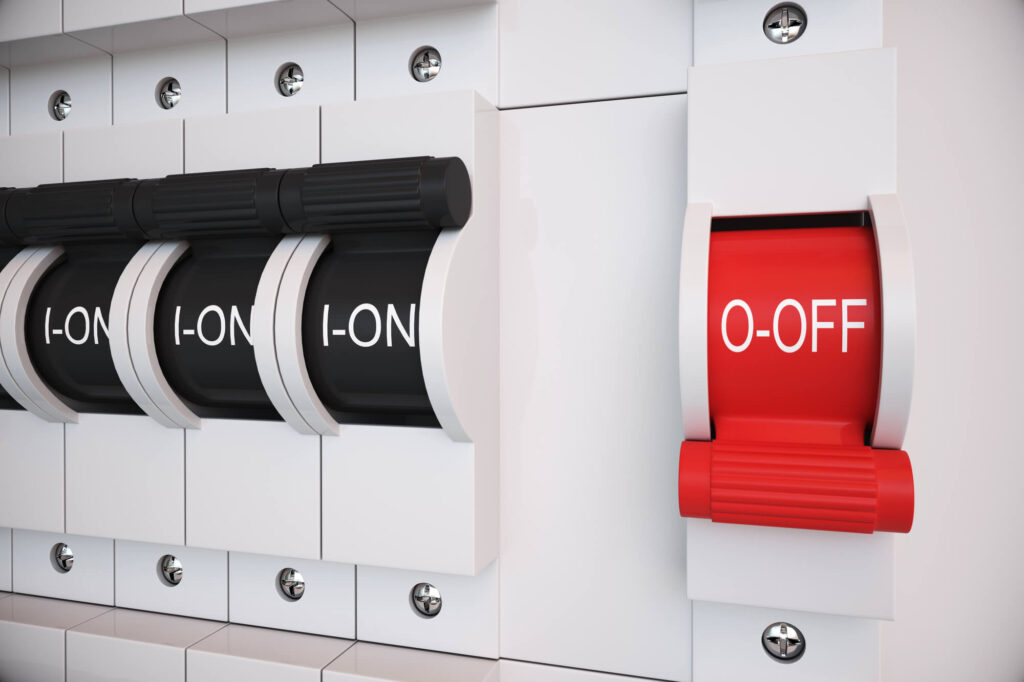
If your breaker trips when microwave runs, it’s a sign that your electrical system is detecting a potential overload or fault. Circuit breakers are designed to protect your home from overheating wires and electrical fires, so when a breaker trips, it’s responding to a condition that may be unsafe.
Microwaves are powerful appliances that draw a large amount of electricity. If the circuit is overloaded, the outlet wiring is damaged, or the microwave itself has a problem, the breaker may shut off power immediately. While the issue may sometimes be simple to resolve, persistent breaker trips should always be investigated.
This guide explains the most common reasons a microwave trips the breaker, how homeowners can troubleshoot the issue safely, and when it’s time to call a professional electrician.
Contents
- 1 What It Means When a Breaker Trips When the Microwave Runs
- 2 Common Causes When a Breaker Trips When Microwave Runs
- 3 Danger and Warning Signs to Watch For
- 4 How to Troubleshoot When a Breaker Trips When Microwave Runs
- 5 Need an Electrician to Diagnose the Problem?
- 6 How to Prevent Microwave Breaker Trips
- 7 Cost to Fix a Breaker That Trips When Microwave Runs
- 8 Frequently Asked Questions
- 9 Get Help Fixing Electrical Problems in Your Home
⚡ Key Takeaways
- When a microwave turns on, it pulls a significant amount of electrical current to power the magnetron that heats food.
- Overloaded Kitchen Circuit Kitchens often have several appliances drawing electricity at the same time.
- If the breaker trips when your microwave runs, watch for these warning signs that may indicate a more serious electrical problem:
What It Means When a Breaker Trips When the Microwave Runs
When a microwave turns on, it pulls a significant amount of electrical current to power the magnetron that heats food. Many microwaves require between 1,000 and 1,500 watts of power.
If the circuit supplying the microwave cannot safely handle that load, the breaker will trip to prevent overheating. This safety feature prevents wires from melting and reduces the risk of electrical fires.
In most homes, a microwave should operate on a dedicated circuit — as required by the National Electrical Code (NEC) for high-draw kitchen appliances like microwaves to prevent chronic breaker trips. If the microwave shares power with other appliances, the electrical demand may exceed the circuit’s capacity.
Breaker trips can also occur if the microwave itself is faulty or if there is a wiring problem in the outlet or circuit.
Common Causes When a Breaker Trips When Microwave Runs
Overloaded Kitchen Circuit
Kitchens often have several appliances drawing electricity at the same time. If your microwave shares a circuit with devices like a refrigerator, toaster, or coffee maker, the combined load may exceed the breaker’s limit.
When the microwave starts, the sudden demand for power can push the circuit beyond its capacity and trip the breaker.
Microwave Requires a Dedicated Circuit
Modern electrical codes often require microwaves to have their own dedicated circuit. If the microwave is connected to a general kitchen outlet circuit, it may not receive enough power to operate safely.
Faulty Microwave
If the breaker trips only when using one specific microwave, the appliance itself may be malfunctioning. Internal electrical faults can cause the microwave to draw excessive current or create short circuits.
Ground Fault in the Outlet
A ground fault occurs when electricity flows through an unintended path, such as damaged insulation or moisture inside the outlet. Ground faults can trigger breakers or GFCI protection devices.
Weak or Aging Circuit Breaker
Circuit breakers can wear out over time. A breaker that has tripped many times may become sensitive and shut off power even under normal electrical loads.
Loose Electrical Connections
Loose wiring connections in the outlet or electrical panel can cause resistance and overheating, which may lead to breaker trips when high-power appliances like microwaves operate.
Danger and Warning Signs to Watch For
If the breaker trips when your microwave runs, watch for these warning signs that may indicate a more serious electrical problem:
- Burning smell from outlets or appliances
- Sparks when plugging in the microwave
- Warm or discolored outlets
- Breaker trips repeatedly
- Lights dim when the microwave starts
- Crackling sounds from outlets
If you notice any of these symptoms, turn off the circuit and contact an electrician immediately.
 circuit breaker” width=”2000″ height=”1333″ srcset=”https://www.instaelectricians.com/blog/wp-content/uploads/2026/03/Electrician-inspecting-circuit-breaker.jpg 2000w, https://www.instaelectricians.com/blog/wp-content/uploads/2026/03/Electrician-inspecting-circuit-breaker-300×200.jpg 300w, https://www.instaelectricians.com/blog/wp-content/uploads/2026/03/Electrician-inspecting-circuit-breaker-1024×682.jpg 1024w, https://www.instaelectricians.com/blog/wp-content/uploads/2026/03/Electrician-inspecting-circuit-breaker-768×512.jpg 768w, https://www.instaelectricians.com/blog/wp-content/uploads/2026/03/Electrician-inspecting-circuit-breaker-1536×1024.jpg 1536w” sizes=”auto, (max-width: 2000px) 100vw, 2000px” />
How to Troubleshoot When a Breaker Trips When Microwave Runs
There are several basic checks homeowners can safely perform to narrow down the cause of the problem.
Unplug Other Kitchen Appliances
If multiple devices share the same circuit, unplug everything except the microwave. Reset the breaker and run the microwave again to see if it trips.
Plug the Microwave Into a Different Outlet
If possible, test the microwave on another circuit in your home. If the breaker trips again, the microwave may be defective.
Inspect the Outlet
Check the outlet for burn marks, loose plugs, or visible damage. Damaged outlets should always be replaced by an electrician.
Reset the Breaker
Turn the breaker fully off and then back on before testing the microwave again. If the breaker trips immediately, there may be a wiring fault or short circuit.
Avoid Using Extension Cords
Microwaves should never be powered through extension cords or power strips. These can easily overload circuits and cause breakers to trip.
Need an Electrician to Diagnose the Problem?
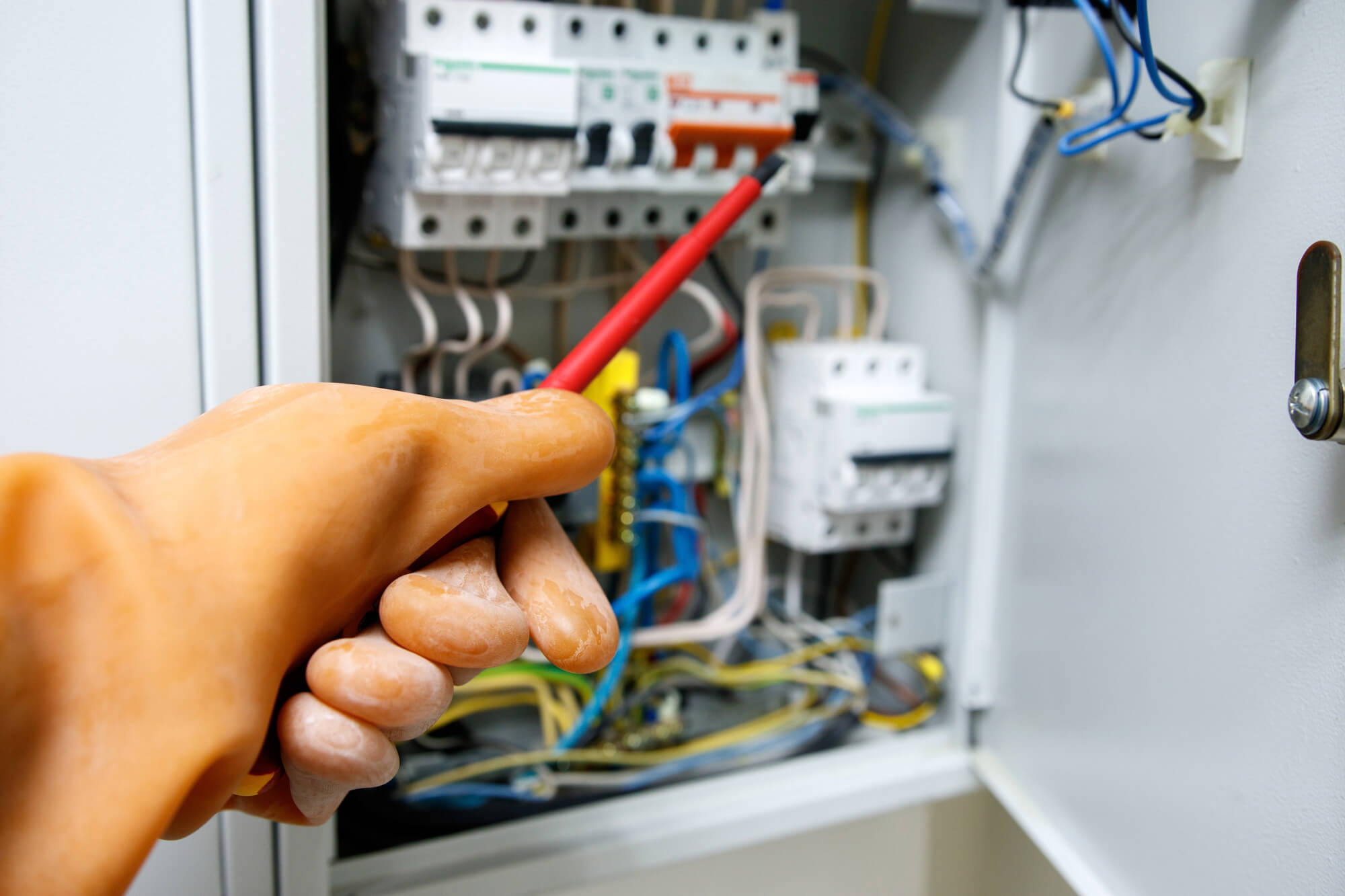
If your breaker continues tripping when the microwave runs, a professional electrician should inspect the circuit. Electrical issues involving kitchen appliances often require testing wiring, outlets, and breaker capacity.
A licensed electrician can determine whether the circuit is overloaded, install a dedicated circuit if necessary, or replace damaged components safely.
Microwave breaker trips mean your kitchen circuit is undersized. Our panel upgrade team and repair specialists can add capacity.
How to Prevent Microwave Breaker Trips
Following a few electrical safety practices can reduce the chances of your microwave tripping the breaker.
- Use a dedicated circuit for microwave appliances
- Avoid running multiple kitchen appliances simultaneously
- Replace damaged outlets immediately
- Upgrade outdated electrical panels
- Schedule periodic electrical inspections
Many older homes were not designed to handle the electrical demand of modern kitchens, which can make breaker trips more common.
Cost to Fix a Breaker That Trips When Microwave Runs
The cost to repair the issue depends on the underlying cause.
- Outlet replacement: $120 – $250
- Circuit breaker replacement: $150 – $350
- Electrical troubleshooting visit: $100 – $250
- Dedicated microwave circuit installation: $500 – $1,500
- Wiring repair: $300 – $800
Installing a dedicated circuit is one of the most common solutions if the microwave shares power with other appliances.
Frequently Asked Questions
Why does my microwave trip the breaker immediately?
This usually indicates a short circuit, ground fault, or internal microwave malfunction. If the breaker trips immediately after turning on the microwave, the appliance or wiring should be inspected.
Can a microwave overload a circuit?
Yes. Microwaves often draw over 1,000 watts of power. If the microwave shares a circuit with other appliances, the total electrical demand may exceed the breaker’s capacity.
Should a microwave be on its own circuit?
Yes. Many electrical codes recommend a dedicated circuit for microwaves to prevent overloads and ensure reliable operation.
Why does my house smell like burning plastic?
Burning plastic smells often occur when wire insulation overheats or melts due to electrical overloads, loose connections, or faulty appliances.
Get Help Fixing Electrical Problems in Your Home
If your breaker trips when the microwave runs, do not ignore the warning signs. Electrical issues can quickly worsen and create serious safety risks.
A licensed electrician can diagnose the problem, repair the circuit, and ensure your kitchen electrical system is safe and reliable.