
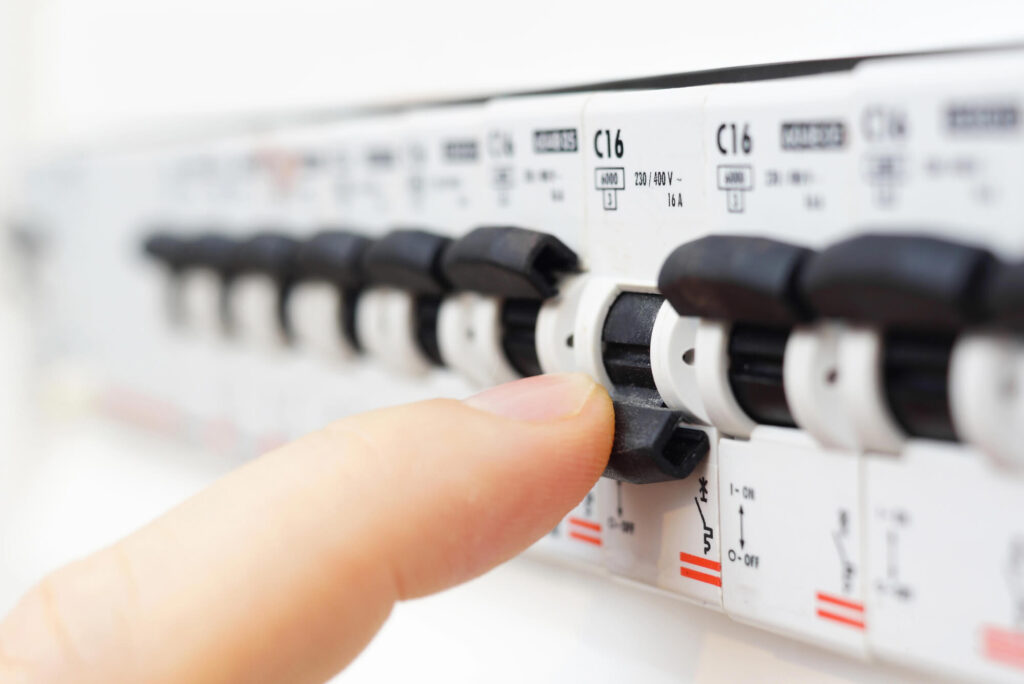
If your breaker trips randomly, it can be frustrating—and potentially a sign of a serious electrical issue. Circuit breakers are designed to protect your home by shutting off power when something goes wrong. When a breaker trips without an obvious reason, it’s important to identify the cause quickly to avoid damage, fire risks, or electrical failure.
In this guide, we’ll explain why a breaker trips randomly, how to troubleshoot the issue safely, what repairs may cost, and when to call a licensed electrician.
⚡ Key Takeaways
- A circuit breaker trips when it detects an unsafe condition, such as too much electrical current, a short circuit, or a ground fault.
- Understanding the root cause is key to fixing the problem.
- If your breaker trips randomly, look for these warning signs that indicate a more serious issue:
What It Means When a Breaker Trips Randomly
A circuit breaker trips when it detects an unsafe condition, such as too much electrical current, a short circuit, or a ground fault. If your breaker trips randomly, it usually means there’s an intermittent issue—something that isn’t constantly happening but occurs under certain conditions.
Common scenarios include:
- The breaker trips at different times of day
- It trips without adding new appliances
- It resets but trips again later
- Multiple breakers may trip occasionally
Even if it seems random, there is always an underlying cause that needs attention.
Common Causes When a Breaker Trips Randomly
Understanding the root cause is key to fixing the problem.
- Overloaded circuit: Too many devices drawing power at once
- Short circuit: A hot wire touching a neutral wire
- Ground fault: Electricity escaping to ground, often in damp areas
- Faulty appliances: Devices with internal wiring issues
- Loose wiring: Intermittent connections causing heat and disruption
- Aging breaker: Worn-out breakers may trip unnecessarily
Warning Signs to Watch For
If your breaker trips randomly, look for these warning signs that indicate a more serious issue:
- Burning smell or melted plastic near outlets
- Warm or discolored outlets and switches
- Buzzing sounds from the breaker panel
- Flickering lights before the breaker trips
- Sparks when plugging in devices
These signs suggest a potential fire hazard and should not be ignored — the U.S. Consumer Product Safety Commission (CPSC) identifies repeatedly tripping breakers as a warning sign of serious wiring faults.
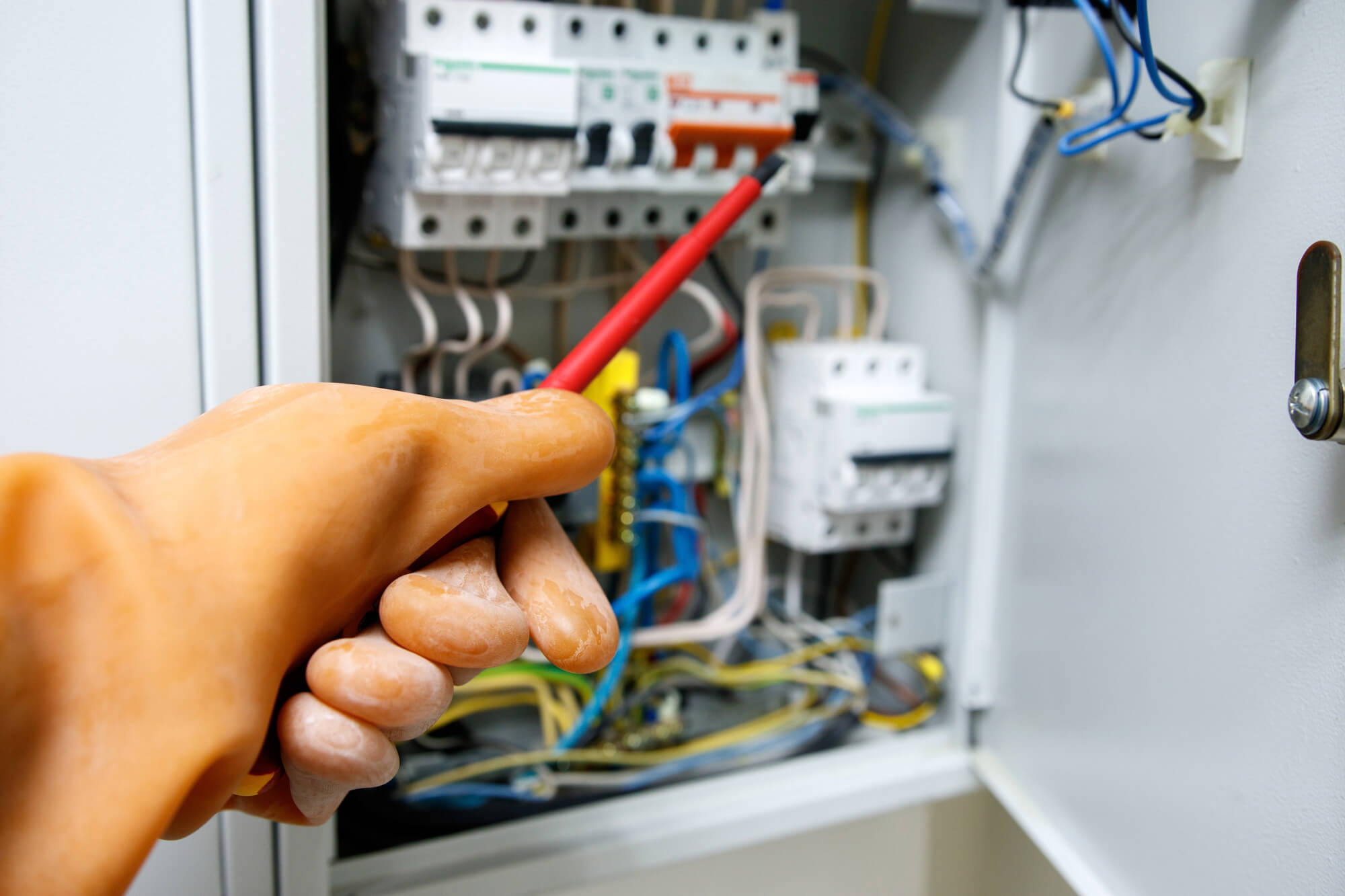
Troubleshooting When a Breaker Trips Randomly
You can take several steps to identify the cause before calling a professional.
Step 1: Identify the affected circuit
Determine which breaker is tripping and what areas or devices it controls.
Step 2: Unplug devices
Disconnect all appliances on that circuit and reset the breaker. Plug them back in one at a time to find the culprit.
Step 3: Check for overload
If the breaker trips when multiple devices are used together, the circuit may be overloaded.
Step 4: Inspect cords and outlets
Look for damage, loose connections, or burn marks.
Step 5: Test with minimal load
If the breaker trips even with nothing plugged in, the issue may be wiring or the breaker itself.
Step 6: Consider recent changes
New appliances or renovations may have increased the electrical load.
If you cannot identify the issue safely, it’s time to call an electrician.
Random breaker trips often mean a failing breaker or wiring fault. Our panel specialists and repair team can diagnose it.
Electrical Repair Costs for Breaker Issues
The cost to fix a breaker that trips randomly depends on the underlying issue.
- Breaker replacement: $150 – $300
- Outlet or switch repair: $100 – $250
- Wiring repair: $300 – $1,500+
- Electrical panel upgrade: $1,500 – $4,000
- Appliance repair or replacement: $100 – $1,000+
Addressing the issue early can prevent more expensive damage later.
When to Call a Licensed Electrician
You should contact a licensed electrician if:
- The breaker trips repeatedly without clear cause
- You notice burning smells or heat from outlets
- The breaker won’t reset
- You suspect wiring or panel issues
- Your home has an older electrical system
Electrical issues can escalate quickly, so professional inspection is often the safest option.
FAQ: Breaker Trips Randomly
Why does my breaker trip randomly with nothing plugged in?
This usually indicates a wiring issue, ground fault, or a faulty breaker that needs professional inspection.
Can a bad breaker cause random tripping?
Yes, circuit breakers can wear out over time and may trip even when there is no real electrical fault.
Is it dangerous if my breaker keeps tripping?
Yes, frequent tripping can indicate serious electrical problems that may lead to fire hazards if not addressed.
Why does my house smell like burning plastic?
Burning plastic smells often occur when wire insulation overheats or melts due to electrical overloads, loose connections, or faulty appliances.
Fix the Problem Before It Gets Worse
If your breaker trips randomly, don’t ignore it. While it may seem like a minor inconvenience, it’s often a warning sign of a deeper electrical issue. By troubleshooting early and seeking professional help when needed, you can protect your home and avoid costly repairs.
Taking action now ensures your electrical system remains safe, reliable, and efficient.
Call 855-436-0065 for Immediate Assistance
Arc Fault Circuit Interrupter (AFCI) Nuisance Trips & Solutions
Modern building codes require AFCI breakers (or outlets with AFCI protection) in bedrooms, living spaces, and kitchens to prevent fires from arcing wires. AFCIs are extremely sensitive safety devices that detect tiny electrical arcs — even a 5-milliamp arc lasting milliseconds will trigger the breaker. While this sensitivity prevents fires, it sometimes causes nuisance trips, especially on circuits with older appliances like refrigerators or fluorescent lighting that have minor arcing issues. If a specific appliance consistently triggers an AFCI, that appliance is the source of the fault and should be repaired or replaced.
Some homeowners report AFCI nuisance tripping when using certain devices like older computers or wall-mounted television sets. If the AFCI trips only when a specific appliance is on, unplug the device and reset the breaker — if the breaker holds, the appliance needs replacement. For circuit-wide nuisance tripping on AFCI breakers protecting multiple outlets, ask an electrician whether replacing the AFCI breaker with an AFCI receptacle (outlet) would help — sometimes a failing AFCI breaker is overly sensitive and needs replacement rather than the entire circuit being faulty.
Intermittent Wiring Faults & Moisture-Related Issues
Random breaker trips without a clear trigger often indicate intermittent wiring faults — loose connections, corroded wire terminals, or moisture intrusion in junction boxes cause electrical resistance that generates heat and triggers protection. These faults are difficult to diagnose because they occur sporadically and may only manifest under specific load conditions. A power quality analyzer or circuit tracer used by a professional electrician can log voltage and current over several days, revealing patterns that identify the faulty circuit or appliance.
Moisture is a common culprit in kitchens, bathrooms, or outdoor circuits. Water seeping into outlet boxes, wire connectors, or breaker terminals causes corrosion and intermittent arcing. If random trips occur near areas exposed to moisture, have an electrician inspect those circuits and junction boxes for water damage or corrosion. Replacing corroded outlets, re-sealing conduit, or upgrading to weather-resistant covers typically costs $200–$500 and stops the trips. Never ignore intermittent tripping — it signals a fire hazard that will worsen over time if left unaddressed.