
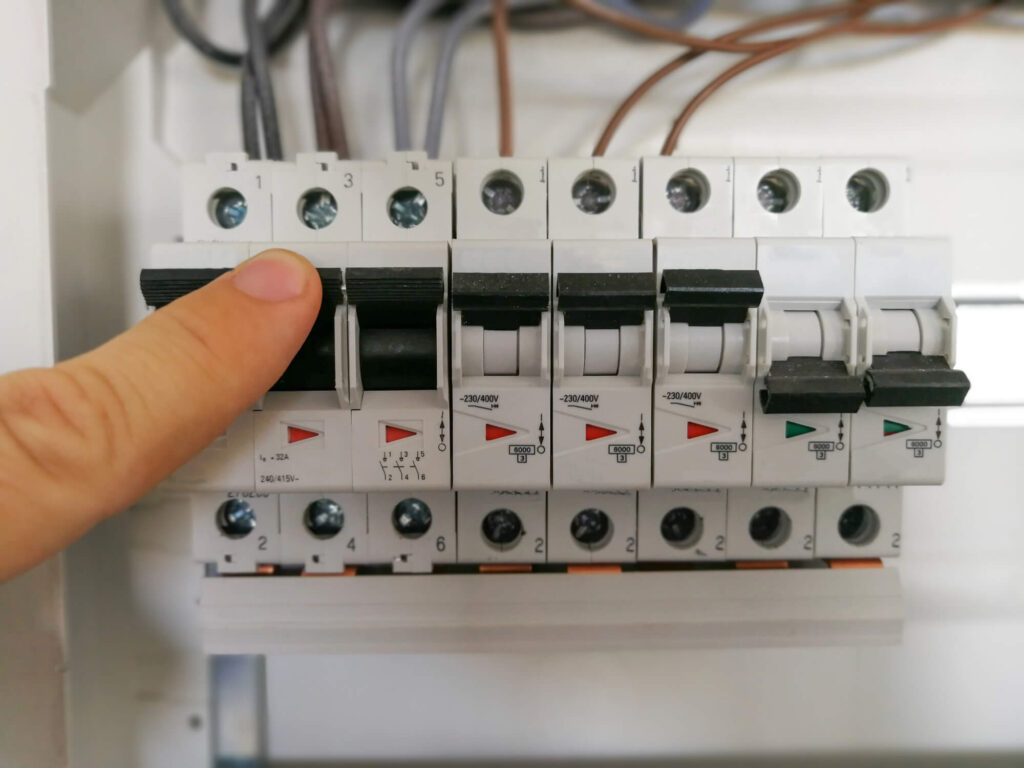
If your breaker trips at night, it may seem confusing or even random—but there is always a reason behind it. Circuit breakers are designed to protect your home from electrical overloads, faults, and fire risks — hazards the U.S. Consumer Product Safety Commission (CPSC) links to arc faults and residential fires. When the issue happens specifically at night, it often points to patterns in electrical usage, temperature changes, or devices that operate automatically.
In this guide, we’ll explain why a breaker trips at night, how to troubleshoot the problem, common fixes, and when to call a licensed electrician.
⚡ Key Takeaways
- When a breaker trips at night, it usually means something changes in your electrical system during those hours.
- There are several reasons why your breaker may trip at night specifically:
- If your breaker trips at night, check for these warning signs that may indicate a more serious problem:
What It Means When a Breaker Trips at Night
When a breaker trips at night, it usually means something changes in your electrical system during those hours. Unlike random trips, nighttime trips often follow a pattern linked to usage or environmental conditions.
Common patterns include:
- The breaker trips at a similar time each night
- It happens when specific appliances turn on
- It occurs during colder or hotter nights
- It resets easily but trips again overnight
Understanding these patterns is key to identifying the root cause.
Common Causes of Breakers Tripping at Night
There are several reasons why your breaker may trip at night specifically:
- Increased nighttime electrical usage: Heaters, air conditioners, or electric blankets may run simultaneously
- Automatic appliances: Dishwashers, refrigerators, sump pumps, or HVAC systems cycling overnight
- Temperature changes: Wiring contracts in colder temperatures, potentially exposing weak connections
- Outdoor moisture: Dew or condensation affecting outdoor outlets or circuits
- Faulty appliances: Devices that activate on timers or cycles
- Overloaded circuits: Multiple nighttime devices drawing power at once
Warning Signs of a Serious Electrical Issue
If your breaker trips at night, check for these warning signs that may indicate a more serious problem:
- Burning smells or melted plastic odors
- Warm or discolored outlets
- Buzzing sounds from the breaker panel
- Lights flickering before the breaker trips
- Sparks when plugging in devices
These signs should never be ignored, as they can indicate a fire hazard.
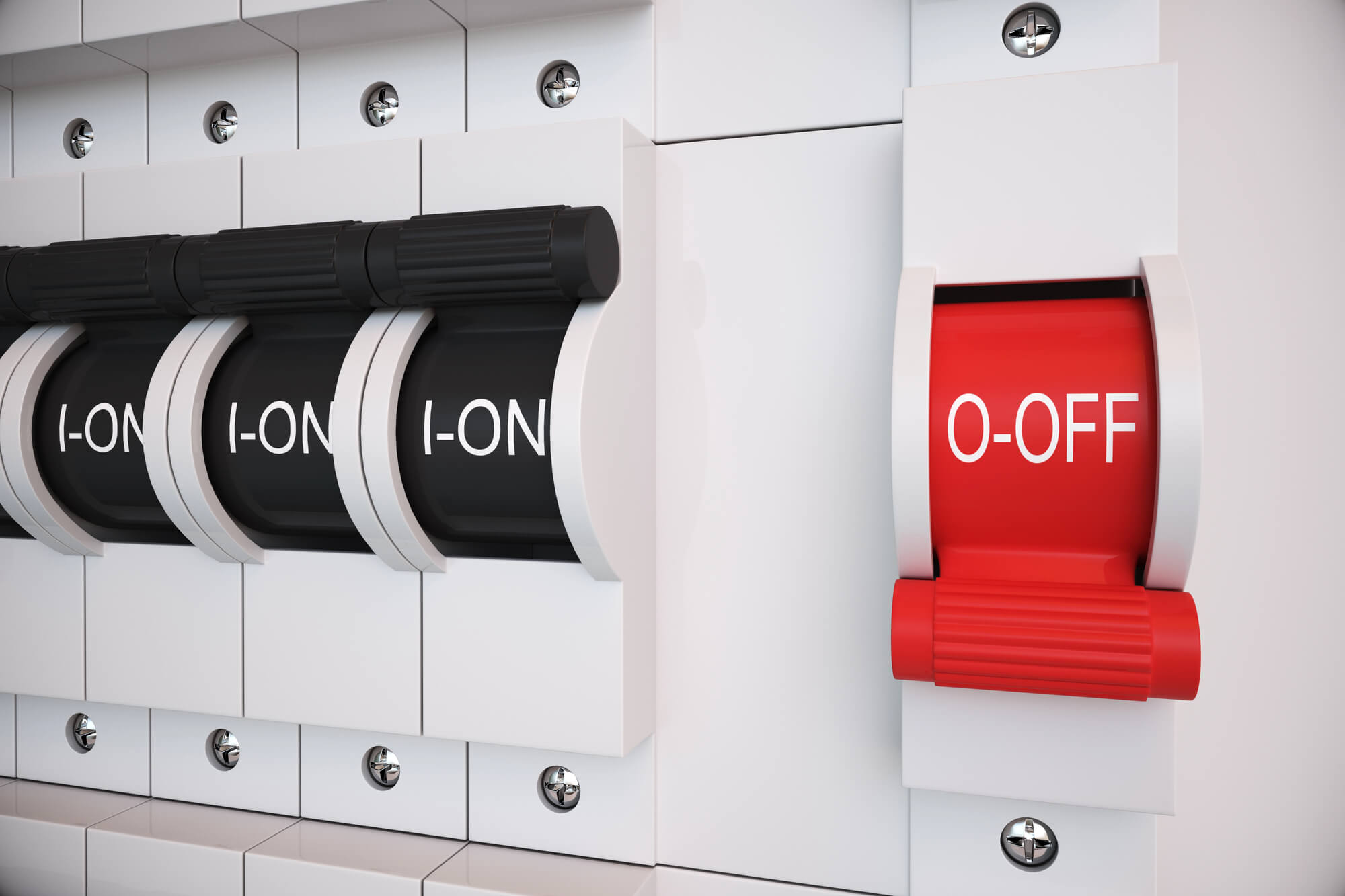
Troubleshooting a Breaker That Trips at Night
You can take the following steps to identify the cause of the issue:
Step 1: Track the timing
Note when the breaker trips and what devices are running at that time.
Step 2: Identify connected appliances
Check which appliances are on the affected circuit and whether they run overnight.
Step 3: Reduce the load
Turn off or unplug non-essential devices and see if the problem stops.
Step 4: Inspect outdoor outlets
Look for moisture or damage, especially if the circuit includes exterior wiring.
Step 5: Test appliances individually
Run appliances one at a time to identify if one is causing the issue.
Step 6: Reset and monitor
After resetting the breaker, monitor it overnight to confirm whether the issue persists.
If the breaker continues to trip despite these steps, professional inspection is recommended.
Nighttime trips are often tied to HVAC or appliance timing. Our diagnostic team and residential electricians can find the cause.
Electrical Repair Costs for Nighttime Breaker Issues
The cost of fixing a breaker that trips at night depends on the underlying cause.
- Breaker replacement: $150 – $300
- Outlet or switch repair: $100 – $250
- Wiring repair: $300 – $1,500+
- Outdoor outlet repair: $150 – $400
- Electrical panel upgrade: $1,500 – $4,000
Addressing issues early can prevent more serious damage and reduce overall costs.
When to Call a Licensed Electrician
You should contact a licensed electrician if:
- The breaker trips consistently at night
- You notice signs of overheating or burning smells
- The breaker won’t reset or trips immediately
- You suspect wiring or moisture-related issues
- Your home has an older electrical system
A professional electrician can diagnose hidden problems and ensure your system is safe and reliable.
FAQ: Breaker Trips at Night
Why does my breaker only trip at night?
This is often due to increased electrical usage, automatic appliances, or environmental factors like temperature and moisture.
Can temperature changes cause breakers to trip?
Yes, temperature changes can affect wiring and connections, especially in older systems, leading to intermittent faults.
Is it dangerous if my breaker trips at night?
It can be, especially if caused by faulty wiring or overheating. It’s important to investigate and resolve the issue promptly.
Why does my house smell like burning plastic?
Burning plastic smells often occur when wire insulation overheats or melts due to electrical overloads, loose connections, or faulty appliances.
Resolve Nighttime Breaker Issues Safely
If your breaker trips at night, don’t ignore it. While it may seem like a minor inconvenience, it often signals an underlying issue that needs attention. By identifying patterns, troubleshooting carefully, and calling a professional when needed, you can protect your home and prevent more serious electrical problems.
Taking action early ensures your electrical system remains safe, efficient, and reliable.
Call 855-436-0065 for Immediate Assistance
Temperature-Related Breaker Sensitivity & Seasonal Patterns
Breaker trips that occur consistently at night or during cold weather often relate to temperature effects on electrical resistance and component sensitivity. Electrical resistance increases as temperature drops, meaning circuits draw higher current under cold conditions even with the same appliance load. An air conditioning compressor starting on a cold night (40 degrees) draws more current than the same compressor on a warm night (75 degrees), potentially exceeding breaker thresholds during winter months or early mornings.
Breaker thermal sensors are temperature-sensitive by design — they measure current and temperature together to provide overload protection. A breaker rated for 20 amps at 77°F may trip at 18–19 amps if the panel temperature drops to 50°F. Similarly, cold wiring in attics or crawlspaces increases resistance, causing voltage drop and additional current draw. If your breaker trips consistently during cold seasons or early mornings, documenting the times and temperatures helps an electrician diagnose whether the issue is ambient temperature, cold-soaked wiring, or a temperature-sensitive breaker that needs replacement.
Nocturnal Load Patterns & Hidden Appliance Issues
Night-time tripping often coincides with automatic appliance cycles that run after midnight: water heater timers, HVAC maintenance heating, sump pump operation, or refrigerator compressor cycles. Ask yourself what typically happens on your circuits between 10 PM and 6 AM. If a specific appliance cycles at night, that’s likely the culprit. Older refrigerators with failing compressors or water heaters with heating element faults often draw excessive current during night cycles when the home is quiet and you might notice the breaker trip.
To isolate the problem, turn off the affected appliance’s breaker before bedtime and see if the issue stops. If the breaker holds, the appliance is the cause — have it serviced or replaced. If the breaker still trips with the appliance offline, the problem is elsewhere on the circuit. Documenting the night when the trip occurs (date, time, weather, outdoor temperature, and what appliances were on) helps an electrician narrow down the cause. Persistent night-time tripping despite troubleshooting should be evaluated by a professional within a few days to prevent potential fire hazards from developing.