
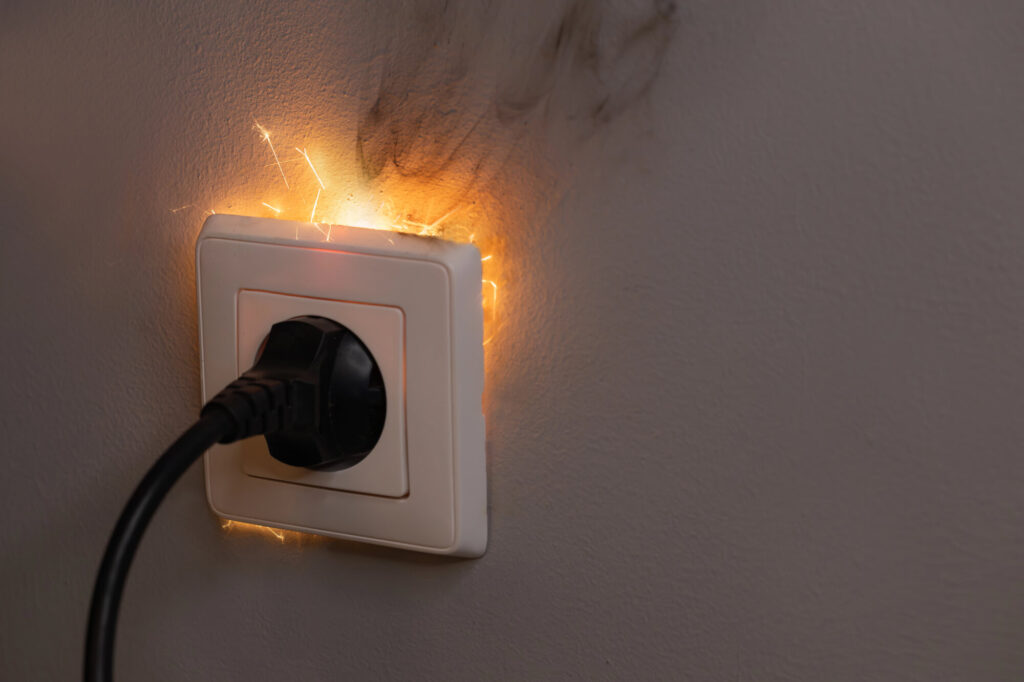
Sparks coming from an electrical outlet are alarming — and for good reason. While a tiny spark when plugging in a device can occasionally be normal, large, repeated, or unexpected sparks are a sign of a potentially serious electrical problem — one the U.S. Consumer Product Safety Commission (CPSC) warns can escalate to arc faults and residential fires. This guide explains what causes outlet sparks, which situations require immediate attention, and when to call a licensed electrician.
⚡ Key Takeaways
- A brief, small blue spark when plugging in an appliance can be a normal electrical phenomenon.
- Short Circuit A short circuit occurs when a hot wire contacts a neutral or ground wire, creating a sudden surge of current that produces significant sparking and a tripped breaker.
- Call a licensed electrician immediately if outlet sparks are accompanied by any of the following:
When Outlet Sparks Are Normal
A brief, small blue spark when plugging in an appliance can be a normal electrical phenomenon. When contact is made, there’s a split-second rush of current to energize the device — this can produce a tiny visible arc. If the spark is small, lasts less than a second, and doesn’t recur, it’s generally not a concern. However, sparks that are large, persistent, accompanied by a popping sound, or occur with a burning smell should be investigated immediately.
Causes of Dangerous Outlet Sparks
Short Circuit
A short circuit occurs when a hot wire contacts a neutral or ground wire, creating a sudden surge of current that produces significant sparking and a tripped breaker. Short circuits can be caused by damaged wiring inside the wall, a failing outlet, or a faulty appliance.
Moisture or Water Exposure
Water is an excellent conductor of electricity. Moisture inside an outlet box — from a nearby leak, high humidity, or splash exposure — creates a path for current to arc. Sparks near water sources are especially dangerous. All outlets near sinks, tubs, or outdoor locations must be GFCI-protected per electrical code.
Overloaded Circuit
Plugging too many devices into a single circuit draws more current than the wiring is rated for. Under sustained overload, connections heat up, insulation degrades, and arcing can occur at the outlet. Using power strips to multiply outlets far beyond a circuit’s capacity is a common cause.
Worn or Failing Outlet
Outlets have a finite lifespan. Over years of use, internal contact points wear down, creating loose connections that arc every time the outlet is used. If plugs fit loosely in an outlet or fall out on their own, the outlet has worn out and needs to be replaced by a licensed electrician.
Warning Signs the Sparks Are Serious
Call a licensed electrician immediately if outlet sparks are accompanied by any of the following:
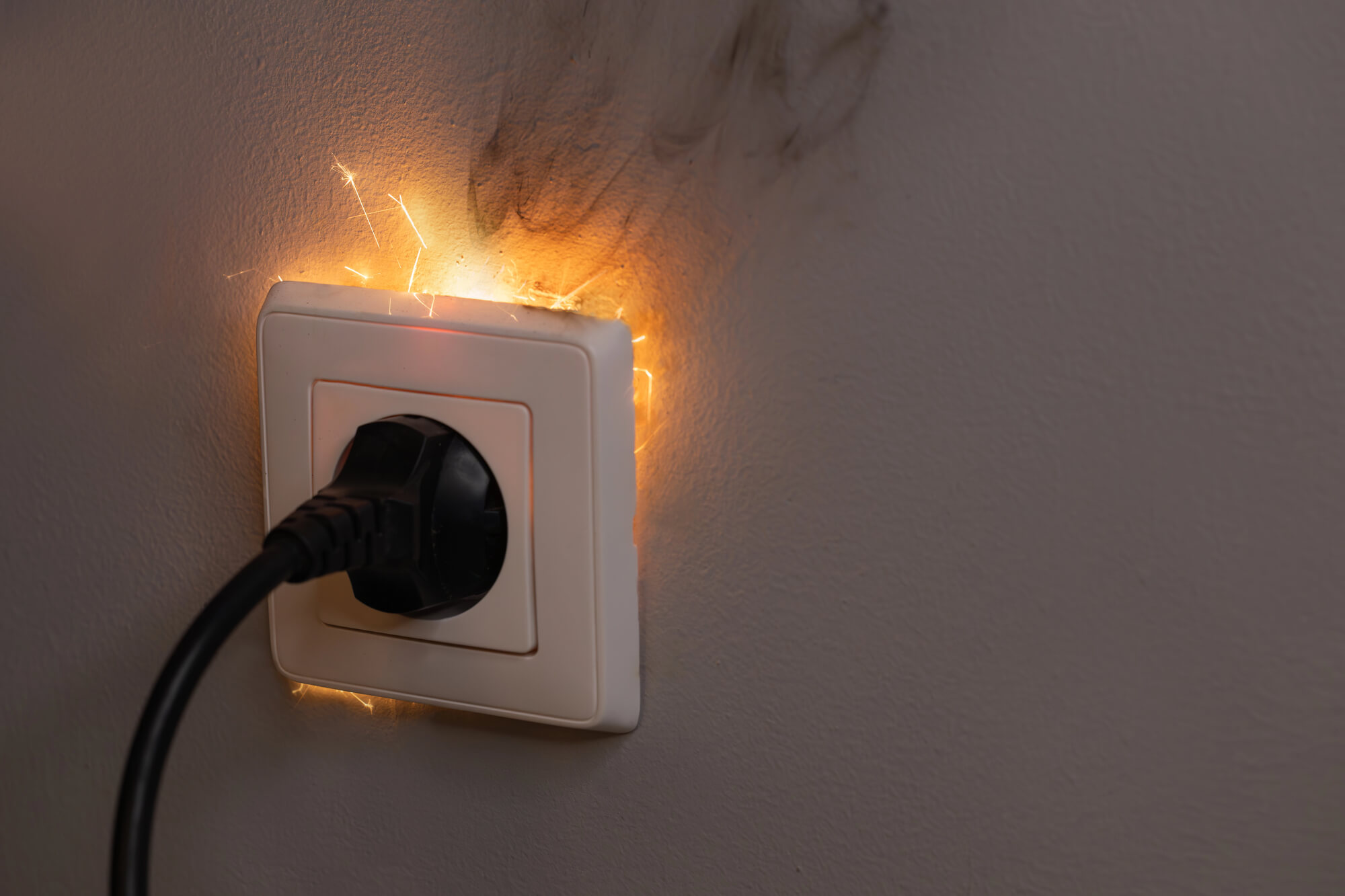
- A burning smell or visible scorch marks around the outlet
- A loud popping or crackling sound
- The outlet feeling warm or hot to the touch
- Sparks occurring without anything being plugged in
- A breaker that trips immediately after reset
- Multiple outlets in the same area losing power
What to Do When You See Outlet Sparks
- Stop using the outlet immediately
- Unplug any devices (if safe to do so without touching the outlet)
- Turn off the circuit at the breaker panel
- Do not attempt to open or repair the outlet yourself
- Call a licensed electrician for inspection and repair
- If you see flames or smell smoke, evacuate and call 911
Sparks from an outlet are a serious hazard. Our same-day electricians can diagnose the cause and our repair team will fix it safely.
When to Replace an Outlet
Replace outlets that show sparking, visible burn marks, feel warm to the touch, have cracked or broken covers, or no longer grip plugs firmly. In kitchens, bathrooms, garages, outdoor areas, and anywhere near water, standard outlets must be replaced with GFCI models. Homes with two-prong outlets should be assessed by an electrician for proper grounding.
How Electricians Diagnose and Repair Sparking Outlets
When an electrician arrives to inspect a sparking outlet, they begin with visual inspection. They look for discoloration, pitting, melted plastic, or char marks on the outlet face and around the receptacle—all signs of previous arcing. Using a multimeter, they measure the resistance of the outlet’s terminals; excessively high resistance indicates oxidized or damaged contacts. They also test for voltage drop across the connection—a voltage drop higher than normal indicates a loose connection or corroded contact.
If the outlet itself appears damaged, replacement is straightforward and inexpensive. However, if the outlet looks normal but still sparks, the problem may be the plug being inserted—bent or damaged prongs not making full contact. In this case, the electrician inspects the circuit breaker and wiring behind the outlet. They pull the outlet from its box to check the wire connections, looking for loose terminals, corrosion, or wire damage. All connections are verified as tight and secure. In rare cases, the wiring inside the wall may be damaged, requiring section replacement.
Safety During and After Outlet Repair
Sparking outlets require careful handling during repair. An electrician will de-energize the circuit at the breaker panel before removing the outlet, then use a multimeter to verify the circuit is dead before handling any wires. Even with the breaker off, they follow proper safety procedures, including using insulated tools and avoiding contact with any metal components until the circuit is confirmed safe.
After repair, the electrician tests the outlet thoroughly before declaring it safe. They plug in a lamp or phone charger and verify that insertion and removal do not produce sparks. They also test for proper grounding and verify that the outlet is receiving the correct voltage. If you experience sparking again after professional repair, contact the electrician immediately—it could indicate a deeper problem with the circuit or wiring that requires further investigation. Never use a repaired outlet repeatedly if sparking resumes; turn off the breaker and call for follow-up service.
Federal Pacific and Zinsco Panels: Why They Make Outlet Sparking Worse
Federal Pacific Electric (FPE) Stab-Lok and Zinsco electrical panels, installed in millions of homes from the 1950s through the 1980s, have a critical flaw: their breakers frequently fail to trip when they should. The CPSC (Consumer Product Safety Commission) issued warnings about FPE panels, and extensive testing by electricians and third-party labs has documented that breakers fail to interrupt overload or short-circuit current in a significant percentage of cases. Schneider Electric, which inherited the FPE product line, has acknowledged design issues and stopped manufacturing new Stab-Lok breakers.
This failure mode directly causes outlet sparking. When a breaker doesn’t trip despite overcurrent, dangerous levels of current continue flowing through the wiring, causing arcing at connections, inside outlets, and at terminal screws. This arcing produces sparks, heat, and eventually fire. If your home has a FPE or Zinsco panel and you notice sparking outlets, the root cause is likely a failed breaker that’s not protecting the circuit. The sparks are a symptom of a much larger problem: your panel is not protecting you or your home from electrical faults.
The solution is panel replacement. While expensive ($2,500–$4,500 installed), it’s a mandatory safety upgrade. Many insurance companies refuse to insure homes with FPE or Zinsco panels, and any lender will flag it during inspection. Don’t wait for a fire—budget for replacement now. Once you’ve replaced the panel with a modern unit (Siemens, Square D, Eaton, or Generac), you eliminate this entire category of risk and regain code compliance and insurability.
Frequently Asked Questions
Is it safe to keep using an outlet that sparked once?
A single very small spark when plugging in a large appliance may be nothing to worry about. However, if the spark was large, accompanied by a sound or smell, or happens again, stop using the outlet and have it inspected by a licensed electrician.
Why did my outlet spark and trip the breaker?
This typically indicates a short circuit — either in the outlet itself, the wiring, or the device plugged in. Try a different known-good device in the outlet. If the breaker trips again, the outlet or wiring is the source and needs professional repair.
Can a sparking outlet start a fire?
Yes. Arcing inside an outlet box can ignite the electrical box itself, nearby wiring insulation, or wall materials. This is why sparking outlets must be taken seriously and inspected promptly.
How much does it cost to replace a sparking outlet?
A standard outlet replacement by a licensed electrician costs $100 – $200. GFCI outlets run $125 – $250 installed. If the wiring behind the outlet is damaged, additional repair costs apply after the electrician assesses the full scope.