
Dangerous electrical wiring is one of the leading causes of house fires — and most of the warning signs are visible if you know what to look for. Whether your home is old or relatively new, recognizing the signs of faulty, outdated, or improperly installed wiring can help you act before a minor issue becomes a catastrophe. This guide covers the most important indicators of dangerous wiring every homeowner should know.
⚡ Key Takeaways
- Occasional breaker trips are normal.
- A persistent burning or hot plastic smell near outlets, switches, the electrical panel, or inside rooms — especially when no appliances are running — indicates overheating wiring or connections.
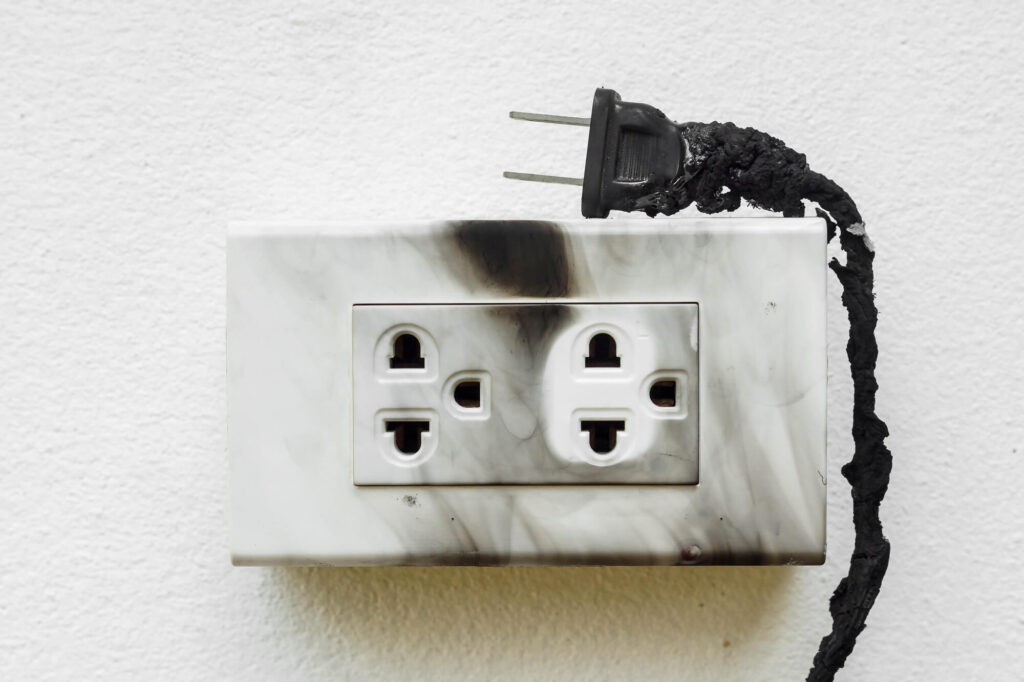
- Black marks, yellowing, or melted plastic around outlet faces or switch plates mean arcing has already occurred at that location.
Frequent Circuit Breaker Trips
Occasional breaker trips are normal. But if the same breaker trips repeatedly under everyday loads — or multiple breakers trip together — your wiring may be undersized, damaged, or incorrectly installed. Repeated tripping is the electrical system’s way of signaling a problem it cannot safely handle on its own.
Burning Smell Without a Visible Source
A persistent burning or hot plastic smell near outlets, switches, the electrical panel, or inside rooms — especially when no appliances are running — indicates overheating wiring or connections. Wiring that reaches dangerous temperatures inside walls can smolder for hours before igniting. This is a serious warning sign that requires immediate professional attention.
Discolored or Scorch-Marked Outlets and Switch Plates
Black marks, yellowing, or melted plastic around outlet faces or switch plates mean arcing has already occurred at that location. Arcing produces intense, localized heat that can ignite surrounding materials. Do not use any outlet or switch showing these signs — turn off the circuit and call a licensed electrician.
Two-Prong Ungrounded Outlets Throughout the Home
If your home has two-prong outlets, the wiring lacks ground conductors — a safety feature that protects against electric shock and allows surge protectors to function properly. While two-prong outlets aren’t dangerous by themselves, they indicate older wiring that may have other safety deficiencies and should be evaluated by a licensed electrician.
Flickering or Dimming Lights
Lights that flicker when appliances run, or that dim and brighten without explanation, indicate loose connections, overloaded circuits, or wiring that can’t cleanly handle the home’s electrical demand. Persistent flickering across multiple rooms is a more serious sign than isolated single-fixture flicker.
Buzzing or Crackling From Outlets, Switches, or Walls
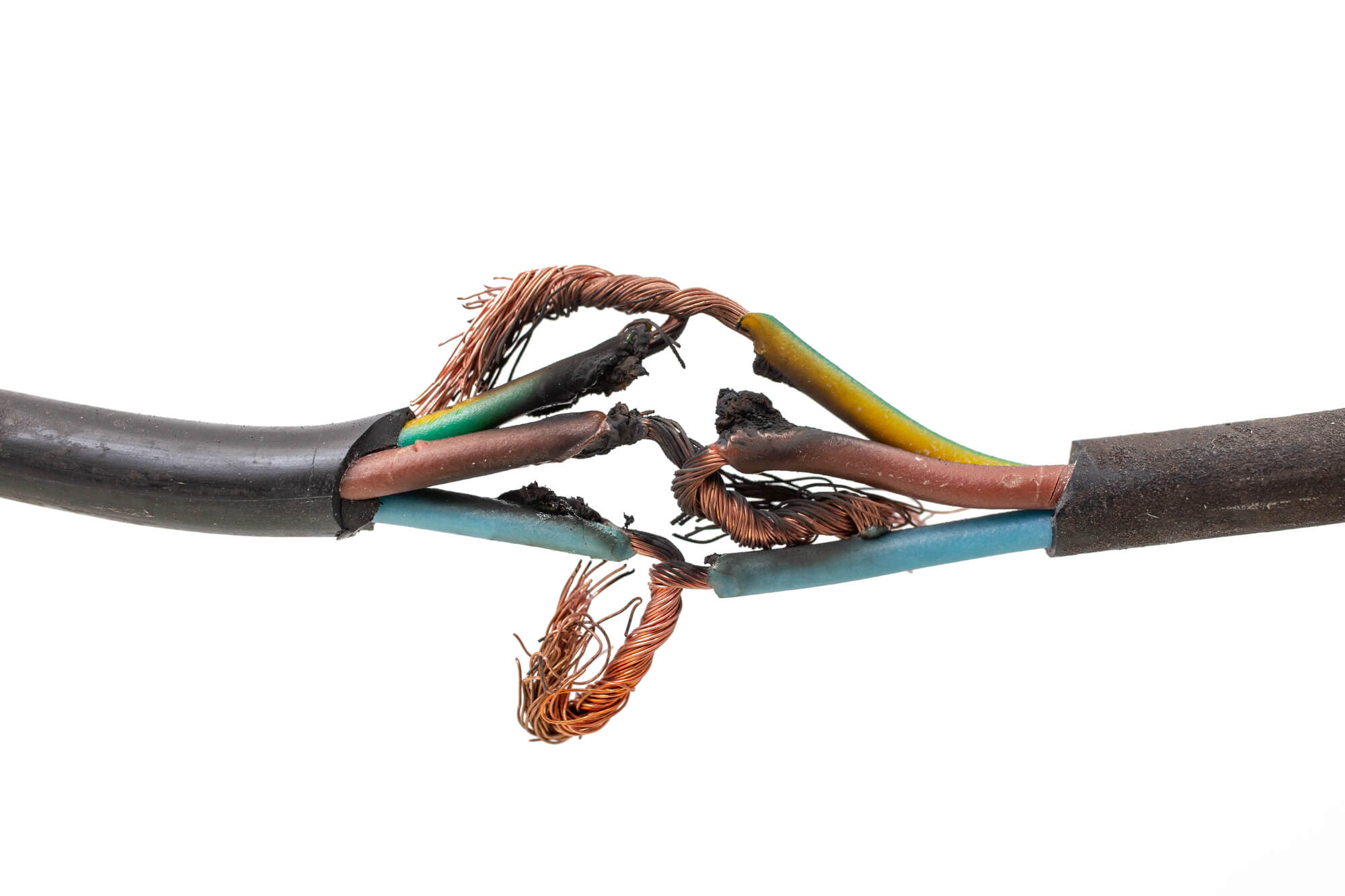
Electricity should flow silently. Any buzzing, crackling, or sizzling from an outlet, switch, panel, or inside a wall indicates electrical arcing — one of the most direct precursors to an electrical fire. The U.S. Consumer Product Safety Commission (CPSC) identifies electrical arcing as a leading cause of residential electrical fires. This sound warrants turning off the circuit immediately and calling an emergency electrician.
Outlets or Switches That Feel Warm or Hot
Standard outlets and switch plates should be at or near room temperature during normal use. Heat indicates excessive current flow through connections that can’t handle it. A warm electrical panel is even more concerning — heat at the panel level suggests problems that affect multiple circuits simultaneously.
Wiring Exposed in Attics, Basements, or Garages
Old wiring run without proper conduit protection, damaged cable jackets, or wires hanging loose in attics, basements, or garages all indicate substandard wiring conditions. Exposed wiring is vulnerable to physical damage, moisture, and pest activity — all of which accelerate insulation breakdown.
Known Problem Wiring Types
Certain wiring types are known to present elevated fire risks:
- Knob-and-tube wiring: Found in homes built before the 1940s; no ground conductor; insulation degrades severely with age
- Aluminum branch circuit wiring: Installed 1965–1973; connections loosen over time, causing overheating
- Federal Pacific or Zinsco panels: Recalled brands with documented failure to trip under overload
If your home shows any signs of dangerous wiring, don’t wait. Our inspection team can assess your system and our electricians can make it safe.
Aluminum Wiring Hazards: A Hidden Danger in Older Homes
Approximately 2 million homes in the United States were built with aluminum branch wiring instead of copper during the late 1960s and 1970s due to copper price volatility. Aluminum wiring is dangerous because it oxidizes (corrodes) over time, creating poor electrical connections inside outlets, switches, and junction boxes. This corrosion increases electrical resistance, causing localized overheating that can ignite nearby insulation or drywall. The oxidation layer that forms on aluminum is an insulator, meaning that even when a connection looks tight, the corroded surface prevents proper electrical contact, leading to arcing and heat generation. Additionally, aluminum and copper have different thermal expansion rates; when copper and aluminum connections are mixed (as they often are at outlets), the different expansion and contraction with temperature changes creates micro-gaps where arcing can initiate. Studies by the Consumer Product Safety Commission have linked aluminum wiring to elevated fire risk. If your home has aluminum wiring, the most reliable permanent solution is rewiring the entire house with copper, which costs $15,000–$25,000 for an average home. If rewiring is not immediately feasible, hire a licensed electrician to perform junction box repairs and outlet replacements using special anti-oxidation compounds and approved connectors rated for aluminum-to-copper connections; this partial approach reduces (but does not eliminate) fire risk until a complete rewiring is completed.
Knob-and-Tube Wiring: When Replacement is Mandatory
Knob-and-tube (K&T) wiring, installed in most American homes built before 1930, represents one of the most serious electrical hazards. K&T wiring consists of individual wires run through ceramic knobs nailed to framing; there is no outer sheathing protecting the wires, no ground wire, and the insulation on the wires has typically deteriorated to brittleness after 90+ years. The exposed insulation easily breaks when anything touches or vibrates the wires, immediately creating a fire hazard. K&T wiring also lacks grounding, so any short circuit immediately becomes a fire risk rather than being safely shunted to ground. Additionally, K&T wiring cannot safely deliver adequate power for modern electrical loads; homes with K&T wiring typically have 60-amp service that cannot support modern appliances and electronics without constant overloading. Most insurance companies refuse to insure homes with K&T wiring, and many jurisdictions require complete rewiring as a condition of sale or before occupancy can continue. If your home has K&T wiring, a complete rewiring (upgrading to modern copper wiring and increasing service capacity to 200 amps) is not optional—it’s an urgent safety necessity and legal requirement. Complete rewiring costs $8,000–$20,000 depending on home size and complexity, but you cannot safely occupy the home without completing this work.
Frequently Asked Questions
How can I tell if my wiring is dangerous without opening the walls?
External signs like the ones listed above are reliable indicators. A licensed electrician can also use non-contact voltage testing and visual inspection of accessible wiring in the panel, attic, and basement to assess the overall condition of your wiring without opening finished walls.
How often should wiring be inspected?
Homes over 25 years old should be professionally inspected every 10 years, or sooner if any warning signs appear. Before any major renovation, before buying a home, or after any significant electrical event (storm surge, flooding, fire), an inspection is strongly recommended.
Does new wiring mean my home is safe?
Generally yes — if installed correctly by a licensed electrician and inspected. However, DIY electrical work or unlicensed installations can create unsafe conditions in any age of home. Always verify that electrical work was permitted and inspected.
Can dangerous wiring be partially repaired, or does the whole home need rewiring?
It depends on the extent and type of problem. Isolated damaged sections can often be repaired individually. Widespread issues — like aluminum branch circuit wiring or knob-and-tube throughout — typically warrant full or partial rewiring. A licensed electrician can assess the most cost-effective approach.