
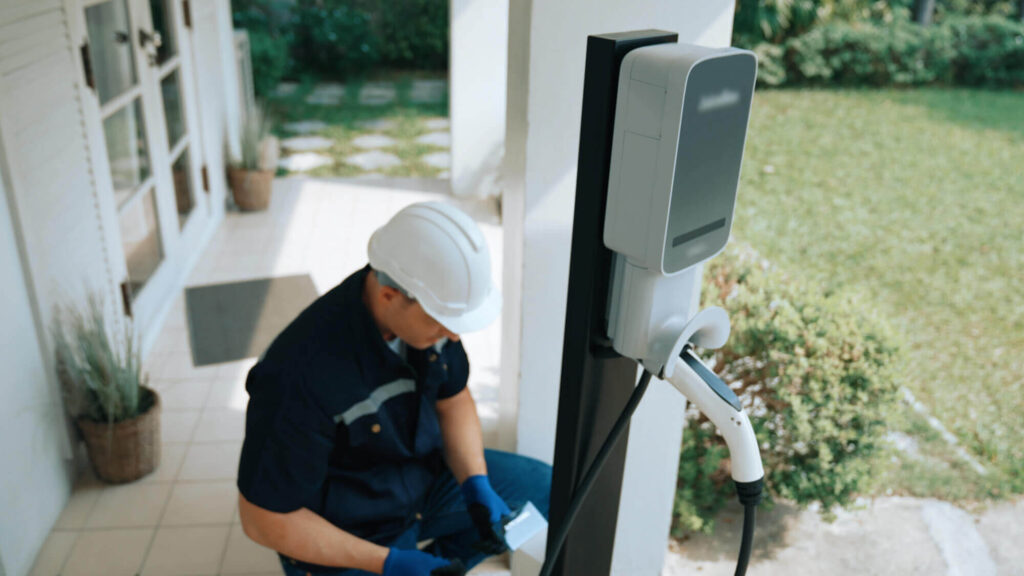
If you’re searching for the best EV charger for home, you’re likely looking for faster charging, convenience, and long-term savings. With electric vehicles becoming more popular, installing a home EV charger — the U.S. Department of Energy’s Alternative Fuels Data Center offers a comparison tool to help homeowners select the right charger for their vehicle and usage needs is one of the smartest upgrades a homeowner can make. But with so many options available, choosing the right one can feel overwhelming.
In this guide, we’ll break down the best home EV chargers, what features matter most, installation costs, and how to troubleshoot common issues—so you can make a confident decision.
⚡ Key Takeaways
- The best EV charger for home use is typically a Level 2 charger.
- Here are some of the most reliable and popular home EV chargers:
- A home EV charger connects to your electrical system and delivers power directly to your vehicle.
What Is the Best EV Charger for Home?
The best EV charger for home use is typically a Level 2 charger. These chargers use a 240-volt outlet (similar to a dryer or oven) and can charge your vehicle up to 6–10 times faster than a standard Level 1 charger.
Top features to look for include:
- Charging speed (measured in amps)
- Smart app connectivity
- Wi-Fi or Bluetooth control
- Weatherproof rating (for outdoor installs)
- Compatibility with your EV
Top EV Chargers for Homeowners
Here are some of the most reliable and popular home EV chargers:
- ChargePoint Home Flex – Highly flexible amperage settings and strong app integration
- Emporia EV Charger – Budget-friendly with excellent smart features
- JuiceBox 40 – Reliable performance with energy monitoring
- Wallbox Pulsar Plus – Compact design with advanced scheduling features
- Grizzl-E Classic – Rugged, no-frills charger ideal for durability
Each of these chargers supports Level 2 charging and works with most electric vehicles sold in the U.S.
How Home EV Chargers Work
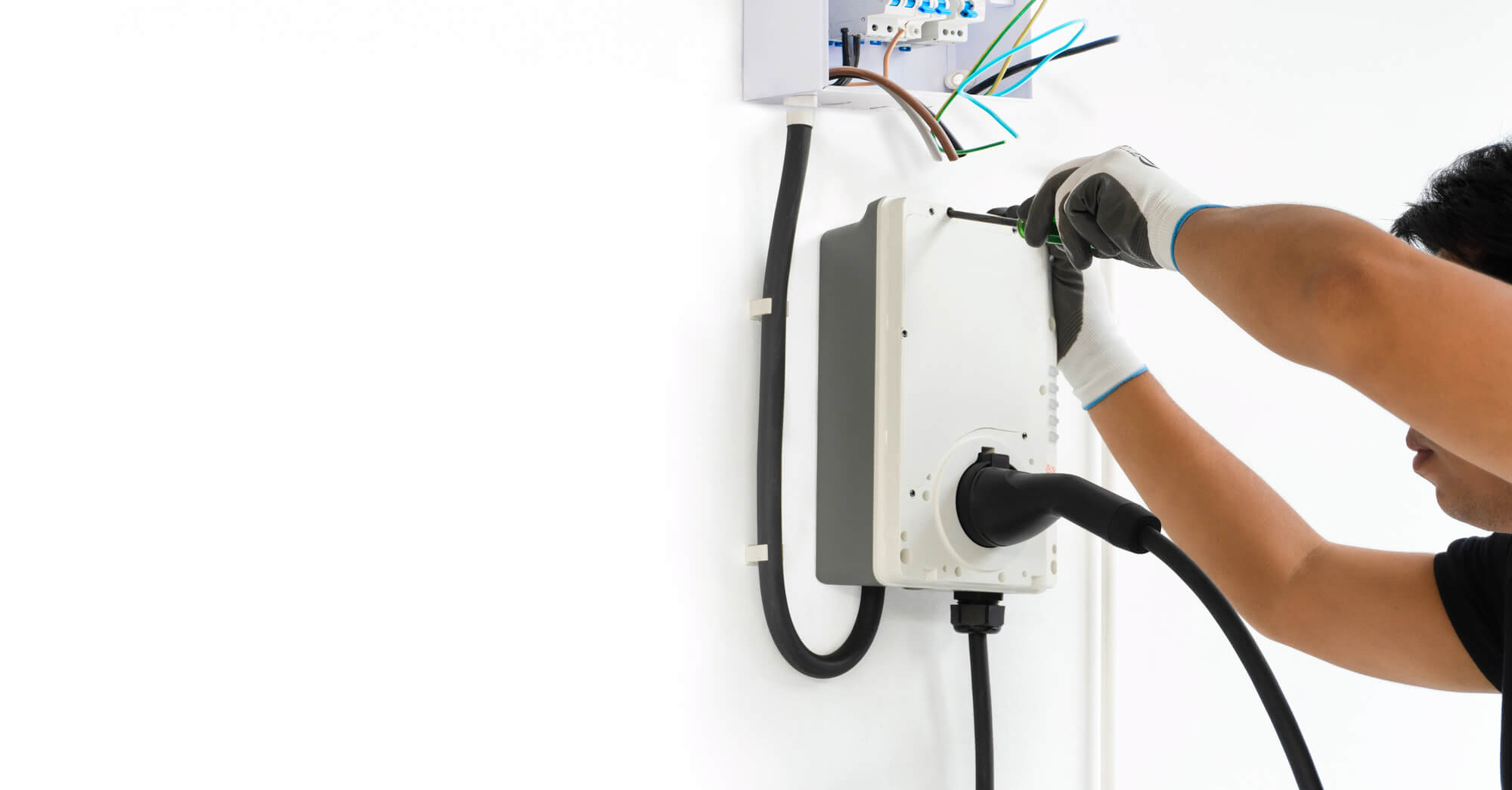
A home EV charger connects to your electrical system and delivers power directly to your vehicle. Level 2 chargers require a dedicated 240V circuit and are typically installed by a licensed electrician.
According to the U.S. Department of Energy, Level 2 chargers significantly reduce charging time compared to standard outlets, making them the preferred choice for home use.
Charging times vary depending on your vehicle and charger output, but most EVs can fully charge overnight using a Level 2 setup.
Installation Costs and Electrical Requirements
The cost to install the best EV charger for home depends on your electrical setup and the charger you choose.
Typical Costs
- EV charger unit: $400–$900
- Installation labor: $300–$1,200
- Panel upgrade (if needed): $1,000–$3,000+
Most installations must comply with the National Electrical Code (NEC), which sets safety standards for EV charger installations.
- A dedicated 240V circuit
- A double-pole breaker (40–60 amps)
- Sufficient panel capacity
If your panel is already near capacity, an upgrade may be necessary before installation.
You may also qualify for federal incentives. The EV charger tax credit can help offset installation costs, depending on your location and eligibility.
Not sure which EV charger is right for your home? Our EV installation experts will assess your electrical setup and recommend the best fit for your vehicle and budget.
Common Problems and Troubleshooting
Even the best EV charger for home can occasionally run into issues. Here are some common problems and how to fix them:
Charger Not Powering On
- Check the breaker in your electrical panel
- Ensure the unit is properly wired
- Look for error lights or app notifications
Slow Charging Speeds
- Verify your charger amperage settings
- Check for load-sharing or scheduled charging limits
- Confirm your vehicle’s onboard charger capacity
Charger Trips Breaker
- May indicate an overloaded circuit
- Loose wiring or faulty breaker could be the cause
- Requires professional inspection
Connectivity Issues
- Reset Wi-Fi connection
- Move router closer or use a signal booster
- Update charger firmware
Electrical Repair Costs Related to EV Chargers
If issues arise, repair costs can vary depending on the problem:
- Breaker replacement: $150–$350
- Wiring repairs: $200–$600
- Outlet replacement (NEMA 14-50): $150–$300
- Full circuit upgrade: $800–$2,500+
It’s important to address electrical issues quickly to avoid safety risks such as overheating or fire hazards.
How to Choose the Right EV Charger
When selecting the best EV charger for home, consider the following:
- Amperage: Higher amps mean faster charging
- Smart features: Useful for scheduling and energy tracking
- Cable length: Ensure it reaches your vehicle easily
- Indoor vs outdoor use: Look for weatherproof ratings if installed outside
- Future-proofing: Choose a charger that can handle your next EV
FAQ: Best EV Charger for Home
What is the best EV charger for home use?
The best EV charger for home is typically a Level 2 charger like ChargePoint Home Flex or Wallbox Pulsar Plus, offering fast charging and smart features.
Do I need an electrician to install an EV charger?
Yes, most Level 2 chargers require a licensed electrician to install a 240V circuit safely and meet code requirements.
How long does it take to charge an EV at home?
With a Level 2 charger, most EVs can fully charge in 6 to 10 hours depending on battery size and charger output.
Can I install an EV charger without upgrading my panel?
It depends on your current electrical capacity. If your panel is full, an upgrade may be required before installation.
Conclusion
Choosing the best EV charger for home comes down to balancing speed, features, and your home’s electrical capacity. For most homeowners, a Level 2 charger provides the ideal mix of convenience and performance.
We recommend investing in a reliable, smart-enabled charger and having it professionally installed to ensure safety and efficiency. With the right setup, you’ll enjoy faster charging, lower energy costs, and the convenience of powering your EV right at home.
Call 855-436-0065 for Immediate Assistance
Preparing Your Home’s Electrical System for EV Charging
Before installing an EV charger, your home’s electrical system must be evaluated to ensure it can safely support the added demand. Most Level 2 chargers draw 30-48 amps continuously, which is substantial. If your home has 100-amp service and already uses significant power for air conditioning, heating, and appliances, adding an EV charger could overwhelm the system. An electrician can calculate your home’s available capacity after accounting for all existing loads.
In many cases, installing an EV charger requires upgrading the main electrical service from 100-amp to 150-amp or 200-amp. This upgrade is expensive and disruptive—it involves work at the utility meter, inside the panel, and potentially digging to replace service entrance conduit. However, it’s a necessary investment if your home’s electrical capacity is insufficient. Alternatively, some homeowners install a subpanel dedicated to EV charging in a garage or carport, which is less expensive if the charger location is far from the main panel.
Additionally, the distance from the main panel to the charger location affects installation costs. Longer runs of high-amperage wire are expensive and require larger conduit. A charger installed 100 feet from the main panel costs significantly more than one installed 20 feet away. During the planning phase, working with an electrician to choose an optimal charger location—balancing accessibility, vehicle parking, and proximity to electrical infrastructure—prevents costly installation surprises.
EV Charger Warranty and Support: What to Look for
When purchasing a home EV charger, warranty length and coverage are critical factors affecting long-term reliability and repair costs. Most manufacturers offer 3–4 year hardware warranties covering defects in materials and workmanship. ChargePoint Home Flex comes with a 3-year limited hardware warranty; JuiceBox 40 includes 3 years of coverage; Tesla Wall Connector provides 4 years; Emporia Level 2 offers a 3-year warranty. Beyond the base coverage, check what specific components are protected: most warranties cover the charging unit itself, internal electronics, and the cable assembly, but some exclude wear-and-tear items like the weatherproof seal around the plug or the strain relief on the cable.
Connectivity warranty is equally important—ensure the charger’s Wi-Fi or cellular connection is covered for 3+ years, since app-based charging controls are a key feature. Before purchasing, verify that the charger is UL-listed (Underwriters Laboratories safety certification) and meets Energy Star standards, which ensure it meets rigorous electrical safety and efficiency requirements. Always register your charger with the manufacturer immediately after installation to activate the warranty coverage; many manufacturers void warranties if products aren’t registered within 30 days. Check whether the manufacturer offers extended warranty options (often available for $100–$300 additional) if you want coverage beyond the standard period. For peace of mind, choose a charger from a manufacturer with strong US-based customer support and a track record of honoring warranty claims.