
Copper and aluminum are both used for electrical wiring, but their applications, properties, and safety considerations differ significantly. Understanding the differences helps homeowners make informed decisions about their electrical systems.
Contents
⚡ Key Takeaways
- Copper is the standard for branch circuits (outlets, switches, lights) due to its superior conductivity and connection safety
- Aluminum is acceptable and widely used for service entrance conductors and large feeder cables
- Single-strand aluminum branch circuit wiring (1965–1973 era) is a documented fire hazard at connections
- Aluminum requires larger wire gauges than copper for equivalent ampacity
- Never mix copper and aluminum at connections without AL/CU rated connectors and anti-oxidant compound
Copper vs. Aluminum: Key Differences
Conductivity
Copper is a better electrical conductor than aluminum. Copper can carry more current per cross-sectional area — aluminum wire must be one to two gauge sizes larger than copper to carry the same amperage safely. For example, 4 AWG aluminum carries approximately the same current as 6 AWG copper.
Weight and Cost
Aluminum is significantly lighter and less expensive than copper per foot. For large-gauge applications (service entrance cables, subpanel feeders), the cost savings of aluminum are substantial — making it the preferred material for utility companies and large commercial feeders.
Connection Behavior
This is where the critical difference lies. Aluminum expands and contracts more with temperature changes than copper. At connection points (outlets, terminals, wire nuts), this movement causes aluminum connections to loosen over time. Loose connections create resistance, heat, arcing, and ultimately fire risk. Copper connections are much more stable at connection points.

When Is Aluminum Wiring Acceptable?
Service Entrance Conductors
The large cables running from the utility meter to your main panel are typically aluminum. At these connection points (meter lugs, main panel lugs), the connections are large, use aluminum-rated hardware, and are properly maintained. This application of aluminum is safe and standard practice.
Large Feeder Cables (Subpanels)
Running a large feeder from the main panel to a subpanel often uses aluminum SER cable for cost savings. Again, at these large-gauge applications with properly-rated aluminum lugs, aluminum performs well.
Not Acceptable: Branch Circuit Wiring
Single-strand aluminum wire used for 15A and 20A branch circuits (the kind installed in millions of homes 1965–1973) is the problematic application. The small gauge wire, high number of connection points (every outlet, every switch, every fixture), and the thermal cycling creates the documented fire hazard. This is distinct from aluminum service entrance wiring, which is safe.
Mixing Copper and Aluminum: The Rules
Copper and aluminum must never be directly connected without using connectors specifically rated for both metals. When two dissimilar metals are in direct contact in the presence of moisture, galvanic corrosion accelerates — increasing resistance and creating heat at the connection. When mixing is necessary (such as pigtailing copper onto aluminum branch circuit wiring):
- Use COPALUM crimp connectors (the CPSC-recommended method) or AlumiConn mechanical connectors
- Apply anti-oxidant compound to aluminum wire ends before connecting
- Use only devices and connectors rated “CO/ALR” or “AL/CU”
How to Identify Your Wiring Type
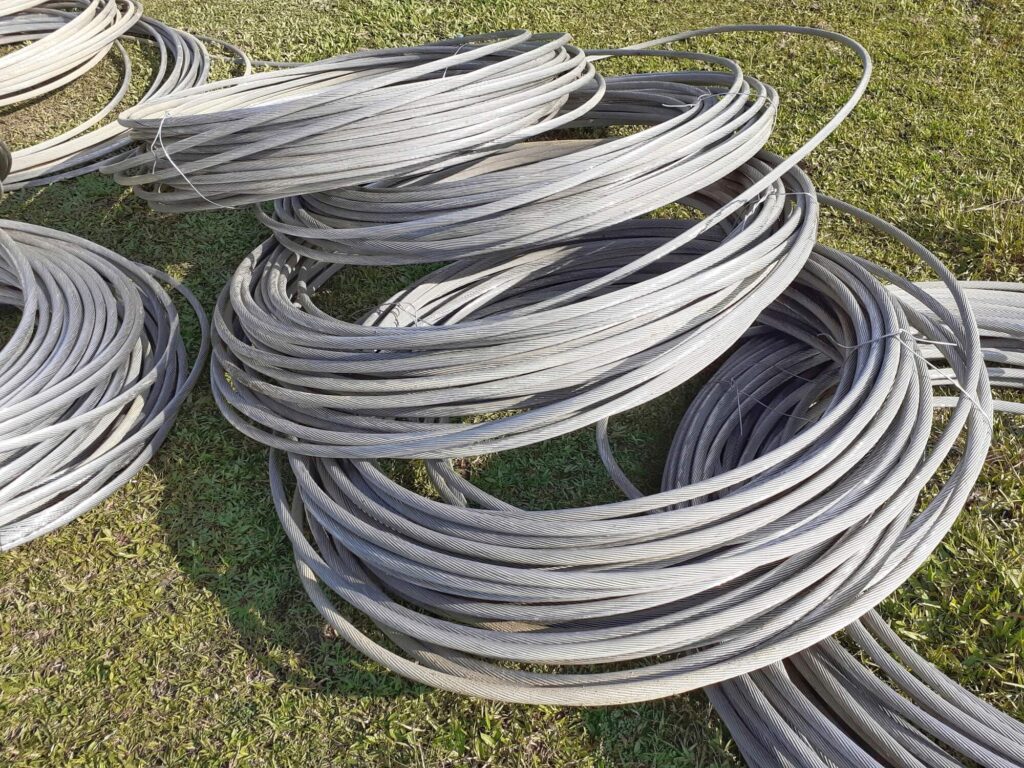
Look at the wire itself — copper is reddish-orange, aluminum is silver-gray. Cable jackets may be marked “AL” or “ALUMINUM” for aluminum wire. If your home was built between 1965 and 1973, there’s a significant chance it has aluminum branch circuit wiring. A licensed electrician can inspect and definitively identify wiring types.
Frequently Asked Questions
Is aluminum wiring safe for home electrical circuits?
It depends on the application. Aluminum service entrance conductors and large subpanel feeders are safe when properly installed with aluminum-rated hardware. Single-strand aluminum branch circuit wiring (used in homes built 1965–1973) is a documented fire hazard at connection points and requires remediation.
Can I connect copper wire to aluminum wire directly?
No. Direct copper-to-aluminum connections cause galvanic corrosion and create high-resistance, fire-hazard connections. When connecting copper to aluminum, use connectors specifically rated for both metals (CO/ALR or AL/CU rated), such as COPALUM crimp connectors or AlumiConn mechanical connectors.
Why is aluminum wire a larger gauge than copper for the same ampacity?
Aluminum is less conductive than copper — it carries less current per unit of cross-sectional area. To compensate, aluminum wire must be one to two gauge sizes larger than equivalent copper wire. For example, 4 AWG aluminum is roughly equivalent to 6 AWG copper for ampacity.
Which is better for home wiring: copper or aluminum?
Copper is the preferred material for residential branch circuit wiring due to its superior conductivity, stable connection behavior, and long track record of safety. Aluminum is appropriate for service entrance cables and large feeder cables but is not recommended for branch circuit wiring.
How can I tell if my home has aluminum wiring?
Look at wires in your electrical panel or at outlets — copper is reddish-orange, aluminum is silver-gray. Cable jackets may be marked “AL” or “ALUMINUM.” If your home was built 1965–1973, have a licensed electrician inspect for aluminum branch circuit wiring.