

The cost to install security lighting varies based on the number of fixtures, type of lights, and whether new wiring is required. Security lighting is one of the most effective deterrents against break-ins and can significantly improve visibility around your property at night. This guide covers typical installation costs, what influences pricing, and when to hire a professional.
⚡ Key Takeaways
- Several factors determine what you’ll pay to install security lighting.
- Most homeowners pay between $150 and $500 per hardwired security light installed by a licensed electrician.
- Hardwired security lights offer the most reliable performance and brightest output, but they cost the most to install because they require electrical work.
What Affects Security Lighting Installation Costs
Several factors determine what you’ll pay to install security lighting. The main drivers include:
- Number and type of fixtures (floodlights, motion-sensor lights, camera-integrated lighting)
- Whether new circuits or wiring runs are required
- Height and accessibility of mounting locations
- Hardwired vs. plug-in or solar options
- Local labor rates and permit requirements
Average Cost to Install Security Lighting
Most homeowners pay between $150 and $500 per hardwired security light installed by a licensed electrician. Here’s a breakdown of typical costs by fixture type:
- Motion-sensor floodlights: $150 – $400 per fixture
- Dusk-to-dawn security lights: $150 – $350 per fixture
- Camera-integrated smart security lights: $200 – $600 per fixture
- New outdoor circuit installation: $300 – $700 additional
- Full perimeter security lighting system (4–8 lights): $800 – $3,000 installed
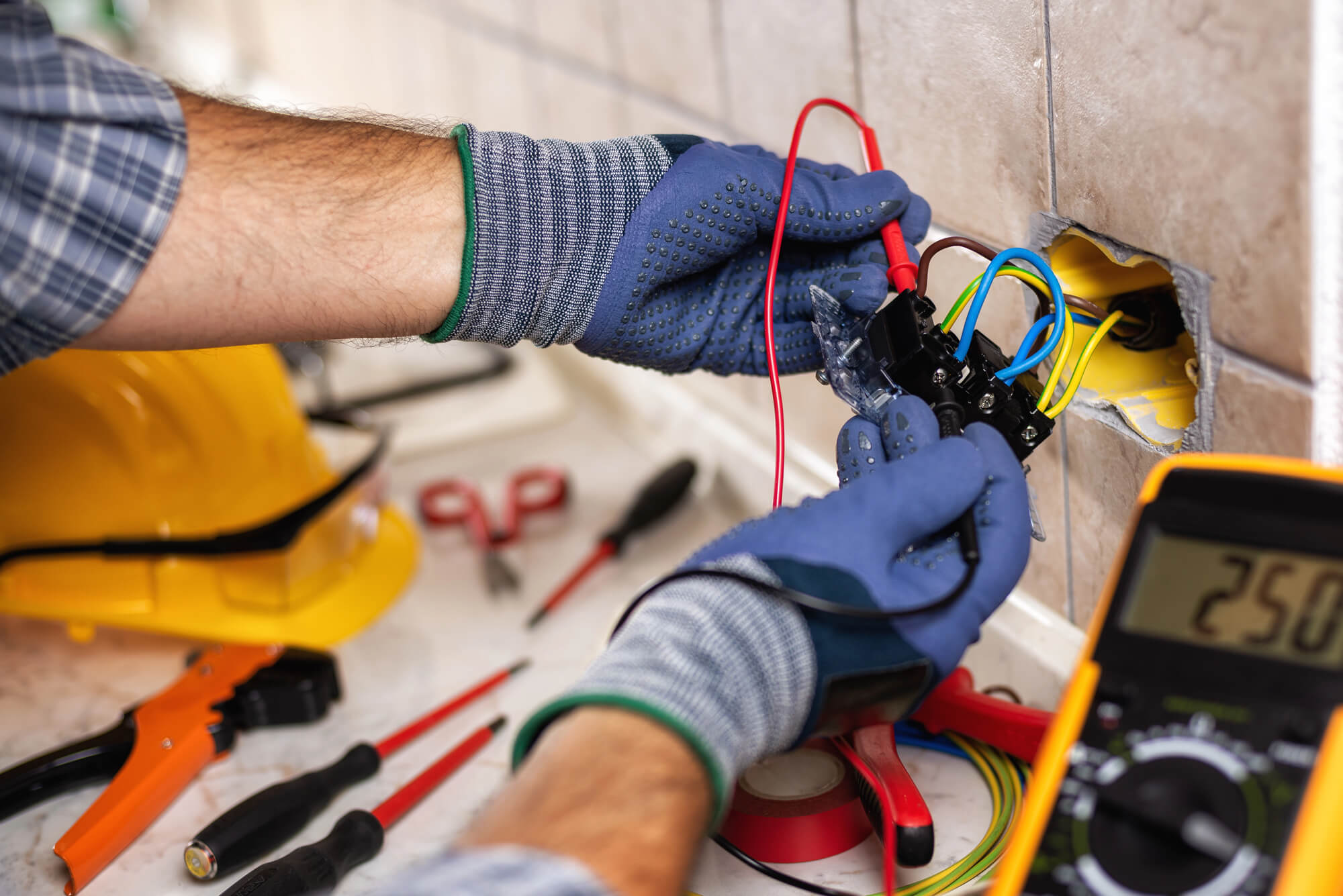
Hardwired vs. Plug-In vs. Solar Security Lights
Hardwired security lights offer the most reliable performance and brightest output, but they cost the most to install because they require electrical work. Plug-in lights are affordable and DIY-friendly but depend on a nearby outlet. Solar security lights have zero wiring costs but may underperform in low-light climates or heavily shaded areas.
For maximum deterrence and reliability, hardwired motion-sensor floodlights on key entry points are the industry-recommended solution.
Additional Cost Factors
New Circuit Installation
If your existing outdoor circuits are at capacity, a new dedicated circuit adds $300 – $700 to the total project cost. An electrician will assess your panel capacity before recommending this.
Smart Security Lighting Integration
Smart lights that connect to your home network for remote control, scheduling, and motion alerts cost $50 – $200 more per fixture than standard hardwired models. Integration with a smart home hub may add further setup costs.
GFCI Protection
All outdoor electrical circuits must have GFCI protection per code. If your existing outdoor wiring lacks GFCI outlets or breakers, adding them costs $75 – $200.
Security lighting is one of the most cost-effective home safety upgrades. Our electricians can install motion-activated floodlights, dusk-to-dawn lights, or smart camera-integrated fixtures.
When to Call a Licensed Electrician
Hardwired security lighting always requires a licensed electrician. You should also call a professional if:
- You need a new outdoor circuit or panel expansion
- Mounting locations are at rooftop height or in difficult-to-access areas
- You’re installing camera-integrated lights that require network wiring
- Your local authority requires a permit for outdoor electrical work
How to Keep Security Lighting Costs Down
- Install multiple fixtures in a single electrician visit to reduce per-trip labor costs
- Choose LED fixtures — they’re energy-efficient and have a longer lifespan than halogen
- Use existing outdoor circuits where possible to avoid new circuit installation costs
- Get at least three quotes from licensed electricians before committing
- Ask whether permits are included in the estimate
Smart Security Lighting Integration and Home Automation
Modern security lighting systems often integrate with broader home automation and security platforms, affecting total installation costs. A basic hardwired motion-sensor light adds $150–$300 in materials and labor. However, integrating that light with a smart home hub (enabling scheduling, remote control, and integration with cameras or alarm systems) adds $200–$500 in additional wiring, hub equipment, and programming time.
Professional-grade systems that integrate security lighting with video surveillance, door sensors, and alarm panels require more sophisticated wiring infrastructure. Running conduit and low-voltage control lines to support a fully integrated system can add $1,000–$3,000 to the base installation cost. However, these integrated systems reduce false alarms (motion sensor lighting is triggered by motion, then feeds that signal to the alarm system to verify actual intrusion) and provide comprehensive security coverage. Many homeowners find the additional cost worthwhile because an integrated system offers better reliability and ease of use than standalone components.
Regional Cost Variations and Permitting
Security lighting installation costs vary significantly by region. West Coast metropolitan areas (Los Angeles, San Francisco, Seattle) typically see rates 20–30% higher than the national average, with some electricians charging $150–$200 per hour for security system work. Midwest and southern states generally run 10–20% below the national average. Rural areas sometimes have difficulty finding electricians with security lighting expertise, which can increase costs due to travel time or require homeowners to wait for availability.
Some jurisdictions require permits for security lighting installation, particularly if the system connects to the main electrical panel or includes smart home integration. Permits typically cost $50–$150 and require an inspection after installation. Plan an extra 1–2 weeks into your project timeline if permits are required. Electricians familiar with local code requirements can help you understand whether your planned installation requires a permit and can often obtain permits on your behalf for a small fee ($25–$75).
DIY vs. Professional Installation: When to Hire an Expert
Solar motion-sensor lights and battery-operated security lights can be installed by any homeowner and require no electrical expertise. However, hardwired security lighting that ties into your home’s main electrical system absolutely requires professional installation. Improper installation can create electrical hazards, void warranties on expensive security equipment, or result in system failures that compromise your home’s security when you need it most.
Additionally, security system installation often involves coordination with alarm companies, camera installers, and other trades. An experienced electrician can oversee this coordination, ensure that all components work together seamlessly, and provide warranties on the integration work. Professional installation also ensures that your system meets UL (Underwriters Laboratories) standards for security equipment, which many homeowners’ insurance policies require for coverage of theft or break-ins. The upfront investment in professional installation typically costs 30–40% less than the cost of adding or replacing the system later if DIY installation fails.
Motion Sensor Sensitivity and Placement for Security Lighting
Motion-activated security lights rely on passive infrared (PIR) sensors that detect heat signatures of moving objects. Optimal PIR sensor placement is critical for reliable detection: mount the sensor 8–10 feet above ground for maximum coverage. Most PIR sensors have a detection range of 40–70 feet in a 180-degree arc directly in front of the fixture, though angle and sensitivity can be adjusted. To minimize false triggers, avoid pointing motion sensors directly at driveways (passing cars trigger unnecessary activation), tree branches that sway in wind (continuous false alerts), AC condenser units (heat radiating from the compressor), or heat lamps on porches. Instead, angle the sensor toward pathways, doors, and property perimeter areas where you actually want detection.
Most motion sensors have adjustable sensitivity (typically via a dial from low to high) and a time delay setting (how long the light stays on after motion stops, usually 5–30 minutes). For security, use moderate sensitivity to catch approaching people while avoiding neighborhood cats and small animals, and set a longer duration (15–30 minutes) so the light doesn’t shut off mid-approach. Smart security lighting options like Ring Floodlight Cam, Kuna outdoor cameras with built-in lights, and Mr. Beams wireless motion-activated lights offer mobile app control and alert notifications when motion is detected. These smart options typically cost $100–$300 but provide 24/7 awareness even when you’re away. Motion-activated lights save significant energy compared to always-on outdoor lighting—a typical LED motion fixture uses only 10–30W when active, reducing consumption by 70–80% over a fixed light running continuously.
Frequently Asked Questions
Do security lights deter burglars?
Yes. Motion-activated floodlights are one of the most cost-effective burglary deterrents available. Well-lit properties are significantly less attractive to opportunistic intruders than dark ones.
How much does it cost to run a security light?
A 20W LED security light running 8 hours per night costs approximately $1 – $2 per month. Upgrading from older halogen fixtures to LED can reduce energy costs by up to 80%.
Do I need a permit to install outdoor security lights?
In most areas, replacing a like-for-like fixture does not require a permit. However, installing new wiring, adding circuits, or mounting lights in new locations typically requires a permit. Check with your local authority or ask your electrician.
Can I install hardwired security lights myself?
In most jurisdictions, hardwired electrical work must be performed by a licensed electrician. DIY installation without a permit can void your homeowner’s insurance and create safety hazards.