
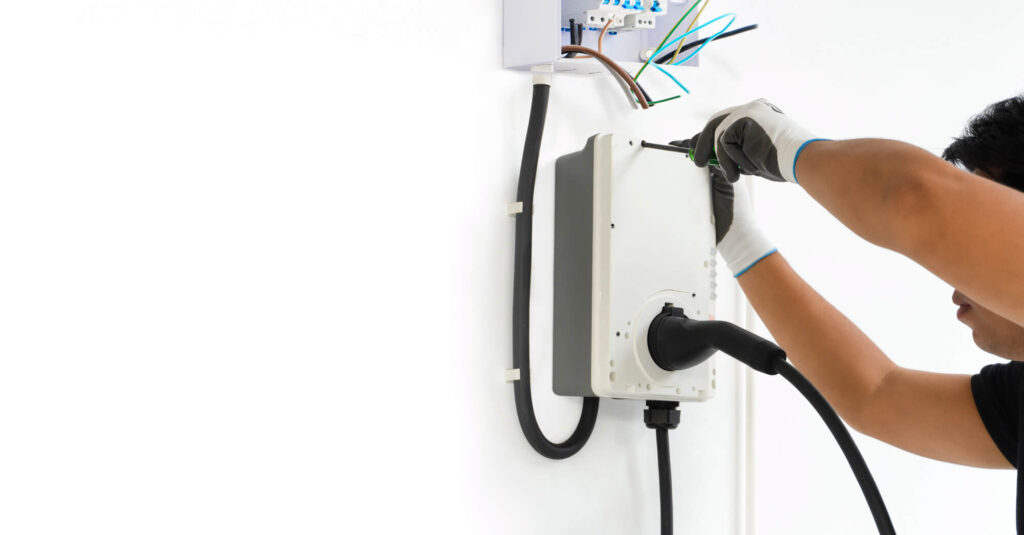
EV charger — and the U.S. Department of Energy’s AFDC provides comprehensive guidance on home EV charging infrastructure installation is becoming essential for homeowners as electric vehicles continue to grow in popularity. Installing a home charging station provides convenience, faster charging, and long-term savings compared to relying on public chargers.
In this 2026 guide, we explain how EV charger installation works, the different charger types, costs, electrical requirements, and what to expect during installation.
⚡ Key Takeaways
- EV charger installation involves setting up a dedicated charging unit at your home, typically in a garage or driveway.
- Before installing, it’s important to understand the different charger levels available:
- The installation process typically includes:
What Is EV Charger Installation?
EV charger installation involves setting up a dedicated charging unit at your home, typically in a garage or driveway. These chargers connect to your electrical system and safely deliver power to your electric vehicle.
Unlike plugging into a standard outlet, a professionally installed EV charger provides faster and more reliable charging while ensuring your electrical system can handle the load.
Types of EV Chargers for Homes
Before installing, it’s important to understand the different charger levels available:
- Level 1 Charger: Uses a standard 120V outlet. Slow charging (adds 3–5 miles per hour).
- Level 2 Charger: Uses a 240V circuit. Much faster (adds 20–60 miles per hour).
- Level 3 Charger: Commercial fast chargers (not typically used in homes).
Most homeowners choose a Level 2 charger for the best balance of speed and affordability.
How EV Charger Installation Works
The installation process typically includes:
- Assessing your electrical panel capacity
- Installing a dedicated 240V circuit
- Mounting the charger unit
- Running wiring from the panel to the charger
- Testing the system for safety and performance
In many cases, permits and inspections are required to ensure the installation meets local electrical codes.
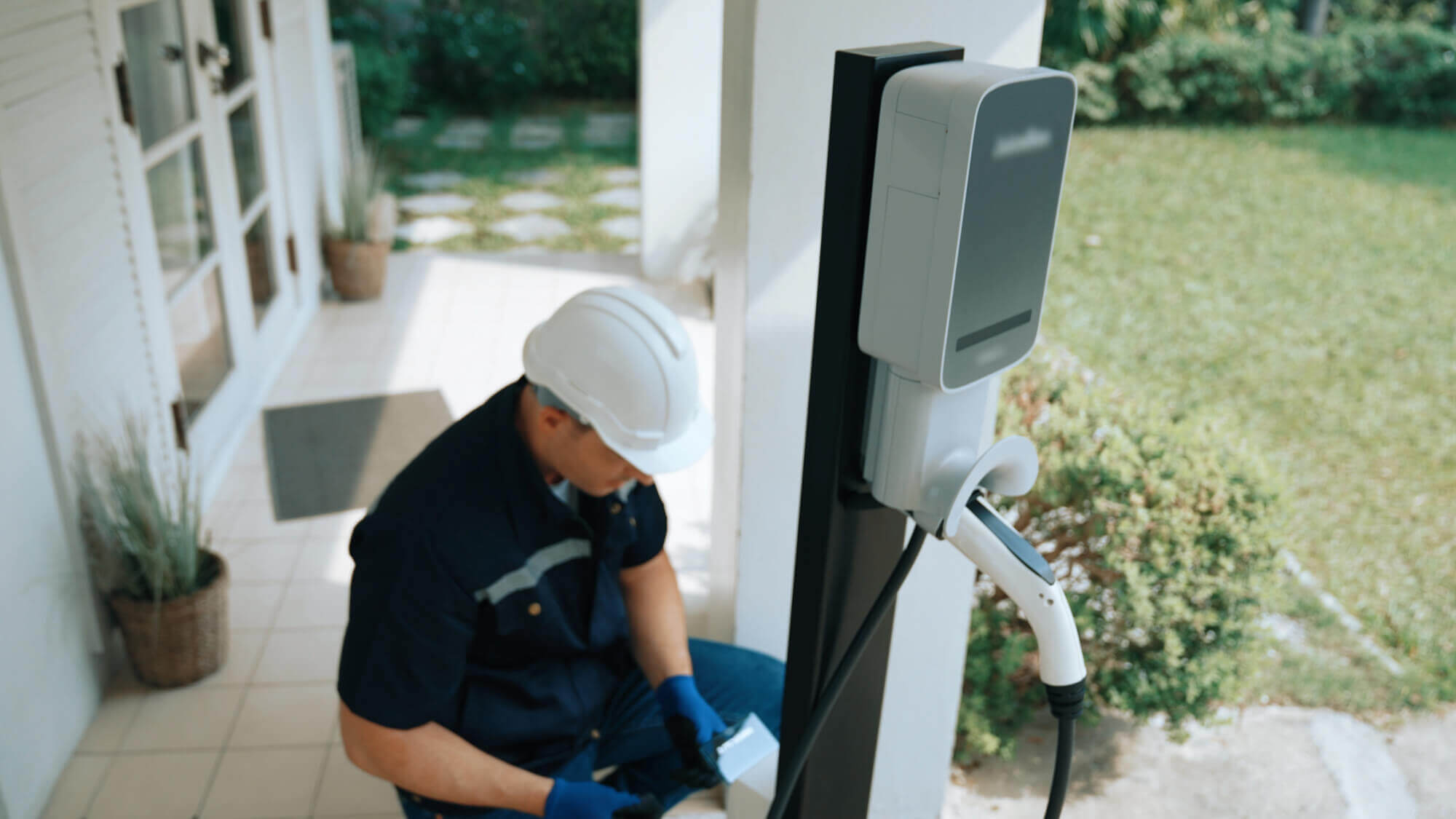
EV Charger Installation Costs
The cost of EV charger installation can vary depending on your home and electrical setup:
- Charger unit: $400 – $1,200
- Installation labor: $300 – $1,500
- Electrical panel upgrades (if needed): $1,000 – $3,000+
- Permit fees: $50 – $300
Total typical cost: $700 – $2,500 for standard installations, or more if upgrades are required.
Homes with older electrical systems or limited panel capacity may require additional work, increasing costs.
Ready to charge at home? Our EV charger installation team handles everything from the permit to the final connection — often in a single day.
Electrical Requirements for EV Charger Installation
EV chargers require significant electrical capacity. Common requirements include:
- A dedicated 240V circuit
- A double-pole breaker (typically 40–60 amps)
- Sufficient panel capacity
- Proper grounding and bonding
If your panel is full or outdated, an upgrade may be necessary before installation.
Common EV Charger Installation Problems
While most installations are straightforward, some issues can arise:
- Insufficient electrical panel capacity
- Long distance between panel and charger location
- Permit or inspection delays
- Incompatible charger or vehicle connection
Working with a licensed electrician helps prevent these issues and ensures compliance with local codes.
Troubleshooting EV Charger Issues
If your EV charger is not working properly after installation, here are common problems and fixes:
Charger Not Powering On
This may be caused by a tripped breaker, loose wiring, or a faulty installation. Check your panel and reset the breaker if needed.
Slow Charging Speeds
Slow charging can result from incorrect settings, insufficient amperage, or using a lower-level charger than expected.
Charger Keeps Tripping the Breaker
This usually indicates an overloaded circuit, improper wiring, or a faulty charger unit. This should be inspected immediately.
Connection Issues with Vehicle
If the charger does not connect properly, check for debris in the connector or compatibility issues with your EV model.
Electrical Repair Costs Related to EV Chargers
Sometimes additional repairs are needed during or after installation:
- Breaker replacement: $150 – $400
- Wiring repairs: $200 – $800
- Panel upgrades: $1,000 – $3,000+
- Outlet or connection repairs: $100 – $300
Addressing these issues early can prevent safety hazards and ensure reliable charging.
Do You Need a Professional for EV Charger Installation?
Yes, EV charger installation should always be handled by a licensed electrician. These systems involve high voltage and must meet strict safety codes.
DIY installation can lead to:
- Electrical hazards
- Code violations
- Insurance issues
- Damage to your vehicle or home
Professional installation ensures safety, compliance, and optimal performance.
EV Charger Installation Costs by Type
The cost of EV charger installation varies significantly depending on the type of charger you’re installing. Level 1 chargers, which use standard household outlets, require minimal installation and typically cost $200–$500. However, most homeowners opt for Level 2 chargers for faster charging at home, which range from $1,500–$3,000 for installation including wiring and breaker upgrades. DC Fast Charging stations are a premium option at $5,000–$15,000+ and are more commonly found at commercial locations. Understanding the differences between these types helps you choose the right solution for your home’s electrical capacity and charging needs.
Electrical Infrastructure Upgrades Required
Before installing an EV charger, your home’s electrical system must be evaluated to ensure it can handle the additional load. Many homes need a dedicated 240V circuit installed, which requires running heavy-gauge wire from your electrical panel to the charger location. Older homes with 100-amp service may need a panel upgrade to 200 amps, adding $3,000–$5,000 to the project cost. Modern homes with adequate capacity can often accommodate a Level 2 charger with just the circuit installation. An electrician will determine if your current system can support the charger or if upgrades are necessary during the initial inspection.
Permits and Inspections for EV Charger Installation
Most municipalities in the United States require electrical permits for EV charger installation, even for Level 2 chargers in residential homes. A permit ensures that the installation meets current National Electrical Code (NEC) standards, includes proper grounding, overcurrent protection, and safety disconnects. The permitting process typically begins with your electrician submitting plans and specifications to your local building department, including details about the charger model, circuit amperage, wire gauge, conduit type, and breaker size. The permit fee varies by location but typically ranges from $50-$200 for residential EV charger permits. Some jurisdictions offer fast-track permits for EV charging (processed within 24-48 hours) to encourage electric vehicle adoption; your electrician can check if your area qualifies.
The inspection process usually happens in two stages: a rough inspection after the electrician runs the wire and installs the breaker and disconnect switch (before the charger is mounted), and a final inspection after the charger is fully installed and tested. Inspectors verify that the circuit breaker amperage matches the wire gauge (typically 50-amp circuits with 6 AWG copper wire for most residential Level 2 chargers), that conduit is properly secured and run through wall studs or raceways, that grounding is adequate, and that all connections are tight and correct. Inspection appointments usually occur within 3-7 business days of requesting them, though some areas may have longer wait times during busy seasons. Each inspection takes 30-60 minutes, and if the inspector finds any code violations, you’ll need corrections before final approval.
Skipping the permit and inspection process might save a few hundred dollars upfront, but it creates significant long-term risks. An unpermitted installation voids your charger manufacturer’s warranty, may not be covered by your homeowner’s insurance in case of fire or damage, and can complicate home sales because inspectors often flag missing permits during a buyer’s inspection. Insurance companies have also begun denying claims on unpermitted electrical work, especially for high-power installations like EV chargers. If you ever need to file an insurance claim related to the charger or the circuit, you could lose coverage entirely. Additionally, if a fire or electrical fault occurs in an unpermitted installation, your homeowner’s liability coverage may not apply, exposing you to personal liability. Permits typically add 2-4 weeks to the project timeline but protect your investment and property.
Frequently Asked Questions
How long does EV charger installation take?
Most installations take 2 to 6 hours, depending on wiring complexity and distance from the electrical panel.
Can I install an EV charger without upgrading my panel?
Yes, if your panel has enough capacity. Otherwise, an upgrade will be required to safely handle the load.
Is a Level 2 charger worth it?
Yes, Level 2 chargers provide significantly faster charging and are the most practical option for daily home use.
Do EV chargers increase home value?
Yes, installing an EV charger can make your home more attractive to buyers, especially as electric vehicles become more common.
Conclusion
EV charger installation is a smart investment for homeowners looking to simplify charging and future-proof their property. With the right setup, you can enjoy faster charging, improved convenience, and increased home value.
We recommend working with a qualified electrician to ensure your system is installed safely and meets all electrical requirements. Proper installation not only protects your home but also ensures your EV charger performs reliably for years to come.