
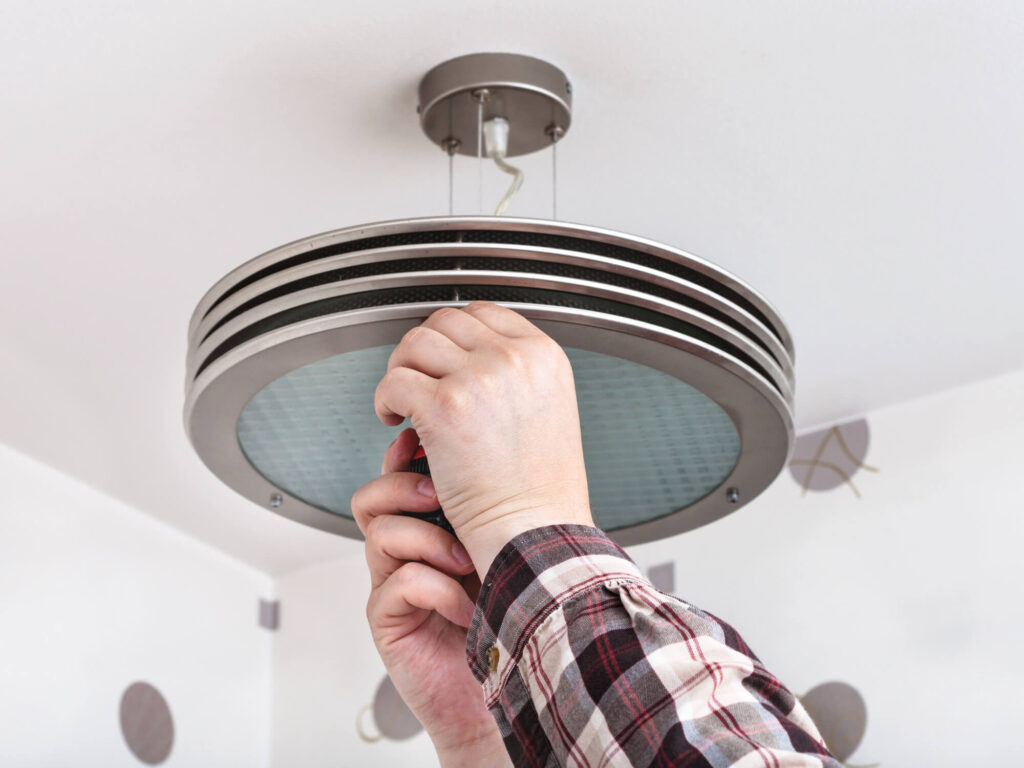
Recessed lighting — also called can lights or downlights — is one of the most popular and versatile lighting upgrades for modern homes. It provides clean, low-profile illumination without the bulk of surface-mounted fixtures and works in virtually any room. This guide covers how recessed lighting installation works, what it costs, and when to call a licensed electrician.
Contents
⚡ Key Takeaways
- Recessed lighting fixtures are installed inside the ceiling, with only the trim ring and bulb visible from below.
- The two main types are new construction fixtures (designed to install before drywall is hung) and remodel fixtures (designed to fit through a finished ceiling hole).
- Installation costs depend on the number of lights, ceiling type, and whether new wiring is required:
What Is Recessed Lighting?
Recessed lighting fixtures are installed inside the ceiling, with only the trim ring and bulb visible from below. They’re used for general ambient lighting, task lighting over countertops or work areas, and accent lighting to highlight artwork or architectural features. Modern LED recessed lights are energy-efficient, long-lasting, and available in a wide range of color temperatures.
Types of Recessed Lighting
The two main types are new construction fixtures (designed to install before drywall is hung) and remodel fixtures (designed to fit through a finished ceiling hole). For most homeowner upgrades, remodel fixtures are used since they’re installed through the drywall without opening the ceiling. IC-rated fixtures are required when insulation is present above the ceiling.
Cost to Install Recessed Lighting
Installation costs depend on the number of lights, ceiling type, and whether new wiring is required:
- LED remodel fixture (hardware): $15 – $60 per light
- Installation on existing circuit: $100 – $200 per light
- Installation with new circuit: $200 – $350 per light
- Dimmer switch addition: $75 – $200
- Full room installation (6 lights, new circuit, dimmer): $900 – $2,500
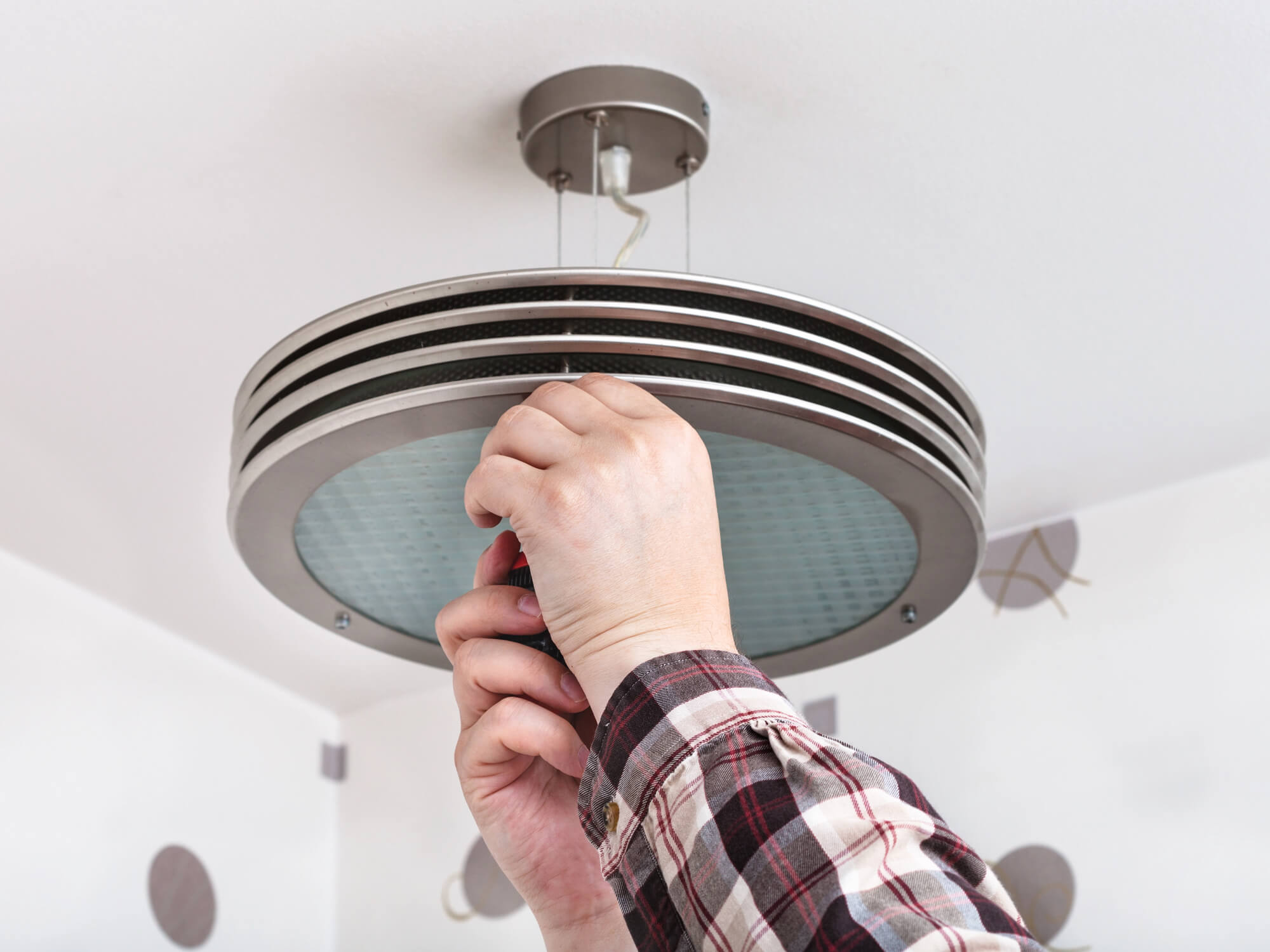
Planning Your Recessed Lighting Layout
A well-planned layout ensures even light distribution and avoids hot spots or dark areas. General spacing guidelines:
- Place lights roughly 2 feet from walls to avoid shadows
- Space lights approximately the same distance apart as the ceiling height (8-foot ceiling = 4-foot spacing)
- For task lighting over countertops, position lights directly above the work surface
- Use 3-inch or 4-inch fixtures for accent lighting; 5- or 6-inch for general ambient light
Your electrician can advise on layout during the planning phase.
Attic Access and Installation Complexity
Installation is much simpler when there is attic access above the ceiling — the electrician can fish wire more easily and confirm insulation clearances. In rooms with no attic access (lower floors with living space above), wire fishing through finished walls and ceilings takes more time and increases labor cost.
Recessed lighting installation requires running new wiring through finished walls and ceilings. Our electricians can handle the full job cleanly and efficiently.
When to Hire a Licensed Electrician
Recessed lighting installation always requires a licensed electrician for the wiring work. Even if the fixture itself simply plugs into an existing socket, running new wiring to additional locations requires licensed work. An electrician will also ensure fixtures are correctly rated for insulation contact where needed.
Frequently Asked Questions
Can I install recessed lighting myself?
The fixture itself can be inserted into a pre-cut hole by a homeowner, but all wiring must be performed by a licensed electrician in most jurisdictions. Wiring recessed lights involves work inside the electrical panel and wall/ceiling cavities that requires professional expertise.
What bulbs do modern recessed lights use?
Most modern remodel fixtures are integrated LED units — the LED is built into the fixture itself and there’s no replaceable bulb. These units typically last 25,000–50,000 hours and use 9–12 watts. Some fixtures use standard GU10 or E26 base bulbs.
Do recessed lights need to be on a dimmer?
Not required, but strongly recommended for living rooms, bedrooms, and dining areas where ambiance matters. Ensure fixtures and dimmers are LED-compatible. Ask your electrician to install a dimmer as part of the project.
How many recessed lights can be on one circuit?
A 15-amp circuit can support approximately 30 LED recessed fixtures (at 9W each), making circuit capacity rarely a limiting factor for standard residential lighting projects. Your electrician will confirm based on your actual fixture wattage.