
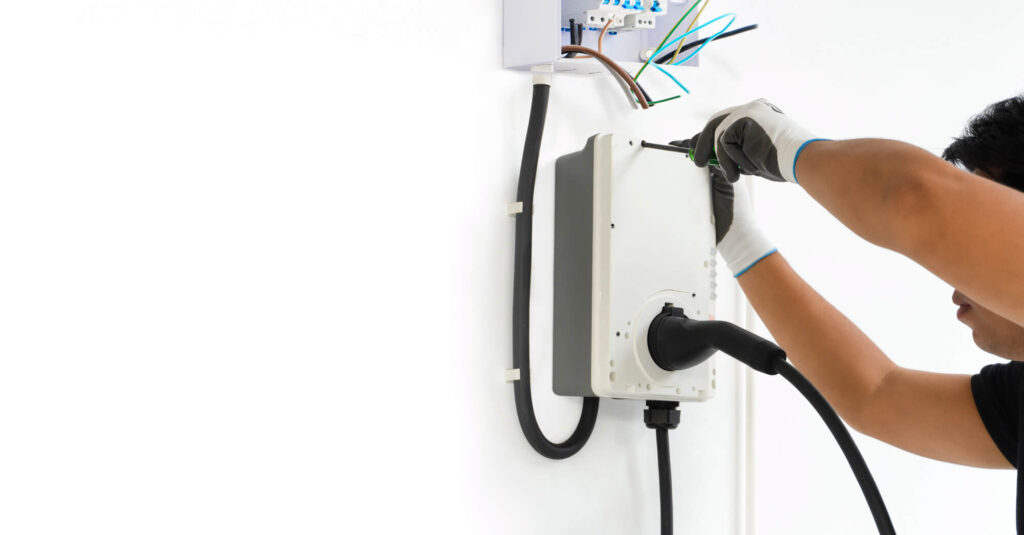
The cost to install a Level 2 EV charger at home is one of the most common questions from electric vehicle owners. A Level 2 charger delivers up to 10 times faster charging than a standard 120V outlet — the U.S. Department of Energy recommends Level 2 as the standard for home EV charging. This guide covers typical installation costs, what affects pricing, and what to expect from the installation process.
⚡ Key Takeaways
- A Level 2 charger operates on 240V power — the same voltage as your electric dryer or range — and can add 20–30 miles of range per hour of charging, depending on your vehicle and charger output.
- The total installed cost depends on the charger hardware, the distance from your panel, and whether a new circuit or panel upgrade is required:
- Distance from Electrical Panel The further the charger is from your main panel, the more wiring is required.
What Is a Level 2 EV Charger?
A Level 2 charger operates on 240V power — the same voltage as your electric dryer or range — and can add 20–30 miles of range per hour of charging, depending on your vehicle and charger output. This compares to just 3–5 miles per hour from a standard 120V outlet. For most EV owners, a Level 2 home charger means waking up to a full battery every morning regardless of how much driving was done the day before.
Average Cost to Install a Level 2 EV Charger
The total installed cost depends on the charger hardware, the distance from your panel, and whether a new circuit or panel upgrade is required:
- Level 2 charger hardware (EVSE unit): $300 – $800 for a quality residential unit
- Electrician installation labor: $300 – $1,000 depending on complexity
- New 240V, 50-amp circuit from panel: Included in most quotes or $300 – $700 if a significant wiring run is required
- Permit fees: $50 – $200 in most jurisdictions
- Panel upgrade if needed: $1,500 – $3,500 additional
- Typical total installed cost (no panel upgrade): $700 – $2,000
Factors That Affect Installation Cost
Distance from Electrical Panel
The further the charger is from your main panel, the more wiring is required. A garage adjacent to the panel is cheapest. A detached garage or charging location on the far side of the home adds cost for longer conduit and cable runs.
Panel Capacity
A Level 2 charger requires a dedicated 240V circuit — typically 50 amps for a 48-amp charger. If your panel is full or lacks available capacity, a panel upgrade or sub-panel may be required, adding to the overall cost.
Conduit and Outdoor Wiring
If the charger is mounted outdoors or the cable must run through conduit, materials cost increases. Exterior-rated conduit and weatherproof outlet covers are required for outdoor installations.
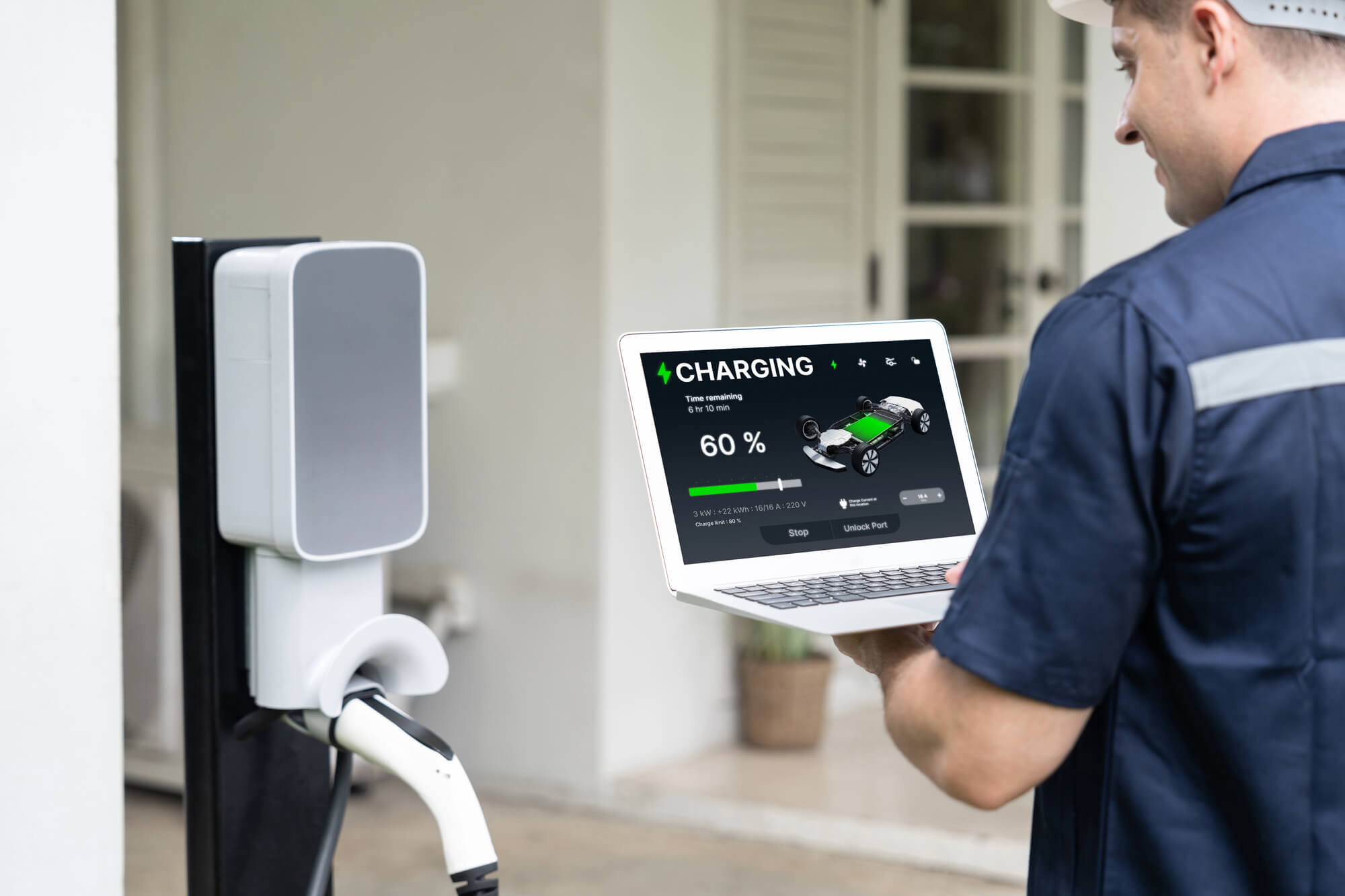
Choosing the Right Level 2 Charger
Key specifications to consider when selecting a Level 2 EVSE:
- Amperage output: 32-amp units charge at a moderate rate; 48-amp units are faster and future-proof for higher-capacity EVs
- Smart features: Wi-Fi connectivity, scheduling, and energy monitoring allow you to charge during off-peak utility rates
- Cord length: 18–25 foot cords accommodate most garage layouts without needing to reposition the vehicle
- Brand compatibility: Most Level 2 chargers use the SAE J1772 connector, which is compatible with all non-Tesla EVs. Tesla owners can use an adapter or purchase a Tesla-compatible unit
Get an accurate cost estimate before you commit. Our EV installation team provides transparent quotes with no surprises — contact us today.
Federal Tax Credit for EV Charger Installation
The Alternative Fuel Vehicle Refueling Property Credit (IRS Form 8911) provides a federal tax credit of up to 30% of the cost to install a Level 2 EV charger at your home, up to $1,000. Consult your tax advisor to confirm eligibility based on your specific situation.
Level 2 vs. Level 1 Charging: Installation and Infrastructure Demands
Understanding the difference between Level 1 and Level 2 charging helps you make informed installation decisions. Level 1 charging uses a standard 120V household outlet and requires no electrician—you plug in a portable charger and add about 2–5 miles of range per hour. However, charging a modern EV from 0–100% can take 24–48 hours, making it impractical for daily use. Level 2 charging uses 240V service (like your dryer or oven outlet) and delivers 10–30 miles of range per hour, allowing a full overnight charge (8–10 hours) for daily commuting. Most Level 2 chargers draw 30–50 amps on a dedicated circuit, requiring either a new 240V outlet installation ($200–$800 if the panel has spare capacity) or a full service upgrade ($3,000–$8,000 if capacity is exceeded). For homes committed to EV ownership or multiple EVs, Level 2 charging infrastructure is essential; the additional installation cost pays for itself within 2–3 years through faster daily charging convenience and reduced reliance on public charging networks (which charge premium kWh rates).
Charger Brands, Warranties, and Contractor Partnerships
Major Level 2 charger brands include Tesla Wall Connector (exclusive to Tesla EVs, $570–$700 hardware), ChargePoint ($500–$800), Eaton ($600–$900), Siemens ($700–$1,000), and Leviton ($600–$900). Installation labor costs may vary depending on charger model—Tesla Wall Connector installation often costs $500–$1,200 because of specific mount and wire gauge requirements, while third-party brands may be $400–$900. Some electricians partner with charger manufacturers and may offer discounts on equipment or bundled labor rates; asking about contractor partnerships can save $100–$300 on hardware. Warranty coverage typically spans 3–5 years for labor and 5–10 years for the charger unit. Smart-enabled chargers (those with Wi-Fi and app integration) cost $100–$300 more but allow remote monitoring of charging status and energy usage, valuable if you’re managing multiple vehicles or tracking charging costs for home office tax deductions. Verify that your chosen charger is compatible with your vehicle and that the electrician has experience installing that specific model before committing.
Ongoing Costs and Electrical Consumption
After Level 2 charger installation, your electricity consumption and costs will increase noticeably. A Level 2 charger drawing 40 amps at 240V consumes approximately 9.6 kW per hour. Charging a typical EV with a 60–75 kWh battery overnight (8–10 hours) consumes 48–75 kWh, costing approximately $6–$12 per full charge depending on your utility rate (US average: $0.12–$0.16/kWh, but rates vary from $0.08/kWh in Louisiana to $0.25/kWh in California). Monthly EV charging costs typically range from $25–$75 if you drive 1,000–1,500 miles per month and charge at home. Some utilities offer time-of-use (TOU) rates that incentivize charging during off-peak hours (late night, early morning), potentially reducing charging costs by 30–40% if you have flexibility in when you charge. Ask your utility whether special EV rate plans exist in your area—many US utilities now offer reduced rates or rebates for EV charger installation to encourage adoption. These programs can offset installation costs by $300–$1,000 and reduce ongoing electricity expenses, making home charging dramatically cheaper than gasoline.
Frequently Asked Questions
Do I need a permit to install a Level 2 charger?
Yes, in most jurisdictions. EV charger installation requires a permit and electrical inspection because it involves a new 240V circuit. Your licensed electrician will handle permit procurement as part of the installation.
Can I install a Level 2 charger myself?
The electrical work — running a new 240V circuit and connecting the charger — must be performed by a licensed electrician in most areas. Mounting the charger unit itself after the circuit is installed is straightforward, but the circuit work requires a professional.
How long does Level 2 charger installation take?
Most installations take 2–4 hours for the electrical work. Permit processing may add days to the timeline. Complex installs requiring conduit runs or sub-panel work can take a full day.
What amperage Level 2 charger should I get?
A 48-amp charger is the best long-term investment — it provides the fastest charging available to most home EVs and is compatible with next-generation high-capacity vehicles. A 32-amp unit is adequate for most current EVs if cost is a concern.