
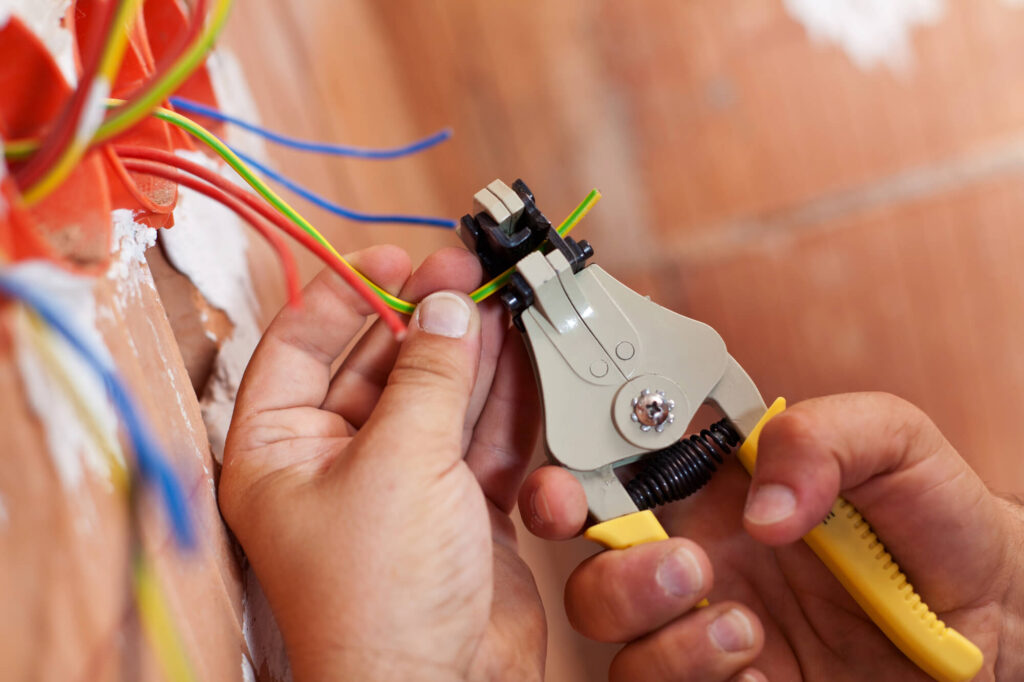
Fitting out a new office space involves far more than furniture and paint. The electrical infrastructure you install from day one will determine how your team works, how easily you can adapt to growth, and whether your space meets the safety and compliance requirements your landlord, insurer, and local authority expect.
Contents
⚡ Key Takeaways
- Poor electrical planning is one of the most common and costly mistakes in office fit-outs.
- A complete office electrical fit-out covers several interconnected systems that must be planned and installed in coordination.
- Lighting significantly affects employee productivity, wellbeing, and energy costs.
Planning Your Office Electrical Fit-Out
Poor electrical planning is one of the most common and costly mistakes in office fit-outs. Decisions made early — about panel capacity, circuit layouts, and cabling routes — are expensive to change once walls are closed and ceilings are installed.
Start with a Power and Data Audit
Before any work begins, map out where every workstation, server, printer, kitchen appliance, AV system, and piece of specialised equipment will be located. Calculate the total load and add a 20–30% growth buffer. Offices that feel adequately powered on day one quickly become overloaded as teams grow and technology requirements increase.
Engage an Electrician at Design Stage
An experienced commercial electrician should be involved from the design phase — not called in after the fitout contractor has already made decisions. Early electrician involvement ensures power and data outlets are positioned correctly, panel capacity is adequate, and the installation meets code before any walls go up.
Key Electrical Components in an Office Fit-Out
A complete office electrical fit-out covers several interconnected systems that must be planned and installed in coordination.
Electrical Panel and Distribution
The main switchboard or sub-panel for your tenancy must have sufficient capacity for your current load plus planned expansion. Separate circuits for high-draw equipment (servers, large displays, kitchen appliances) prevent nuisance tripping and protect sensitive electronics from voltage fluctuations caused by other loads.
Power Outlets and Circuit Design
Open-plan offices need power outlets at workstations, along walls, and in collaboration areas. Floor boxes are increasingly common for flexible desk arrangements. Each workstation cluster should ideally have its own circuit to isolate any faults and simplify troubleshooting. USB charging outlets and surge-protected power strips at fixed workstations reduce reliance on power boards, which are a common fire risk when overloaded.

A well-planned office electrical fit-out supports productivity and safety. Our commercial electricians design and install complete office electrical systems to spec.
Lighting in Office Fit-Outs
Lighting significantly affects employee productivity, wellbeing, and energy costs. Modern office fit-outs almost universally use LED lighting for its efficiency and longevity, but the design and control system are equally important.
Lighting Zones and Controls
Zone lighting by area — open plan, meeting rooms, breakout spaces, and individual offices should each have independent control. Motion-sensor controls in lower-traffic areas like hallways, restrooms, and storage rooms reduce energy consumption substantially. Dimming capability in meeting rooms and collaborative spaces allows the space to adapt to different activities.
Emergency Lighting Requirements
All commercial premises require emergency lighting and illuminated exit signs. These must be installed to code, tested on commissioning, and maintained on a regular schedule. Your electrician will ensure placement meets minimum illumination requirements along all exit routes.
Data and Communications Cabling
While structured data cabling is typically handled by a specialist, the electrical fit-out must accommodate it. Power and data cables must be routed separately to prevent interference. Sufficient conduit capacity and cable trays should be installed during the electrical fit-out to allow data cabling to follow without disruption.
Compliance and Sign-Off
All commercial electrical work requires permits and must be inspected and signed off by the relevant authority — a requirement under OSHA electrical standards and local building codes. Your electrician is responsible for obtaining permits, completing the work to code, and providing compliance certificates. Never occupy a new fit-out without proper electrical sign-off — it can void your lease, insurance, and occupancy permit.
Frequently Asked Questions
How much does an office electrical fit-out cost?
Office electrical fit-out costs depend on the size of the tenancy, the complexity of the systems installed, and the age of the building. Budget $15–$50 per square foot as a rough guide for a comprehensive fit-out including power, lighting, and emergency systems. Get multiple quotes from licensed commercial electricians with fit-out experience.
Do I need a permit for office electrical work?
Yes. All commercial electrical work requires permits in virtually every jurisdiction. Your licensed electrician handles permit applications and ensures work is inspected and signed off as required. Work without permits can prevent occupancy and create problems with your landlord and insurer.
How long does an office electrical fit-out take?
For a typical office space of 2,000–5,000 square feet, electrical rough-in and fit-out takes 1–3 weeks. The electrical work happens in stages — rough-in during construction, fit-off once finishes are complete. Your electrician can provide a timeline after reviewing the plans.
Can my office expand its electrical capacity later?
Yes, but planning for expansion upfront is far more cost-effective. Installing a larger panel, additional conduit, and spare circuits during the initial fit-out costs a fraction of what it would cost to retrofit later when walls and ceilings are finished.
What’s the difference between a fit-out electrician and a maintenance electrician?
Fit-out electricians specialise in new installations — running new circuits, installing panels, and completing all electrical work in a new or refurbished space. Maintenance electricians handle ongoing repairs and servicing of existing systems. Many commercial electrical contractors offer both services.