
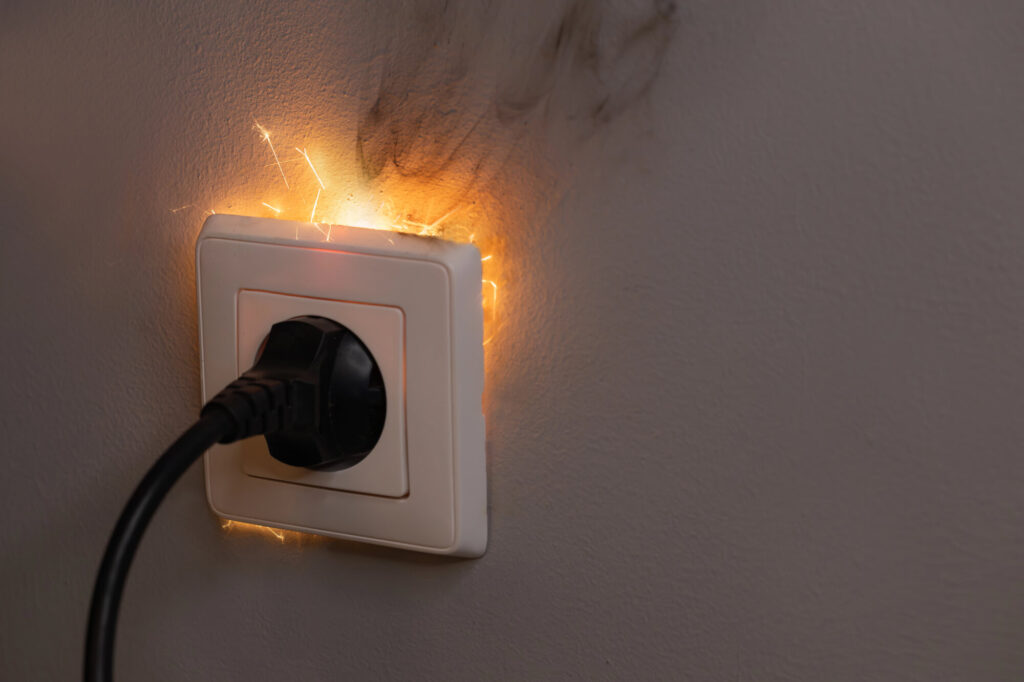
If you notice sparks when plugging a device into an outlet, it can be alarming. Small sparks may occasionally occur when electricity jumps between the plug and outlet contacts. However, frequent or large sparks can indicate a more serious electrical issue that should be inspected by a licensed electrician.
⚡ Key Takeaways
- Electrical sparks occur when electricity jumps across a small gap between metal contacts.
- Several electrical issues can cause sparks when plugging in devices.
- Some outlet sparking — which the CPSC Electrical Safety Guide warns can be caused by loose wiring, moisture ingress, or a worn receptacle that needs immediate professional attentions may indicate a potentially dangerous electrical problem.
Outlet Sparks When Plugging In? What It Means
Electrical sparks occur when electricity jumps across a small gap between metal contacts. When you plug a device into an outlet, the electrical current begins flowing immediately, which can create a brief spark as the connection is completed.
A small, quick spark that happens occasionally may be normal. However, large sparks, frequent sparks, or sparks accompanied by noise or burning smells may indicate a problem with the outlet, wiring, or appliance.
Common Causes of Outlet Sparks
Several electrical issues can cause sparks when plugging in devices.
- Normal electrical arc – A small spark can occur when a plug completes the electrical connection.
- Loose outlet connections – Worn outlets may not hold plugs securely.
- Faulty appliances – A damaged appliance may draw excessive current.
- Overloaded circuits – Too many devices drawing power on the same circuit.
- Moisture inside the outlet – Water exposure can cause electrical arcing.
- Damaged wiring – Loose or deteriorating wiring may create sparks.
If sparks appear large, bright, or happen repeatedly, the outlet should be inspected as soon as possible.
When Outlet Sparks May Be Dangerous
Some outlet sparks may indicate a potentially dangerous electrical problem.
- Large yellow or white sparks
- Sparks that last longer than a moment
- Burning smell near the outlet
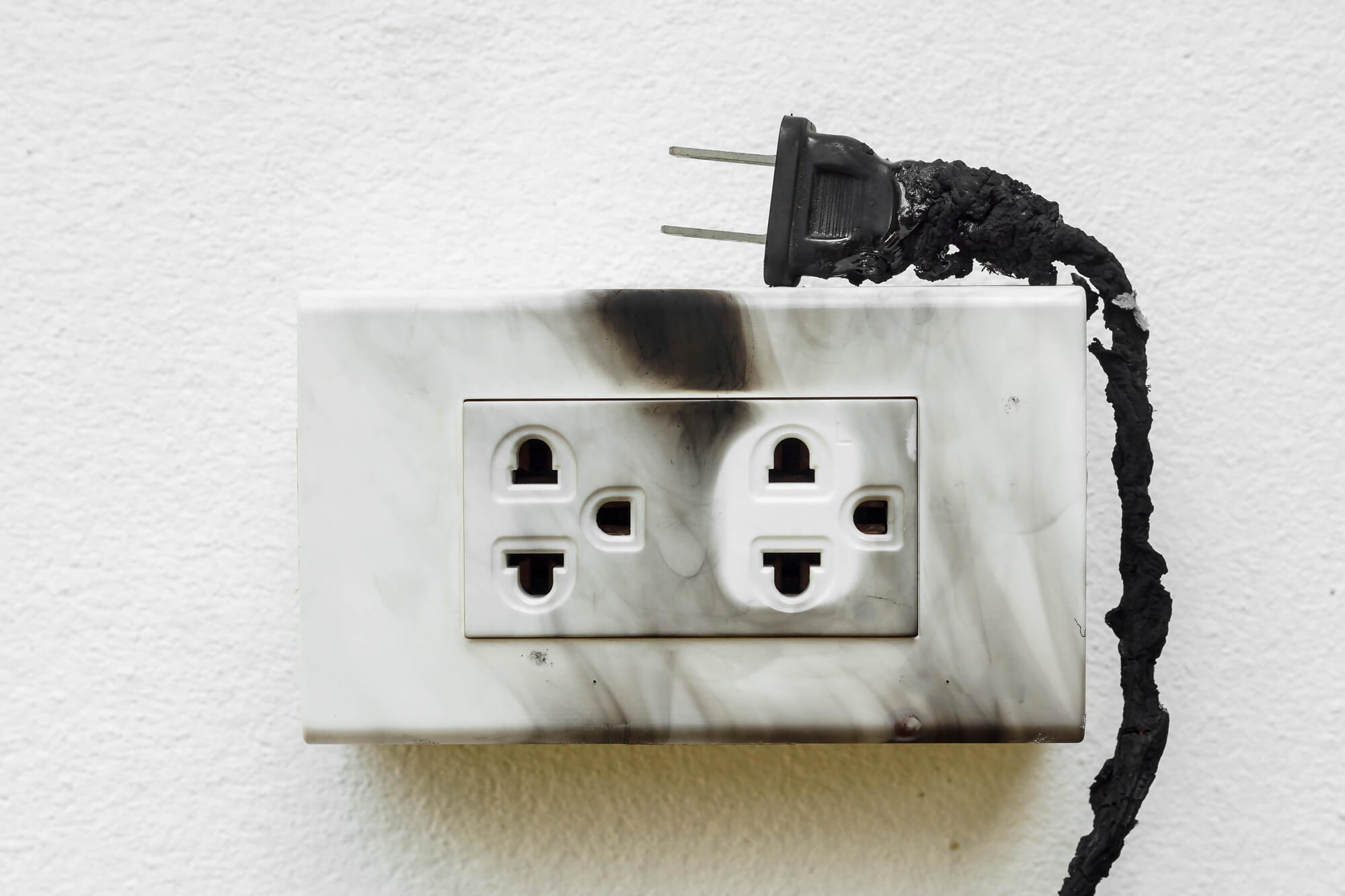
- Outlet discoloration or burn marks
- Buzzing sounds from the outlet
If you notice any of these warning signs, stop using the outlet and turn off the circuit breaker controlling that outlet until it can be inspected.
How to Troubleshoot a Sparking Outlet
If an outlet sparks when plugging in devices, you can try a few basic troubleshooting steps.
- Unplug the device and inspect the plug for damage
- Test the outlet with another appliance
- Check whether the outlet holds plugs firmly
- Look for burn marks or discoloration around the outlet
- Check the breaker panel for overloaded circuits
If the outlet continues to spark, the outlet or wiring may need repair or replacement.
Sparking outlets are an emergency — call our same-day electricians or book immediate repair.
Local, licensed electricians available 24/7
Why Older Outlets May Spark More Often
Older outlets may lose tension in their internal contacts, which prevents plugs from fitting securely. Loose electrical connections can create arcing, which produces sparks and heat.
Replacing worn outlets with modern electrical receptacles can improve safety and reduce sparking problems.
What Does It Cost to Fix a Sparking Outlet?
The cost to repair a sparking outlet depends on the underlying issue.
- Outlet replacement: $100 – $250
- Electrical troubleshooting visit: $100 – $250
- Wiring repair: $300 – $800
- Circuit upgrade: $500 – $1,500
An electrician can inspect the outlet, test the wiring, and determine whether the issue involves the outlet itself or the electrical circuit.
What Causes Arcing and Sparks Inside Outlets
When you see sparks as you plug something into an outlet, arcing is occurring between the plug prongs and the outlet receptacle. This happens because electrical current is jumping across a gap instead of flowing smoothly through the connection. Arcing generates intense heat—far hotter than the surface you can see—and rapidly degrades both the plug and outlet. Over time, repeated arcing creates pitting and corrosion on the metal contacts, making the problem worse. The heat from arcing can eventually ignite the insulation or surrounding materials if left unchecked.
Loose or bent outlet contacts are common culprits. As outlets age and you insert plugs thousands of times, the spring tension in the contacts weakens. When plug prongs don’t make firm contact with the outlet’s internal receptacles, a gap forms, causing visible arcing. Moisture and oxidation on the contacts also increase resistance, creating additional heat and sparking. In some cases, the plug prongs themselves may be worn, damaged, or improperly shaped, preventing a secure connection.
When Sparking Outlets Become an Emergency
Not all outlet sparking is equally dangerous, but the risk escalates quickly. A single spark during insertion isn’t immediately catastrophic, but repeated sparking indicates a deteriorating connection that will continue to degrade. If an outlet arcs every time you use it, the risk of fire increases substantially because the heat generated can spread to nearby combustibles—especially behind walls where you cannot see it. Burning smell, discoloration, or melted plastic around an outlet are signs of dangerous arcing that requires immediate attention.
The National Electrical Code requires outlets to maintain a secure connection, and outlets showing signs of repeated arcing fail that standard and should be replaced immediately. Do not continue using a sparking outlet while waiting for a repair. If you cannot avoid using the outlet temporarily, use a surge protector as a stopgap (never as a permanent fix), unplug devices immediately after use, and monitor the area for any signs of heat, smoke, or burning odor. Call a licensed electrician right away to replace the faulty outlet and inspect the circuit for heat damage.
When Outlet Sparking Means You Need a New Panel
Sparking in a single outlet is usually caused by loose connections inside that outlet, but sparking that occurs in multiple outlets, happens frequently, or is accompanied by other panel warning signs may indicate a problem inside your electrical panel itself. If you notice sparking in 2 or more outlets in different areas of your home, or if sparking persists even after an electrician has replaced an outlet, the issue is likely upstream in your panel or the feeder wires. Arc faults in your main panel are particularly dangerous; they generate extreme heat that can spread to adjacent breakers and components, potentially triggering a cascade of failures. Panels from the 1980s-1990s, particularly Federal Pacific Electric (FPE) or Zinsco panels, are notorious for internal arc faults because their internal mechanisms are prone to corrosion and mechanical failure; if your home has one of these panels and you’re experiencing sparking, replacement should be a priority.
Other signs that your sparking problem originates in the panel include frequent circuit breaker tripping (multiple breakers, not just one), a burning smell from the panel, visible scorch marks or discoloration on the panel cover, or panel age over 25 years. If your panel is older than 40 years and shows any of these signs, a full panel replacement is almost certainly necessary and should be done by a licensed electrician. Panel replacement cost ranges from $2,500-$4,500 depending on panel size, breaker configuration, and local labor rates. While this is a significant expense, it’s essential for safety; a failing panel poses serious fire risk and may result in your insurance company refusing coverage or requiring panel replacement as a condition of your homeowner’s policy.
Before authorizing panel replacement, have a licensed electrician inspect your panel and verify that sparking is indeed panel-related rather than outlet-related. They can check for arc faults using specialized testing equipment, identify which components are failing, and provide recommendations for repair or replacement. In some cases, the problem is a loose main breaker connection rather than a component failure—a much simpler fix costing $100-$300 in professional service. Don’t ignore multiple outlets sparking or frequent breaker tripping; these are warning signs that your electrical system is in distress and needs professional evaluation before a serious fire or safety incident occurs.
Frequently Asked Questions
Is it normal for outlets to spark when plugging something in?
A very small spark can occur when electricity first connects to the plug. However, large sparks or repeated sparking may indicate a problem with the outlet or wiring.
Can a sparking outlet cause a fire?
Yes. Electrical arcing can create heat and potentially ignite nearby materials if the problem continues.
Should I stop using an outlet that sparks?
If sparks are large or frequent, you should stop using the outlet and have it inspected by an electrician.
Can a faulty appliance cause outlet sparks?
Yes. A damaged appliance may draw excessive current or create electrical arcing when plugged into an outlet.
Speak With a Licensed Electrician Today
If an outlet sparks when plugging in devices, the issue may involve loose wiring, damaged outlets, or overloaded circuits. Addressing electrical problems quickly helps prevent potential safety hazards.
InstaElectricians connects homeowners with licensed electricians across the United States. Our network of professionals can inspect outlets, repair wiring issues, and ensure your electrical system is operating safely.
Whether you need outlet repair, electrical troubleshooting, or safety upgrades, help is available right now.