
If your lights flicker — the CPSC Electrical Safety Guide notes that flickering caused by appliance startup often points to undersized wiring or a shared circuit that cannot handle the combined load when an appliance turns on, it usually means the appliance is drawing a large amount of electricity when it starts. This is common with appliances that use electric motors, such as refrigerators, air conditioners, washing machines, and microwaves. While occasional flickering may be normal, frequent or severe flickering can indicate electrical problems that should be inspected.
⚡ Key Takeaways
- Many appliances require extra power when they first start running.
- Certain appliances are more likely to cause flickering lights because they require a large amount of electricity when starting.
- Frequent or severe flickering lights may indicate electrical issues that require attention.
Why Lights Flicker When Appliances Turn On
Many appliances require extra power when they first start running. This temporary surge in electricity, known as inrush current, can briefly reduce voltage in the circuit. When voltage drops momentarily, lights connected to the same electrical system may dim or flicker.
In most homes, small flickers that last only a second are normal. However, noticeable flickering throughout the house may indicate that the electrical system is struggling to handle the power demand.
Appliances That Commonly Cause Lights to Flicker
Certain appliances are more likely to cause flickering lights because they require a large amount of electricity when starting.
- Air conditioners – HVAC systems require significant power when compressors start.
- Refrigerators – The compressor motor can create brief voltage fluctuations.
- Microwaves – High power consumption may affect nearby lighting circuits.
- Washing machines – Electric motors create sudden electrical demand.
- Space heaters – High wattage can stress electrical circuits.
If the flickering only happens briefly when an appliance starts, the electrical system may still be operating normally.
When Flickering Lights May Indicate a Problem
Frequent or severe flickering lights may indicate electrical issues that require attention.
- Lights flicker throughout the entire house
- Lights dim significantly when appliances start
- Lights continue flickering after appliances are running
- Breaker trips when appliances turn on
- Buzzing sounds from the electrical panel
These symptoms may indicate overloaded circuits, loose wiring connections, or electrical panel capacity problems.
How to Troubleshoot Flickering Lights
If lights flicker when appliances start, you can try a few basic checks before calling an electrician.
- Check whether the flicker happens with only one appliance
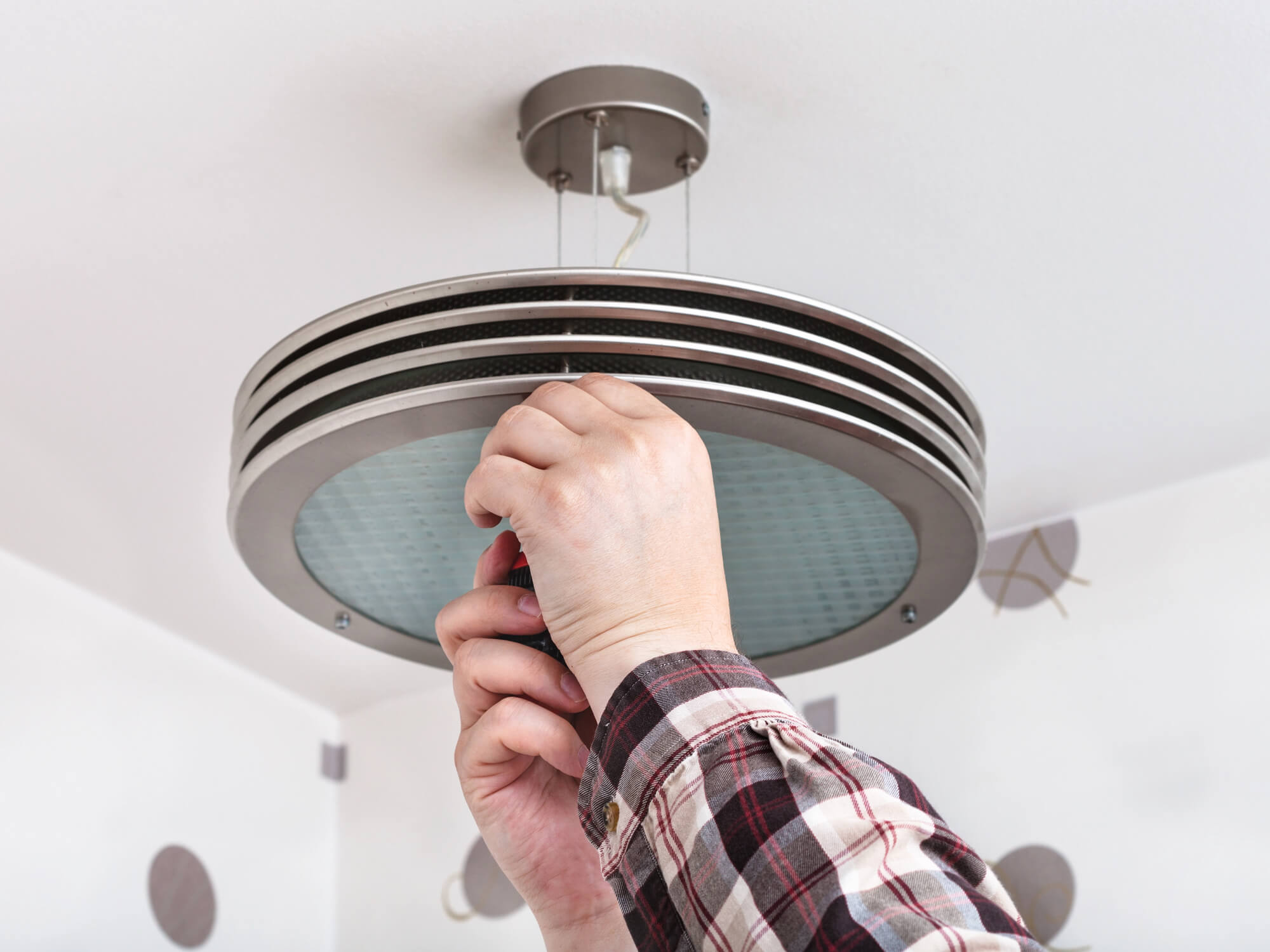
- Make sure light bulbs are tightened properly
- Replace older bulbs with compatible LED bulbs
- Plug the appliance into a different circuit if possible
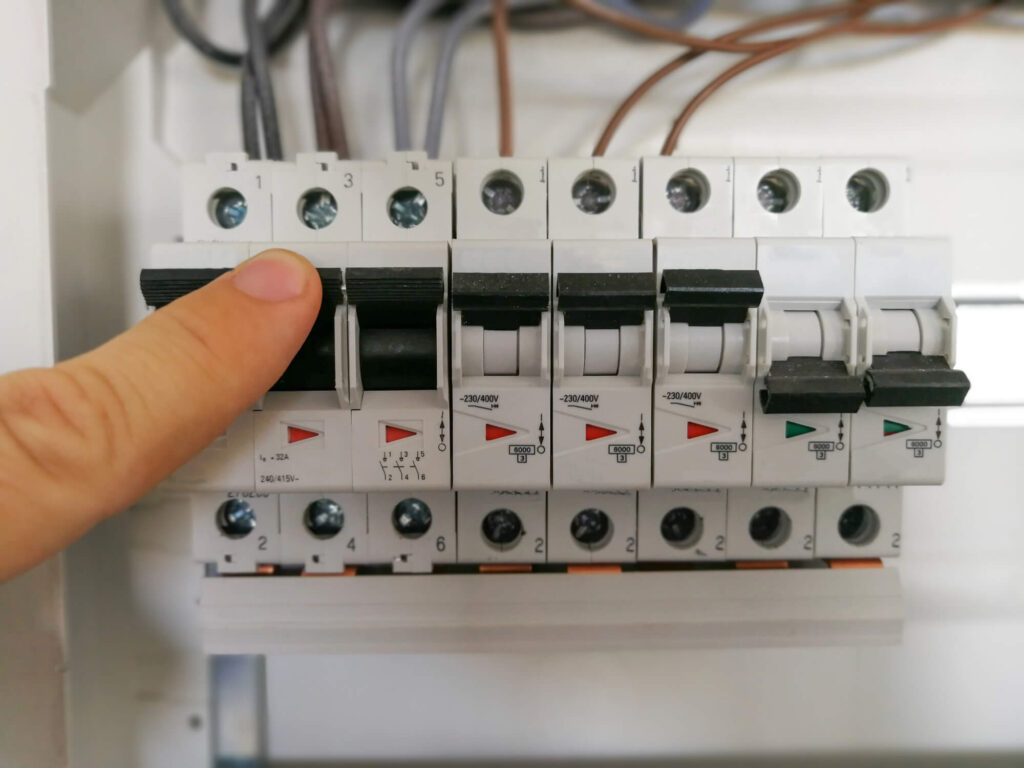
- Check the electrical panel for overloaded breakers
If flickering continues across multiple circuits, the electrical panel or wiring may require inspection.
For flickering caused by overloaded circuits or an undersized panel, our panel upgrade specialists and repair team can assess and fix the problem fast.
Local, licensed electricians available 24/7
Electrical Panel Capacity and Flickering Lights
Older homes may have electrical panels that cannot support modern power demands. When large appliances draw electricity, the system may struggle to deliver consistent voltage to lighting circuits.
Upgrading the electrical panel or installing dedicated circuits for high-power appliances can often solve flickering light issues.
What Does It Cost to Fix Flickering Lights?
The cost of fixing flickering lights depends on the cause of the problem.
- Electrical troubleshooting visit: $100 – $250
- Light switch replacement: $100 – $250
- Dedicated circuit installation: $300 – $800
- Electrical panel upgrade: $2,000 – $4,500+
A licensed electrician can inspect the electrical system and determine whether the flickering is normal or a sign of a larger electrical problem.
Load-Related Flicker & Dedicated Circuit Solutions
Voltage drop is a fundamental electrical principle: the farther power travels from the main panel, the more voltage is lost along the way. When a high-amperage device like an air conditioner compressor or electric water heater suddenly draws power, it creates a momentary spike in current demand that causes a temporary voltage drop across the entire circuit — and potentially on neighboring circuits sharing the same service. Modern LED lighting is particularly sensitive to voltage fluctuations, often flickering noticeably even with small 3–5 volt drops that older incandescent bulbs would ignore.
Installing a dedicated 20-amp or 30-amp circuit for a high-draw appliance is the most reliable solution, typically costing $200–$500 depending on circuit distance. This removes the appliance from shared circuits, so its start-up spike no longer affects lights or other devices. For temporary flicker in a single room, point-of-use voltage stabilizers ($50–$150) may help, but they’re less effective than a dedicated circuit. If your entire house flickers when appliances start, the issue may be undersized utility service (too-small feed lines from the street) — contact your utility company to evaluate your service capacity.
Utility-Side Investigation & When to Request Service Upgrades
While most load-related flicker is a home wiring issue, utilities sometimes undersize service to residences, especially in older neighborhoods. If multiple neighbors report flickering lights when large appliances start, the utility’s distribution lines or transformer may be inadequate for the neighborhood’s demand. Utility-side flicker typically affects all nearby homes simultaneously and occurs during peak demand times (early morning, evening, cold weather).
Request a free utility audit if you suspect undersized service — many utilities offer these and can run a load analysis on your account. If the utility confirms inadequate service, they may upgrade to larger feed lines or install a bigger transformer at no cost to you. Document when flicker occurs, which appliances trigger it, and whether it happens at the same times daily — utilities review this information when evaluating service requests. Professional diagnosis from your electrician costs $150–$250, but identifying whether the problem is your home or the utility determines who pays for the fix.
Voltage Drop: The Technical Cause of Appliance-Related Flickering
Voltage drop is the underlying electrical phenomenon behind appliance-triggered light flickering. When a high-load device like a refrigerator or air conditioner compressor motor starts, it draws a large surge of current in the first few milliseconds. If the circuit wiring or panel capacity is insufficient to supply that current demand, the voltage at the source momentarily drops below the standard 120 volts. This voltage dip affects other loads on the same circuit—including light fixtures—causing them to dim or flicker noticeably. The National Electrical Code (NEC) allows a maximum voltage drop of 5% on individual branch circuits (6 volts on a 120-volt circuit), but many older homes with outdated wiring exceed this limit. An electrician can diagnose voltage drop using a voltmeter: they measure the voltage at the outlet under load (when the appliance is running) and compare it to the resting voltage, identifying where the drop occurs.
The solution depends on the severity and location of the voltage drop. If voltage drop exceeds 5%, the most common fix is installing a dedicated circuit for the high-load appliance, running larger gauge wire directly from the panel to the device. For example, refrigerators and air conditioning units should ideally be on their own 20-amp or dedicated circuits rather than shared with lighting. For high-amperage devices like electric ranges or water heaters, 240-volt service with appropriate gauge wire (often 6-8 AWG) minimizes voltage drop over distance. In some cases, upgrading the main service panel to increase capacity or replacing undersized wiring throughout the home may be necessary. Most professional remediation costs $400–$1,500 for a dedicated appliance circuit, whereas full-home rewiring can exceed $8,000. A licensed electrician’s diagnostic testing pinpoints the root cause and recommends the most cost-effective solution.
Frequently Asked Questions
Is it normal for lights to flicker when appliances start?
Yes. Many appliances draw extra power when starting, which can briefly reduce voltage and cause lights to flicker for a second.
Why do my lights dim when the air conditioner turns on?
Air conditioners require significant power when the compressor starts, which can temporarily lower voltage in the electrical system.
Should I worry if lights flicker frequently?
Frequent flickering may indicate overloaded circuits, wiring issues, or insufficient electrical panel capacity.
Can an electrician fix flickering lights?
Yes. An electrician can inspect circuits, wiring, and the electrical panel to identify and resolve voltage fluctuation issues.
Speak With a Licensed Electrician Today
If your lights flicker whenever appliances turn on, the issue may involve overloaded circuits, voltage fluctuations, or electrical panel limitations.
InstaElectricians connects homeowners with licensed electricians across the United States. Our network of professionals can diagnose flickering lights, install dedicated circuits, and upgrade electrical panels when necessary.
Whether you need electrical troubleshooting or system upgrades, help is available right now.