
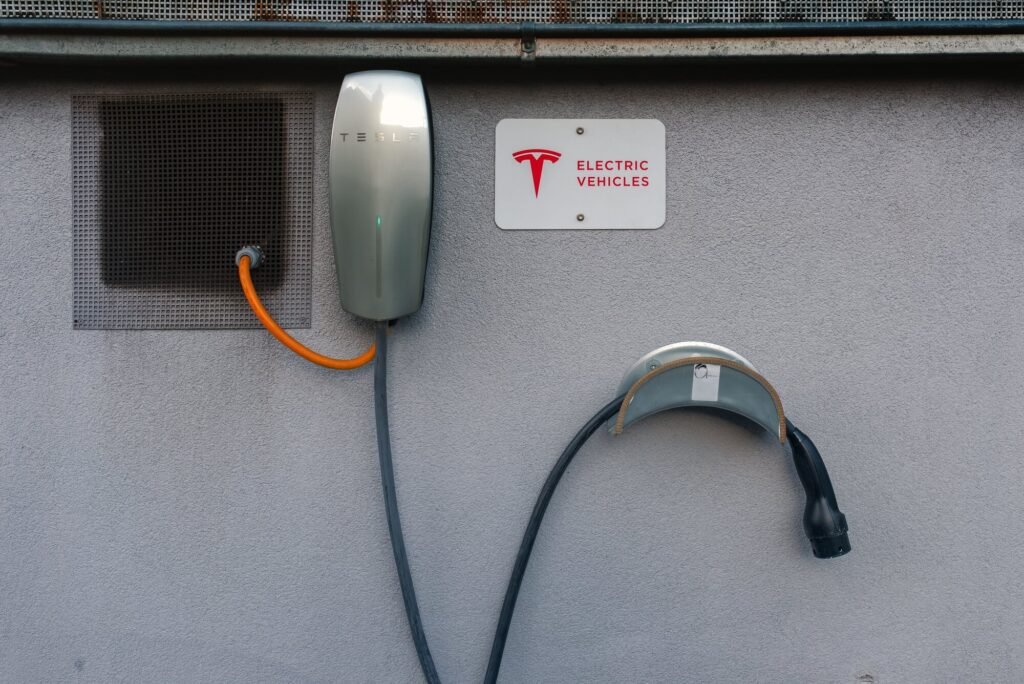
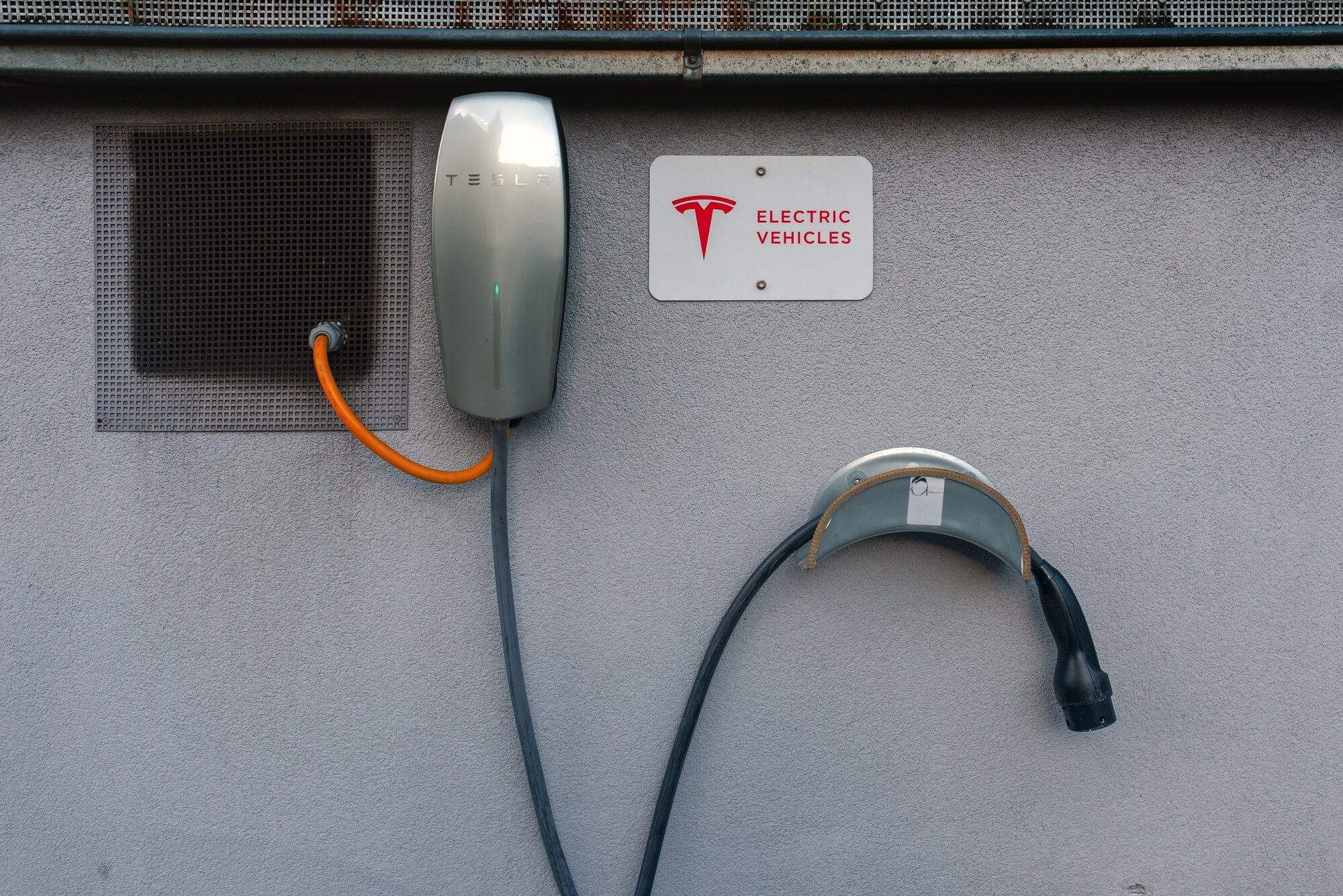
Tesla home charger installation — whether for the Tesla Wall Connector or a compatible third-party Level 2 charger — is one of the most common electrical upgrades among Tesla owners. The right home charging setup means you’ll always start the day with a full battery, without depending on public charging infrastructure. This guide covers Tesla charger installation costs, options, and what to expect from the process.
Contents
- 1 Tesla Charging Options for Your Home
- 2 Cost to Install a Tesla Wall Connector
- 3 Cost to Install a NEMA 14-50 Outlet for Tesla
- 4 Does Tesla Installation Qualify for a Tax Credit?
- 5 What to Expect During Tesla Charger Installation
- 6 Electrical Panel Upgrades and Capacity Considerations
- 7 Distance from Electrical Panel and Trenching Costs
- 8 Permit, Inspection, and Code Compliance Costs
- 9 Tesla Charger Cost Comparison: Wall Connector vs NEMA 14-50
- 10 Federal Tax Credit for EV Charger Installation
- 11 How to Get the Best Price on Tesla Charger Installation
- 12 Frequently Asked Questions
⚡ Key Takeaways
- Tesla owners have three main home charging options, each with different speeds and installation requirements:
- The Tesla Wall Connector itself costs $400 from Tesla.
- Alternatively, a licensed electrician can install a 240V NEMA 14-50 outlet in the garage, allowing use of the Tesla Mobile Connector at higher charging speeds:
Tesla Charging Options for Your Home
Tesla owners have three main home charging options, each with different speeds and installation requirements:
- Mobile Connector (Level 1, 120V): Adds 3–5 miles of range per hour; no installation required; uses a standard household outlet. Suitable only for low daily mileage drivers.
- Mobile Connector with 240V adapter: Adds 20–30 miles per hour; plugs into a NEMA 14-50 outlet (same as an RV outlet); requires a licensed electrician to install the outlet and circuit.
- Tesla Wall Connector (Level 2, hardwired): Adds up to 44 miles of range per hour on Model 3/Y; hardwired installation by a licensed electrician; the recommended solution for most Tesla owners.
Cost to Install a Tesla Wall Connector
The Tesla Wall Connector itself costs $400 from Tesla. Installation by a licensed electrician adds the following:
- New 60-amp, 240V circuit from panel: $300 – $800 depending on distance and panel location
- Permit fees: $50 – $200
- Electrician labor (2–4 hours): $200 – $600
- Total installed cost (Wall Connector + installation): $900 – $2,000 in most markets
If a panel upgrade is required to add capacity for a new 60-amp circuit, add $1,500 – $3,500 to the total.
Cost to Install a NEMA 14-50 Outlet for Tesla
Alternatively, a licensed electrician can install a 240V NEMA 14-50 outlet in the garage, allowing use of the Tesla Mobile Connector at higher charging speeds:
- NEMA 14-50 outlet installation (new 50-amp circuit): $300 – $700 installed
- Charging speed: ~30 miles of range per hour (slightly slower than the Wall Connector)
This is a cost-effective option for drivers who may switch between EV brands in the future, as the NEMA 14-50 is a universal outlet usable with any EV via adapter.
Does Tesla Installation Qualify for a Tax Credit?
Yes. The federal Alternative Fuel Vehicle Refueling Property Credit covers 30% of installation costs (not the hardware) up to $1,000 for residential installations. The Tesla Wall Connector itself is not eligible, but the electrician’s labor and permit costs are. Consult your tax advisor to confirm eligibility.
What to Expect During Tesla Charger Installation
A licensed electrician will:
- Assess your panel for available capacity and breaker slots
- Run a new 240V, 60-amp circuit from the panel to the charger location
- Mount and wire the Wall Connector per Tesla’s installation guidelines
- Obtain and manage required permits
- Test the installation and confirm connectivity with the Tesla app
Tesla charger installation costs vary by home setup. Our certified installers can assess your garage and provide a firm quote — often at a lower cost than dealership referrals.
Electrical Panel Upgrades and Capacity Considerations
Most modern homes with a 200-amp electrical panel have sufficient capacity to add a Level 2 Tesla Wall Connector without upgrading the panel. However, older homes with 100-amp service or homes where the panel is already heavily loaded may require a panel upgrade before installation. A full panel upgrade from 100 amps to 200 amps costs $2,500–$4,000 in material and labor, which can nearly double your total Tesla charger installation cost.
Before committing to an installation estimate, have your electrician assess your panel capacity and current electrical load. They’ll review your utility bills and inspect your panel to determine available amperage. If your panel has spare 240V breaker slots available, installation proceeds quickly. If additional circuits must be created or if existing circuits must be rerouted to make space, labor costs increase by $200–$500. In rare cases where the service entrance itself must be upgraded (larger conductors or new meter installation), costs can exceed $5,000 total.
Distance from Electrical Panel and Trenching Costs
The distance between your electrical panel and the desired charger location dramatically affects installation cost. If the charger will be installed on an exterior wall near the panel, the electrician simply runs conduit a short distance, keeping cost to the $500–$1,000 range. However, if you want the charger on the opposite side of the house or in a detached garage, trenching through the yard becomes necessary.
Underground runs in conduit add $10–$20 per linear foot for materials and labor. A 50-foot run to a detached garage costs $500–$1,000 in trenching and conduit alone, before accounting for the charger and electrical work. Above-ground runs on the exterior of the house (using conduit attached to the wall) are slightly cheaper ($8–$15 per foot) but aesthetically less desirable. Some electricians recommend running wire during major renovation projects or when other ground work is happening (driveway replacement, landscaping) to amortize the trenching cost.
Permit, Inspection, and Code Compliance Costs
All Tesla Wall Connector installations require electrical permits and inspections in most U.S. jurisdictions. Permit costs typically range from $75–$200, depending on your location and the complexity of the installation. Additional fees may apply if a separate service entrance inspection is required or if the installation requires changes to your utility service agreement.
Some utility companies require a dedicated circuit for EV charging infrastructure or mandate time-of-use agreements to manage grid demand during peak charging hours. Coordinating with your utility adds 1–2 weeks to the project timeline but may qualify you for rebates or discounted charging rates. Many jurisdictions also offer tax credits or rebates for Tesla Wall Connector installation, typically $300–$1,000. Your electrician can advise you on available incentives and help you apply for rebates, potentially offsetting a significant portion of the installation cost.
Tesla Charger Cost Comparison: Wall Connector vs NEMA 14-50
You have two main options for home Tesla charging — the Tesla Wall Connector (hardwired) or a NEMA 14-50 outlet with a mobile connector. Here’s how they compare:
| Option | Hardware Cost | Installation Cost | Charging Speed | Best For |
|---|---|---|---|---|
| Tesla Wall Connector (Gen 3) | $400–$500 | $200–$900 | Up to 44 miles/hr | Daily drivers, long range models |
| NEMA 14-50 Outlet | $30–$60 | $150–$500 | Up to 30 miles/hr | Occasional charging, flexibility |
| Standard 120V Outlet (Level 1) | $0 (existing) | $0 | 3–5 miles/hr | Low-mileage drivers only |
For most Tesla owners who drive more than 30 miles per day, the Wall Connector is worth the higher upfront cost. The faster charge rate means waking up to a full battery even with a late-night plug-in.
Federal Tax Credit for EV Charger Installation
The Alternative Fuel Vehicle Refueling Property Credit (IRS Form 8911) allows you to claim 30% of the cost of EV charger installation, up to $1,000 for residential installations. This applies to both the hardware and installation labor costs.
To qualify, the charger must be installed at your primary or secondary residence. The credit is non-refundable, meaning it can reduce your tax bill to zero but won’t result in a refund if it exceeds what you owe. Consult a tax professional for your specific situation — but for a $1,200 installation, you could receive up to $360 back at tax time.
Many states and utilities offer additional rebates on top of the federal credit. Check the U.S. Department of Energy database for rebates in your area.
How to Get the Best Price on Tesla Charger Installation
A few steps can meaningfully reduce your total installation cost:
- Get 3 quotes: Prices for the same job can vary by $300–$500 between electricians. Always get at least three written quotes before committing.
- Choose a charger-ready panel location: The closer the charger to your electrical panel, the lower the wiring cost. Discuss placement with your electrician before deciding.
- Bundle with other electrical work: If you need other upgrades (GFCI outlets, panel work, lighting), combine them in one visit to save on trip fees.
- Ask about panel capacity first: If your panel is already near capacity, ask about a sub-panel instead of a full upgrade — it may cost less.
- Verify Tesla-certified electricians: Tesla’s Find an Installer tool lists certified electricians who often offer competitive rates and understand the installation requirements.
Frequently Asked Questions
Can I install a Tesla Wall Connector myself?
Tesla’s installation guide requires the Wall Connector to be installed by a licensed electrician. Running a new 240V circuit involves panel work and must be permitted and inspected. DIY installation voids the product warranty and may void homeowner’s insurance.
How fast does a Tesla Wall Connector charge?
The Wall Connector delivers up to 48 amps (11.5 kW) on a 60-amp circuit. For Model 3 Long Range and Model Y, this translates to approximately 34–44 miles of range added per hour. Most drivers with typical daily mileage fully charge overnight.
Can I use a non-Tesla charger with my Tesla?
Yes. Tesla vehicles come with a J1772 adapter that allows use of any standard Level 2 charger. Universal Level 2 chargers are often cheaper than the Wall Connector and work identically for charging purposes, though they lack some of the Wall Connector’s power management features.
Do I need a permit to install a Tesla charger?
Yes. EV charger installation requires a permit and inspection in most jurisdictions, regardless of brand. Your electrician handles the permit as part of the installation service.