

AFCI and GFCI protection are two of the most important — and most confused — safety features in modern home electrical systems. Both are required by the National Electrical Code (NFPA 70), but they protect against completely different hazards. This guide explains exactly what each does, where each is required, and whether your home is up to code.
⚡ Key Takeaways
- AFCI breakers protect against arc faults that cause fires inside walls; GFCI protects against ground faults that cause electrocution.
- NEC code requires AFCI in most living spaces and bedrooms; GFCI is required in kitchens, bathrooms, garages, and outdoor areas.
- Dual-function AFCI/GFCI breakers provide both protections in one device and are required in many new installations.
What Is an AFCI?
An Arc Fault Circuit Interrupter (AFCI) is a circuit breaker that detects arc faults — dangerous sparking inside damaged or corroded wiring that ignites fires inside walls. Standard circuit breakers do not detect this low-level arcing. AFCI breakers use advanced electronics to cut power within milliseconds when an arc fault signature is detected.
The NEC requires AFCI protection in bedrooms, living rooms, kitchens, hallways, and most indoor living spaces in new construction and major renovations.
What Is a GFCI?
A Ground Fault Circuit Interrupter (GFCI) monitors current on the hot and neutral wires. If more than 5 milliamps leaks to ground — typically through a person — the GFCI trips in 1/40th of a second, fast enough to prevent lethal shock. GFCI protection can be an outlet (protecting downstream outlets) or a breaker protecting the full circuit.
NEC requires GFCI in kitchens, bathrooms, garages, crawl spaces, unfinished basements, outdoor outlets, and near pools.
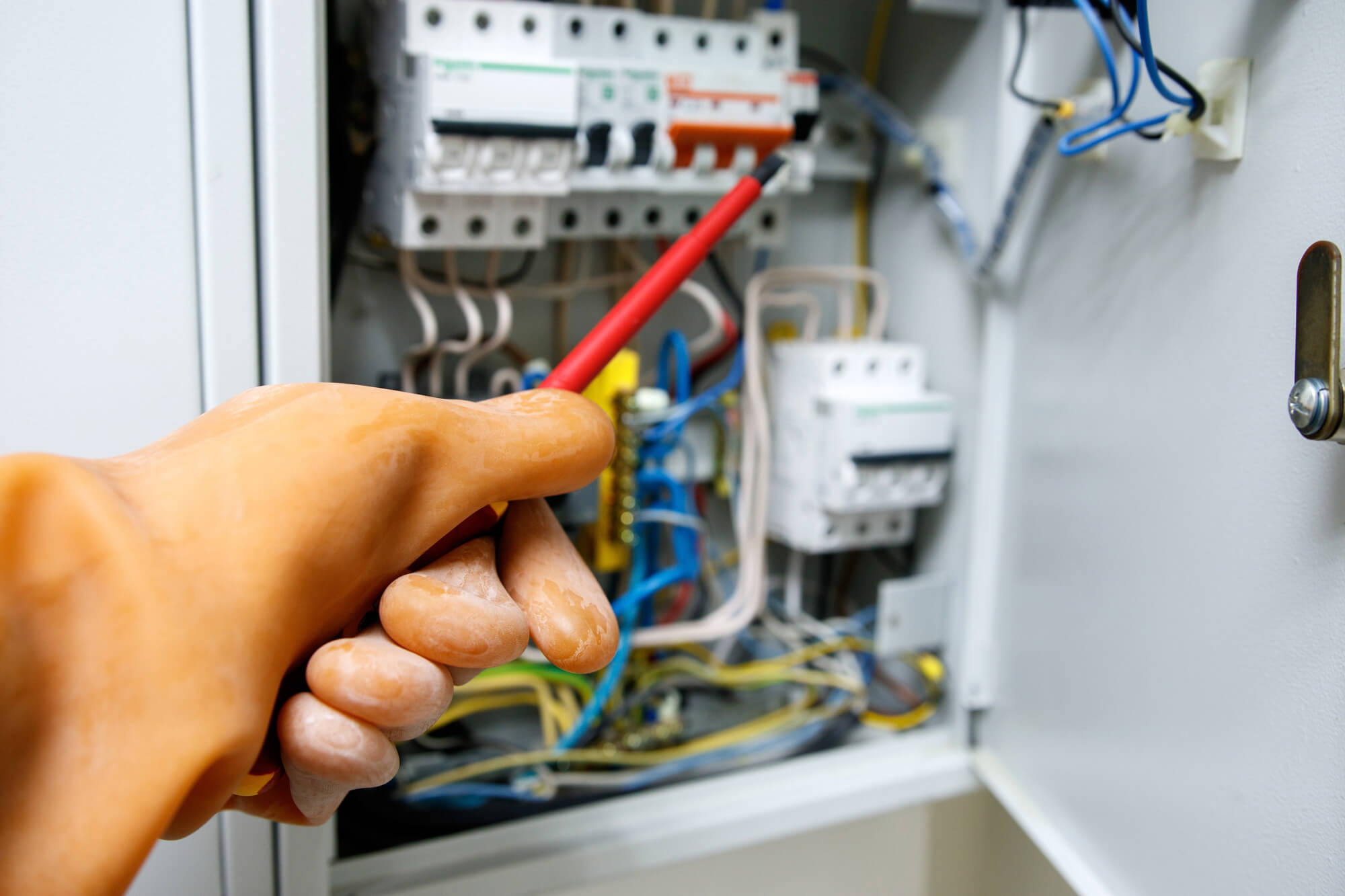
AFCI vs GFCI: Key Differences
- AFCI prevents fires by detecting arc faults in wiring and devices.
- GFCI prevents electrocution by detecting current leaking through a person to ground.
- AFCI is always a breaker at the panel; GFCI can be an outlet or a breaker.
- AFCI does not protect against shock; GFCI does not protect against arc-fault fires.
Where Each Is Required by Code
AFCI (NEC 2020): All 120V, 15/20-amp branch circuits — bedrooms, living rooms, kitchens, hallways, garages, and most indoor areas.
GFCI (NEC 2020): Bathrooms, garages, crawl spaces, unfinished basements, outdoor receptacles, kitchen countertop outlets, laundry areas, and near pools. Local code varies — a licensed electrician can confirm your jurisdiction’s requirements.
Dual-Function AFCI/GFCI Breakers
Dual-function AFCI/GFCI breakers combine both protections in one panel device. They cost more than standard breakers but eliminate the need for separate GFCI outlets on the circuit and meet the most current NEC requirements. See our guide on resetting a tripped AFCI breaker.
Where AFCI and GFCI Protection Is Required by Code
The National Electrical Code (NEC) mandates AFCI and GFCI protection in specific locations to protect against different hazards. AFCI protection is now required on all bedroom circuits, living room circuits, dining areas, libraries, dens, family rooms, and other living spaces in residential homes. The NEC has progressively expanded AFCI requirements over the past 20 years, reflecting the growing understanding of arc-fault fire risk. Most homes built after 2008 have AFCI protection on bedroom outlets as standard. If your home was built before 2008, adding AFCI protection to bedrooms is a smart upgrade, especially if the home has an older electrical panel or aluminum wiring.
GFCI protection is required in bathrooms, kitchens (especially countertop outlets within 6 feet of sinks), garages, laundry areas, basements, and any outdoor outlets. The NEC requires GFCI-protected circuits in wet locations or areas prone to moisture, and in spaces where water and electricity might come into contact during normal use. Unlike AFCI requirements, which are straightforward, GFCI requirements have become increasingly stringent. Modern code requires GFCI protection for virtually all kitchen countertop outlets, all bathroom outlets, and even hallway outlets in some jurisdictions. Many modern homes also install GFCI protection on bedroom circuits where nightstands have lamps that might be knocked over into water, such as in master bedrooms with attached bathrooms.
Upgrading Your Home with AFCI and GFCI Protection
If your home was built before 2010 and does not have adequate AFCI and GFCI protection, upgrading is a worthwhile investment in safety. You have two main options: upgrade individual outlets to AFCI or GFCI-protected outlets, or install AFCI and GFCI breakers in your panel. Upgrading individual outlets costs $15–$30 per outlet for the device itself, plus $75–$150 in labor per outlet if installed by a licensed electrician. This piecemeal approach works well for targeted upgrades, such as adding a few GFCI outlets to a bathroom or kitchen.
A comprehensive approach is to install AFCI and GFCI breakers directly in the electrical panel. This provides protection for the entire circuit and is more cost-effective than upgrading individual outlets if you need protection for many outlets. AFCI and GFCI breakers cost $40–$100 each, plus labor, and a full panel upgrade with protection on all vulnerable circuits typically runs $800–$1,500. The advantage of breaker-level protection is that a single failure or false trip affects only that circuit, and replacing a breaker is simpler than replacing multiple outlets. However, if you have an older panel or a panel from a manufacturer with limited breaker availability (such as Federal Pacific Electric or Zinsco), breakers may be difficult to source. In these cases, upgrading individual outlets or replacing the panel entirely may be more practical.
Can You Have Both AFCI and GFCI Protection on the Same Circuit?
Yes, and in many cases, the NEC requires both. When you need arc-fault and ground-fault protection on the same circuit—common in bedrooms near wet areas, laundry rooms, or hybrid situations—you have two options: install separate AFCI and GFCI devices, or use a dual-function AFCI/GFCI breaker. The dual-function breaker is cleaner and more reliable. Square D offers the QO2-20AFICPFP (dual AFCI/GFCI breaker for 20-amp circuits), and Siemens makes the QA120AFCPFP and similar models. These breakers cost $50–$80 each, compared to around $25 each for separate single-function breakers.
The advantage of the dual breaker is that you have one device protecting the entire circuit against both arc faults and ground faults. You don’t have to worry about combining a breaker and an outlet, or stacking multiple outlets, which can create confusion and compliance gaps. When testing the breaker, you simply press the test button and it trips if protection is working. If you use separate devices, you must test both—the AFCI breaker with its built-in test button, and the GFCI outlet with its own test button—making verification more cumbersome.
From a code perspective, NEC Article 210.12 requires AFCI protection in bedrooms, and NEC Article 210.8 requires GFCI protection in bathrooms and other wet areas. When a circuit overlaps (e.g., a bedroom outlet near a bathroom), both requirements apply. Rather than debate which takes precedence, the dual-function breaker satisfies both mandates in a single device. Installation cost is slightly higher upfront, but the added reliability and simplicity make it a smart choice.
Frequently Asked Questions
Can I replace a standard breaker with an AFCI breaker myself?
No. Circuit breaker replacement involves working inside an energized panel where main lugs remain live even with the main breaker off. This must be done by a licensed electrician.
Will an AFCI breaker nuisance-trip?
AFCI breakers can occasionally trip with older power strips or devices with filtering capacitors. Persistent unexplained trips usually indicate a wiring issue that needs an electrician to diagnose.
Do I need AFCI protection in an older home?
Code requirements apply to new construction and renovations, but retrofitting AFCI breakers into older homes is strongly recommended — older wiring is more prone to insulation degradation and arc faults.
How often should I test my GFCI outlets?
Test GFCI outlets monthly using the TEST button — the outlet should lose power. Press RESET to restore it. If the outlet fails to trip or won’t reset, it must be replaced immediately by a licensed electrician.