
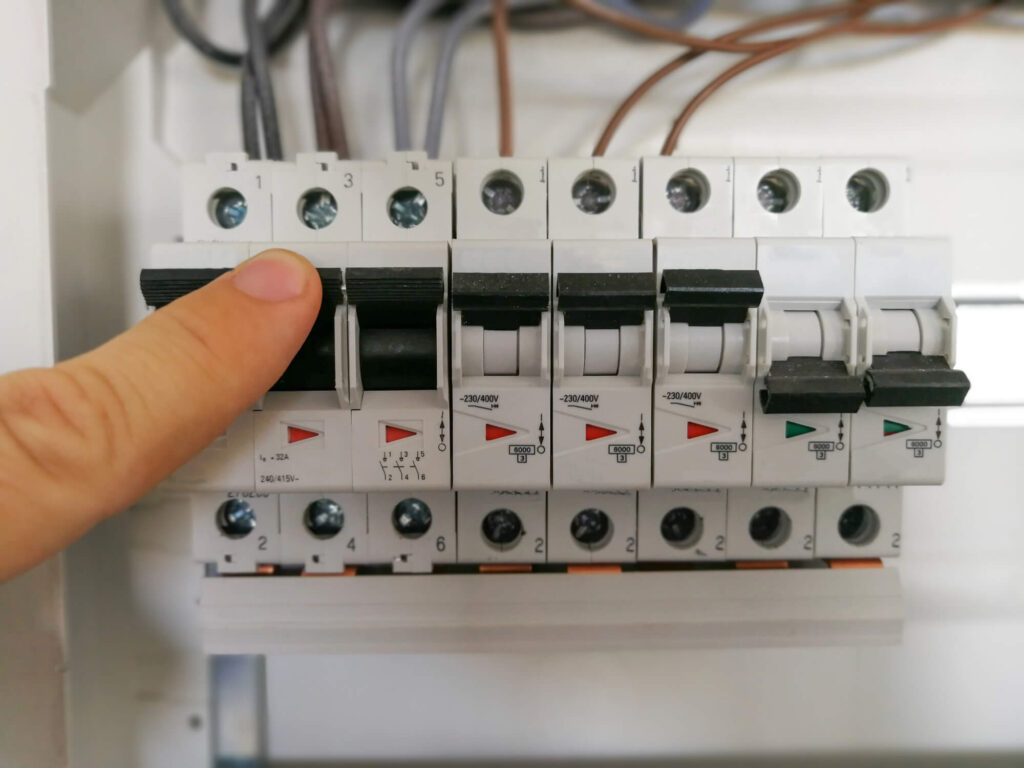
An AFCI breaker that keeps tripping is your electrical panel‘s way of warning you about arc faults — dangerous sparking inside wires that can cause house fires. Knowing how to reset it safely and when to call an electrician is critical.
⚡ Key Takeaways
- AFCI breakers protect against arc faults, a leading cause of electrical house fires
- To reset: turn the breaker fully OFF, then back ON — a simple flip may not reset it
- Nuisance tripping can be caused by certain appliances or wiring conditions, not a true arc fault
- Repeated tripping indicates a real wiring problem that needs professional diagnosis
- Never bypass or replace an AFCI breaker with a standard breaker — this removes fire protection
What Is an AFCI Breaker?
An Arc Fault Circuit Interrupter (AFCI) breaker detects dangerous arcing — unintended electrical discharge that occurs when wires are damaged, loose, or pinched. Unlike regular breakers that only trip on overloads or short circuits, AFCI breakers can detect the specific waveform signature of arc faults. The NEC now requires AFCI protection in most living areas of new homes.
How to Reset a Tripped AFCI Breaker
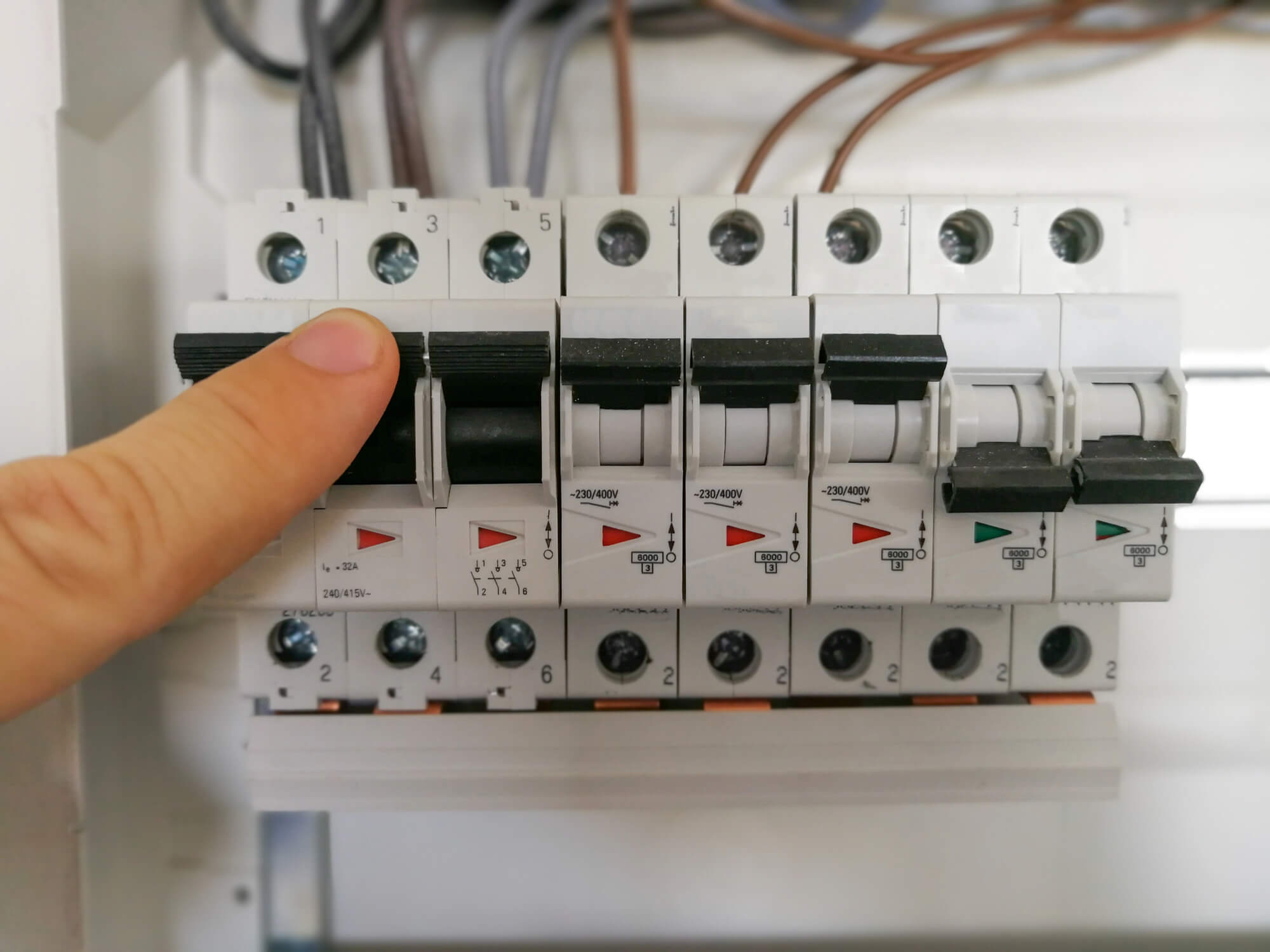
Resetting an AFCI breaker is slightly different from resetting a standard breaker:
- Identify the tripped breaker — it will be in a middle position (not fully ON or OFF) with the test/reset indicator showing “tripped”
- Turn the breaker fully to the OFF position — push it firmly past the middle position until it clicks to OFF
- Pause 10 seconds
- Turn the breaker fully ON — push it firmly to the ON position until it clicks
- If it immediately trips again, there is likely a real arc fault or wiring problem — do not continue resetting
Why Does My AFCI Breaker Keep Tripping?
There are several reasons an AFCI breaker trips:
Actual Arc Fault (Wiring Problem)
The most serious cause — damaged insulation, a loose terminal connection, or a wire pinched under a staple is creating real arcing. This is a fire risk and requires immediate professional inspection.
Nuisance Tripping from Appliances
Some devices — particularly older motors (vacuum cleaners, certain power tools), fluorescent light fixtures, or devices with certain switching power supplies — generate electrical noise that AFCI breakers can misidentify as an arc fault. Try unplugging all devices on the circuit and resetting. If it holds, plug devices back in one at a time to identify the culprit.
Overloaded Circuit
If the circuit is drawing more current than the breaker’s rated amperage, it trips on overload before any arc fault is involved. Check the total wattage of devices on the circuit.
Ground Fault on the Circuit
AFCI breakers can also respond to ground faults in some configurations. Check for any moisture near outlets or fixtures on the circuit.
When to Call a Licensed Electrician
Call a licensed electrician immediately if:
- The breaker trips again immediately after resetting
- You see burn marks, smell burning, or hear crackling sounds from outlets or switches on the circuit
- The breaker has tripped multiple times with no obvious cause
- You cannot identify which device is causing the issue
AFCI breakers exist specifically to prevent electrical fires — the National Electrical Code (NFPA 70) has expanded AFCI requirements significantly over the past two decades because arc faults cause thousands of home fires each year. Repeated tripping is the system working as designed — warning you of a real hazard.
Can I Replace an AFCI With a Regular Breaker?
No. Replacing an AFCI breaker with a standard breaker removes fire protection that is required by code in many applications. It’s also potentially illegal if your jurisdiction requires AFCI protection for that circuit type. If your AFCI breaker is faulty, replace it with another AFCI breaker of the correct brand and amperage.
Why Your AFCI Breaker Keeps Tripping
AFCI (arc-fault circuit interrupter) breakers are designed to be hypersensitive to arcing—more so than standard breakers—because arc faults are a leading cause of electrical fires. However, this heightened sensitivity sometimes causes nuisance tripping when the breaker detects normal arcing from motor loads (like refrigerators, air compressors, and older vacuum cleaners). These motor loads inherently produce small electrical arcs as brushes contact the commutator, and some AFCI breakers react to this normal arcing by immediately tripping, even though no actual fault exists. This is called “nuisance tripping,” and it’s one of the most common complaints about AFCI protection. If your AFCI breaker trips when you use a specific appliance, the issue may not be the breaker itself—it may be an incompatibility between the AFCI and that particular motor load.
To determine whether your AFCI breaker is genuinely detecting a fault or experiencing nuisance trips, test the circuit step-by-step: first, turn the breaker back on and avoid using any appliances for a few hours to see if it trips on its own (indicating a real arc fault). If it stays on, plug in each appliance one at a time and monitor whether a specific device triggers the trip. If only one appliance causes tripping, the issue is likely that appliance (such as an older motor with worn brushes) rather than a breaker fault. If the breaker trips randomly or when multiple different appliances are plugged in, it’s more likely a genuine arc fault in the wiring. Document when and how the breaker trips, including which appliance (if any) was running at the time, and share this information with your electrician.
If you determine the breaker is nuisance tripping due to incompatibility with a specific appliance, options include replacing that appliance with a newer model (recommended for safety), relocating the appliance to a different circuit, or replacing the AFCI breaker with a newer model from a different manufacturer (some AFCI breakers are less sensitive to motor loads than others). However, if the breaker is genuinely detecting arc faults—tripping randomly, frequently, or when multiple appliances are in use—this indicates a serious wiring problem that requires professional diagnosis. Never ignore frequent AFCI tripping by simply resetting the breaker repeatedly; each trip is your breaker’s way of warning you that arc faults are occurring and fire risk is present. Call a licensed electrician to diagnose the underlying cause, which could be damaged insulation, moisture in outlet boxes, or a deteriorating appliance connection.
Frequently Asked Questions
How do I reset a tripped AFCI breaker?
Turn the breaker fully to the OFF position first (past the middle “tripped” position), wait 10 seconds, then push it firmly to ON. A simple flip without going to full OFF may not properly reset an AFCI breaker.
Why does my AFCI breaker keep tripping for no reason?
This is often “nuisance tripping” caused by certain appliances (older motors, some fluorescent lights) that generate electrical noise mimicking arc fault signatures. Unplug all devices and reset — if it holds, plug in devices one at a time to find the culprit. If it trips with nothing plugged in, there’s likely a real wiring issue.
Can I replace my AFCI breaker with a regular breaker?
No. This removes required fire protection and violates the NEC in most applications. Replace a faulty AFCI with another AFCI breaker of the correct brand and amperage rating.
Is a tripped AFCI breaker a fire hazard?
A tripped AFCI breaker means the protection is working — it detected potential arcing and cut power. The hazard exists in whatever caused the trip. Repeated tripping without an obvious cause (overload, faulty device) requires professional inspection.
Do AFCI breakers wear out?
Yes. AFCI breakers have electronic components that can degrade over time. If your breaker trips without cause and all wiring checks out, the breaker itself may be faulty and need replacement. Use the AFCI test button to verify it’s functioning properly.